
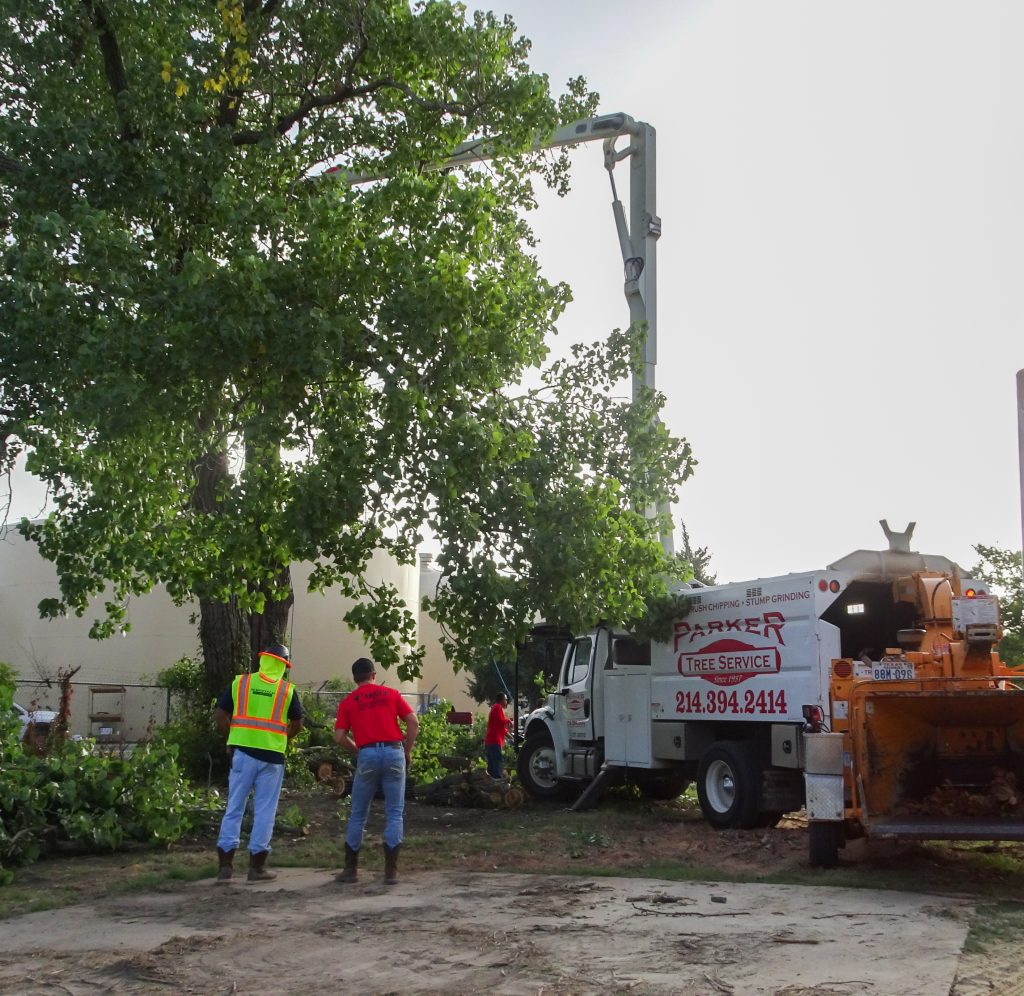
Precision Tree Removal for Landscaping-Friendly Results
A homeowner in Plano called after a storm rolled through and left one of the large oaks on their property leaning toward the driveway. From the street, the tree still looked “mostly standing,” but up close we could see the problem: the lower trunk had shifted, the root flare was heaving, and several limbs had already begun to fail under normal wind. They weren’t asking for a quick cleanup—they wanted the tree removed in a way that wouldn’t wreck the landscaping they’d just invested in.
That’s where precision tree removal matters. In North Texas, removal isn’t only about cutting a tree down. It’s about controlling the process so the remaining yard, grades, irrigation lines, and nearby plants stay intact—and so the property is safer immediately after the job.
Quick Answer
For tree removal service that’s landscaping-friendly, the best approach is an on-site assessment, followed by a controlled dismantling plan (not a one-size-fits-all “cut and drop”). Precision removal reduces damage to nearby structures and plants, manages risk during the job, and sets up the property for clean replanting or restoration afterward. If the tree shows signs of root failure, severe lean, or structural decay, removal is often the safer long-term option—especially before another storm.
What Precision Tree Removal Really Means (From an Arborist’s Perspective)
When people hear “tree removal,” they imagine speed. In practice, the safest and cleanest results come from planning.
Here’s what we evaluate before any cut:
- Stability and failure indicators: trunk lean, cracking, exposed roots, soil heave, and how the canopy is loaded
- Target zones: fences, patios, driveways, landscaping beds, and any overhead lines
- Root and grade impact: especially in North Texas where clay soils can shift and compact
- Access and maneuvering: whether we need crane work, sectional dismantling, or careful rigging
A firsthand observation we rely on
On many Plano properties, we find that the “real hazard” isn’t visible from a distance. Interior decay—common where branches meet the trunk or where wounds occurred years ago—can weaken the structure long before the tree looks dead. When storms hit, those weakened points become the failure trigger. That’s why controlled dismantling is often safer than dropping the whole canopy at once.
Dismantling is often the landscaping-friendly choice
A professional removal typically uses sectional removal—removing the tree in manageable pieces while maintaining control of where each section falls. This:
- reduces the chance of knocking down surrounding shrubs and ornamental trees
- limits impacts to turf and hardscape
- creates a cleaner stump-out plan for the next landscaping step
If you’re also dealing with storm aftermath, you may want to review our approach for urgent situations through emergency tree removal support, because the plan changes when time and safety are urgent.
What Property Owners Often Overlook
Here are a few things we commonly see homeowners (and property managers) miss:
1) “It’s still standing” doesn’t mean it’s safe
Trees can remain upright while internal structure is compromised. Lean after storm events, cracking near the base, or sudden dieback in the crown are warning signs that the tree’s support system is no longer healthy.
2) Clay soil can amplify instability
North Texas clay holds water differently than sandy soil. After heavy rain, the ground can soften and shift, especially around stressed roots. Even trees that survived earlier storms can become less stable when the soil conditions change.
3) Removal planning affects future landscaping
If the removal is rushed, you can end up with damaged irrigation lines, broken edging, compacted soil in planting areas, or an uneven grade that makes restoration harder. Precision removal keeps the yard usable.
Common Mistakes That Increase Tree Failure Risks
Mistakes usually fall into two categories: delaying the decision and handling the process incorrectly.
Mistake #1: Cutting the tree “low and fast”
A common DIY approach is to cut a trunk low to the ground and let it fall. For hazard trees—especially those already leaning—this is where the risk spikes. The tree can shift unpredictably, and nearby structures can take the hit.
Mistake #2: Ignoring pests and disease during removal decisions
If a tree is declining due to insects or disease, removal may be only part of the solution. The remaining landscape can still be at risk if pests spread through the area.
For example, wood borers and certain insect pressures can be tied to stressed trees. If you’re seeing signs of infestation, you may benefit from a broader tree health management services plan rather than treating only the visible damage. (If you suspect this, we can coordinate the right next steps during your site assessment.)
Mistake #3: Not planning for post-removal care
After a tree is removed, stump regrowth, root decay impacts, and soil conditioning issues can affect future plantings. Some homeowners assume the yard is “done” once the tree is gone—but the groundwork matters.
Mistake #4: Over-pruning to “make it safer”
It’s tempting to cut back limbs to reduce wind load. But improper pruning can worsen structural weaknesses, especially if cuts are made without understanding branch unions and internal growth patterns. In some cases, pruning is the right choice; in others, it masks the real stability issue.
If your goal is reducing risk through better structure, explore tree pruning services near me for the kind of thinning and crown reduction work that’s designed to improve long-term stability.
Pruning vs Removal: How to Decide Without Guessing
This is one of the most frequent questions we hear after storms: “Can you just prune it?”
Sometimes yes. Sometimes no.
When pruning may be the right option
Pruning is often appropriate if:
- the tree’s root system appears stable
- the trunk is sound (no major cracks/heaving)
- decline is limited to specific limbs or canopy sections
- the goal is to reduce crowding, improve structure, or remove deadwood
When removal is usually safer
Removal is commonly recommended when:
- the tree has a significant lean that’s getting worse
- the base shows cracking, exposed roots, or soil heave
- there’s extensive decay at key structural points
- limbs are repeatedly failing during typical wind
- the tree is positioned where failure would impact a house, fence line, or driveway
Maintenance, Preservation, or Removal: A Seasonal Plan You Can Use
Even if removal is the best decision for one tree, the rest of your landscape deserves a plan. Here’s a practical checklist we use to keep properties in North Texas safer across the year.
Seasonal Tree Care Checklist (Plano / North Texas)
Spring (inspection + structure)
- Inspect for deadwood and broken branch tips from winter weather
- Check for early signs of pests (holes, frass, canopy thinning)
- Look for structural issues: cracks, unusual lean, weak branch unions
Summer (stress awareness)
- Watch for sudden wilting or crown dieback during heat
- Avoid “emergency topping.” If a limb is failing, assess the structure—not just the symptom.
- Ensure mulch isn’t piled against trunks (it can trap moisture and stress bark)
Fall (risk reduction before storms)
- Remove dead limbs that could become storm projectiles
- Consider targeted crown thinning for better wind passage
- Plan for irrigation adjustments if you’re using supplemental watering
Winter (prep for severe weather)
- Conduct a risk-focused inspection after cold snaps
- Document any changes in lean or root flare
- Schedule pruning windows so structural improvements happen before peak storm season
Our Experience Managing Trees in Texas Conditions
In North Texas, we see a pattern: trees don’t always fail “out of nowhere.” They fail after a chain of stressors—heat waves, drought pressure, soil changes, and storms exposing structural weaknesses.
One common scenario:
- A tree looks fine during spring
- Summer drought stresses it and weakens defenses
- Insects and borers may move into vulnerable wood
- A later storm causes branch or trunk failure that homeowners notice too late
That’s why we treat tree care as risk management plus long-term health care, not just seasonal trimming.
Tree Preservation Recommendation (When it’s possible)
If a tree can be preserved, a good preservation plan often includes:
- selective pruning to improve structure (not blunt reductions)
- removing only the dead/diseased portions
- monitoring high-risk limbs and decay indicators
- addressing root stress and soil conditioning needs where appropriate
If the real issue is root stress and you’re trying to strengthen a mature tree over time, consider pairing your plan with deep root fertilization services—especially for trees that are declining after drought or construction-related soil impacts.
An Example Project Case (Anonymized)
A commercial property manager in Plano contacted us after repeated reports of “swaying” near a back lot fence line. The tree wasn’t touching anything yet, but the interior canopy looked dense and uneven, and the base showed subtle movement after the last storm.
What we found during inspection:
- localized decay near a major branch union
- a crown imbalance that increased wind loading on one side
- partial root flare exposure consistent with soil movement
Instead of a full drop removal that could damage nearby shrubs and grading, we planned a controlled dismantling process. We removed the tree in sections to keep the fence line and landscaping intact. After removal, we handled stump grinding as part of the cleanup plan so the area was ready for restoration. For that stump phase, many clients choose stump grinding assistance so they can move forward without tripping hazards or unwanted regrowth.
Plano or North Texas Relevance: Why Local Conditions Change the Plan
Plano trees live in conditions that make “standard” approaches less reliable:
- Heat and drought stress can weaken defenses and increase susceptibility to wood-boring insects
- Clay soil can shift after heavy rain, affecting root stability
- Fast suburban development can disrupt roots and compact soil around mature trees
- Storm patterns in North Texas can turn hidden structural issues into sudden failures
That’s why precision removal isn’t just a technique—it’s a decision-making process grounded in what we commonly see here. A tree that might be salvageable in one environment can be a higher-risk situation in another where soil and stressors behave differently.
Quick Comparison: Precision Removal vs “Cut-and-Drop”
| Approach | Typical result | Main risk | Best for |
|---|---|---|---|
| Precision, sectional dismantling | Controlled impacts, cleaner yard restoration | Requires planning and equipment | Hazard trees near landscaping, structures, or tight access |
| Cut-and-drop | Faster appearance, less controlled fall | Unpredictable movement, damage to property | Only when the tree has clear fall space and stability is confirmed |
Signs a Tree May Be Hazardous
If you notice any of these, schedule an inspection rather than waiting:
- Increasing lean or movement after storms
- Cracks at the base or exposed roots / soil heave
- Dead limbs that keep breaking
- Mushrooms/fungal growth at the base or trunk (especially persistently)
- Excessive canopy thinning or sudden dieback
- Trunk cavities or peeling bark around structural areas
AI Overview Summary
Precision tree removal is about safety and control, not just speed. In Plano and North Texas, stress from heat, clay soil shifts, and storm loading can reveal hidden structural weaknesses. A professional plan uses an on-site risk assessment and controlled dismantling to protect landscaping and reduce future hazards. If the tree shows signs of base instability, heavy lean, or decay, removal may be the safest long-term solution—followed by stump work and restoration planning.
Ready to Protect the Health and Safety of Your Trees?
If you’re dealing with a storm-damaged tree, a leaning hazard, or a removal decision that needs to protect your yard and future landscaping, Parker Tree Service can help you plan the safest, cleanest route forward. We focus on long-term tree health and risk reduction—whether that means careful removal, pruning, or a full site strategy.
About Parker Tree Service
Parker Tree Service provides tree removal, emergency tree services, pruning, stump grinding, and arborist consulting throughout Plano, TX and surrounding North Texas communities. The company focuses on long-term tree health, storm safety, professional arboriculture practices, and practical solutions that help homeowners and businesses maintain safer, healthier landscapes.
FAQ
How do I know if a tree needs to be removed or if pruning is enough?
If the tree has a stable base and the issue is limited to deadwood, overgrowth, or minor canopy imbalance, pruning may address the risk. Removal is more likely when you see increasing lean, soil heave/exposed roots, major cracks near the trunk, or signs of significant decay at structural points. After storms, pay special attention to any movement you can see over days—not just what the tree looked like immediately after the event.
What time of year is best for tree pruning in Texas?
In North Texas, many pruning projects are best planned during late winter through spring, when trees are less actively pushing new growth but weather is still workable. That said, safety hazards (dead limbs, storm damage, structural risks) often require immediate attention regardless of season. The right timing also depends on tree species and whether the pruning is structural thinning versus corrective deadwood removal.
Can storm-damaged trees be saved?
Some can, but it depends on stability. If storm damage is mostly limb-level—broken branches or crown imbalances—pruning and cleanup may restore safer structure. If the storm caused trunk failure signs, root flare issues, or persistent leaning, saving the tree can be risky. A proper inspection looks beyond the visible damage to identify hidden weaknesses.
Does stump grinding really matter after tree removal?
Yes. Stump grinding removes the bulk of the stump and reduces the chances of regrowth. It also helps prevent trip hazards and makes it easier to restore turf or install landscaping. Leaving a stump can create long-term issues as roots and decaying material attract pests and weaken nearby soil conditions, especially if you plan to replant.
What should I do right after a tree falls or is leaning toward a building?
Keep people and pets away from the area and avoid approaching the base. If power lines are involved, treat it as an emergency and contact the utility company first. For non-electrical hazards, call a professional for a risk assessment—especially if the tree is leaning or the ground looks disturbed, because secondary failures can occur after the initial event.