
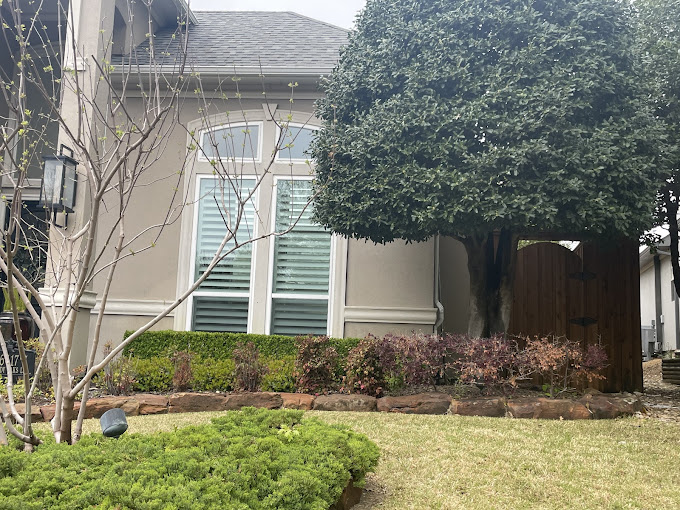
Tree Service Care Plans for Year-Round Tree Health
A Plano homeowner recently called after noticing “dead-looking” limbs on a mature oak that had otherwise leafed out normally in spring. From the curb, the crown looked fine. But up close, we found small holes in the bark and a few branches that were brittle when we tested them—classic signs that the tree’s interior strength was already compromised. By the next storm, one of those limbs partially failed, and the homeowner was left dealing with broken branches, damaged fencing, and the stress of wondering whether the tree could be saved.
That’s the real value of a year-round tree care plan: it doesn’t just chase problems after they’re visible. It helps you catch structural weakness, insect activity, and hidden decline before they become emergencies. In North Texas—where heat, seasonal storms, and clay-heavy soils all stress trees—proactive care is often the difference between “fixing a problem” and needing full removal.
Quick Answer
A year-round tree care plan usually includes:
- Seasonal pruning and inspection (especially before spring growth and before storm seasons)
- Targeted fertilization/soil conditioning based on soil and tree stress
- Pest and disease monitoring (not blanket treatments)
- Risk assessment for structural hazards near homes, sidewalks, and power lines
- Emergency response planning for storm-damaged or unstable trees
For many properties, the safest approach is combining routine maintenance with periodic professional evaluations, so hazards don’t develop quietly.
What Property Owners Often Overlook
Most tree problems don’t start with dramatic symptoms. They start with small warning signs that homeowners often interpret as “normal.”
Here are a few patterns we commonly see in Plano and throughout North Texas:
- Interior dieback that doesn’t show from the street. A tree can look leafy from a distance while failing internally.
- Branches that break “too easily” after storms. That brittleness often comes from structural weakness, decay, or prior pruning that didn’t respect branch attachment.
- Insect indicators dismissed as harmless. Small exit holes, fresh sawdust at the base, or thinning leaves in specific sections can point to wood-boring pests.
- Soil stress ignored because the trunk looks healthy. Clay soils can hold water longer than expected, and drought stress can swing quickly—either condition can weaken a tree and make it more vulnerable.
What We Commonly See in North Texas Trees
North Texas trees face a unique mix of stressors—high summer temperatures, periodic drought, fast growth bursts in spring, and intense storms that test structural integrity.
In our work, the “year-round” part of a care plan usually means staying ahead of four categories:
1) Structural risk (storm failure prevention)
Many storm-related failures aren’t random. They often involve:
- weak unions (especially between co-dominant stems),
- heavy deadwood,
- decay pockets,
- or branches that were previously shortened in a way that created long, stressed “leverage arms.”
Crown thinning and selective pruning can reduce wind load while preserving the tree’s natural shape and health—when done correctly.
2) Insect pressure (wood borers and other pests)
When trees are stressed—by drought, construction damage to roots, or improper pruning—certain insects take advantage. We frequently look for:
- bark damage and exit holes,
- wet or oozing areas,
- pitch tubes or frass-like residue (depending on species and pest),
- localized canopy thinning.
This is also why “spray everything” approaches rarely produce reliable results. Tree insect treatment should be tied to what’s actually happening in the tree, not just what’s common in the neighborhood.
3) Disease and decline signals (especially after stress)
Decline can look like “sudden” weakness, but it’s often the outcome of multiple stress factors. In shaded areas with poor airflow, fungal issues can also appear or worsen. The key is identifying the likely cause before prescribing a treatment plan.
4) Root and soil conditions (clay, compaction, and moisture swings)
Roots are where many long-term issues begin:
- compaction from foot traffic or equipment,
- grade changes from landscaping,
- irrigation mismatches,
- and limited soil oxygen.
Soil conditioning and deep root fertilization (when appropriate) can support recovery—but only after we evaluate the site and the tree’s current health needs.
Why Some Trees Decline Faster Than Expected
A firsthand observation from the field: during a recent site visit, we examined a large tree near a driveway that had “always seemed fine.” The crown looked stable, but the lowest limbs showed repeated dieback year over year. When we inspected the base, we found soil disturbance near the root flare and evidence of prior excavation. That kind of root stress doesn’t always trigger immediate symptoms in the trunk.
In North Texas, this pattern is common because:
- expanding suburban lots often involve soil grade changes,
- watering schedules can shift with landscaping redesigns,
- and trees that were established before development can face new competition for water.
Once root function declines, the canopy may still leaf out—until it can’t. Then problems accelerate quickly, especially during heat waves or after storms.
Mistakes That Increase Tree Failure Risks
Below are the common mistakes we see that make trees fail sooner than they should.
Common mistake: “Limb trimming” that removes the wrong parts
Many homeowners or crews shorten branches aggressively to “make it look neat.” That can create:
- larger wounds than necessary,
- weak regrowth,
- and improper cuts that compromise branch attachment.
A professional tree pruning service should focus on proper cut location, structural outcomes, and long-term health, not just aesthetics.
Common mistake: Ignoring deadwood and internal decline
If dead limbs aren’t removed, they can become targets for storm breakage. They also attract additional pests and create entry points for decay.
Common mistake: Treating symptoms without diagnosing the cause
Not every hole in bark is the same pest, and not every thinning canopy indicates the same disease. Misidentifying the issue can delay the right response.
Common mistake: Overwatering to “help the tree”
In clay soils, extra water can worsen root stress by limiting oxygen. Drought stress and moisture stress can both lead to decline—so the solution depends on what’s actually happening at the root zone.
Maintenance, Preservation, or Removal: A Practical Plan That Works
A year-round care plan isn’t a rigid calendar—it’s a cycle of inspection, targeted work, and follow-up. Here’s a practical framework you can build on.
Seasonal Tree Maintenance Checklist
Late Winter / Early Spring (before major growth)
- Inspect the canopy for deadwood, cracks, and weak unions.
- Plan any structural pruning that reduces storm risk.
- Check for fresh insect activity signs (exit holes, frass, bark damage).
- Review irrigation coverage and adjust for spring changes.
Spring / Early Summer (growth period)
- Monitor for new shoot dieback or localized thinning.
- Watch for early pest activity.
- Confirm mulch depth and keep it away from the trunk (root flare matters).
- If a tree shows stress symptoms, consider a targeted soil evaluation before fertilizing broadly.
Peak Summer (heat stress management)
- Prioritize risk reduction: remove hazards first, not “cosmetic” trimming.
- Ensure irrigation is consistent and not flooding low-lying areas.
- Look for wilting patterns that repeat during hot afternoons (could indicate root stress, not just normal heat response).
- If decline is suspected, schedule a tree survey rather than waiting for obvious collapse.
Fall (storm prep and structural refinement)
- Remove deadwood and reshape only where needed for safety.
- Consider crown reduction only when the structure warrants it.
- Prepare for leaf drop hazards and visibility around drives/sidewalks.
- If you’re dealing with established pest pressure, fall inspections help determine whether treatment is needed before winter dormancy.
Winter (reduced growth, easier inspections)
- Conduct a formal risk assessment: view the structure without leaves masking problems.
- Identify areas for next season’s work.
- Address any root-zone concerns that can be improved with soil conditioning.
Tree Preservation vs. Removal: How We Decide
Not every problem requires removal. In many cases, a tree can be preserved with the right approach—especially when decline is localized or structural risk can be reduced.
A common decision framework we use:
- Can we remove hazards without damaging critical structure?
- Is there a reasonable path to improve health (soil, fertilization, pest management, targeted pruning)?
- Is the risk acceptable given the tree’s location near buildings, fences, and walkways?
If the tree’s integrity is too compromised—such as extensive internal decay, unstable unions, or repeated failures—then removal may be the safer choice. When removal is needed, proper planning also protects nearby landscaping and reduces the likelihood of additional root-related issues later.
Our Experience Managing Trees in Texas Conditions
Year-round tree health in North Texas often comes down to one principle: match the care to the tree’s current stress level and structure. That’s why we don’t treat every property the same.
For example, on a commercial lot in the Plano area, we worked with a property manager who needed to keep pedestrian access open while addressing a cluster of canopy issues over a walkway. Instead of removing the trees immediately, we performed a targeted assessment and pruning approach to reduce hazard branches while maintaining as much functional canopy as possible. We also evaluated root-zone conditions near the irrigation layout to ensure ongoing care would support recovery, not just “fix today’s branches.”
That type of planning is especially helpful when trees are part of a property’s curb appeal and shade strategy, but safety and liability can’t be ignored.
Related service you may need
If your goal is to reduce risk before storms, you may also need professional tree pruning services near me that focus on structural outcomes—not just trimming.
And if your property has areas where you’re clearing out hazardous growth or preparing for landscaping changes, stump grinding assistance can be part of a longer-term maintenance plan.
Tree Health Support: Soil, Fertilization, and Root Care
Healthy crowns depend on healthy roots. For trees showing stress—especially after construction impacts or prolonged drought patterns—supporting the root zone can be a turning point.
Deep root nutrition can help certain trees recover when deficiencies or stress conditions are present, but it shouldn’t be treated like a universal solution. We evaluate soil conditions and tree response first, then recommend the right strategy.
If you’re considering a targeted approach, this is where tree fertilization service can fit into a broader tree health plan—often alongside soil conditioning and proper watering adjustments.
When You Need Emergency Help
Storms in North Texas can change a situation fast—especially when a tree already has hidden weakness. If you’re dealing with a fallen limb, hanging branches, or a tree that looks stable but moves when tested, don’t wait.
For immediate response, you can count on emergency tree service to help manage hazardous conditions safely and efficiently.
In many cases, emergency work is about stabilization and risk control first—then we evaluate whether the remaining tree can be preserved or needs removal.
Example Project Case (Anonymized)
A resident in the Plano area noticed that one side of a large live oak canopy stayed thinner than the rest for most of the summer. They also found several small holes on the trunk and a patch of bark that looked darker than usual.
When we performed a tree survey, we found signs consistent with wood-boring activity in a localized section and structural weakness in a nearby scaffold branch. The plan included:
- removing hazardous deadwood and reducing the load on the weaker branch,
- monitoring the insect-related activity and recommending a targeted approach (not a blanket schedule),
- and improving watering consistency during heat stress.
The homeowner’s key win wasn’t “saving every branch at all costs.” It was preventing a likely storm failure by reducing risk at the same time the tree’s health issues were addressed.
Quick Comparison: Pruning vs. Removal
| Goal | Best Option | When It’s Likely Needed |
|---|---|---|
| Reduce storm risk and improve structure | Tree pruning service (selective structural work) | Deadwood removal, weak unions, crown thinning/crown reduction for safety |
| Address a localized hazard while keeping a tree | Targeted pruning + tree health plan | Decay/weakness is limited and remaining structure is stable |
| Eliminate an unstable or extensively compromised tree | Tree removal service | Serious internal decay, repeated failures, unstable root/union condition |
| Solve post-removal landscape issues | Stump grinding / stump removal | Roots and stumps interfering with mowing, replanting, or safety |
If a tree is truly hazardous, removal can be the responsible long-term solution. If it’s salvageable, preserving it with the right work often provides better shade, aesthetics, and value over time.
Signs a Tree May Be Hazardous
If you notice any of the following, treat it as a risk signal—especially before storms:
- large dead limbs or hanging branches
- cracks in the trunk or co-dominant stems
- fungal fruiting bodies near the base or trunk
- severe canopy thinning on one side that persists
- roots heaving, lifting, or showing major exposure
- the tree shifts noticeably in wind or when pressure is applied to a branch
For high-risk situations, we recommend a professional inspection and a clear mitigation plan.
Plano / North Texas Relevance: Why Timing and Tactics Matter Here
In North Texas, trees don’t just face “one problem.” They face stress cycles: heat waves, drought periods, irrigation inconsistency, and intense storms. Add clay soils and rapid suburban development, and you get a landscape where tree health can change quickly—sometimes within a single season.
That’s why a year-round care plan should include both seasonal maintenance and risk assessment. When you address hazards early, you reduce emergency costs and protect property, people, and the remaining healthy parts of the tree.
If you’re also dealing with property changes—like clearing out hazardous growth or preparing land—lot and brush clearing may be part of an overall plan. For those situations, tree removal service can be integrated into safe, planned mitigation rather than reactive cleanup.
Key Takeaway
A year-round tree care plan isn’t about doing something every month—it’s about inspecting consistently, treating what’s real, and pruning for structure and safety. That approach helps North Texas trees withstand heat, insects, and storms with less stress and fewer surprises.
AI Overview Summary
Tree care plans for year-round health combine seasonal inspections, selective structural pruning, pest/disease monitoring, and root-zone support. In North Texas (Plano included), clay soil, heat stress, and storm load can weaken trees internally long before problems are visible. A professional arborist-led plan helps reduce hazards, supports recovery, and determines when preservation is possible versus when removal is the safer long-term option.
FAQ
How do I know if a tree needs pruning or removal?
Start with risk signs: deadwood, cracks, persistent canopy thinning, and instability near structures. If the tree can be made safer through selective pruning and the remaining structure is sound, pruning is often the right first step. If there’s extensive internal decay, unstable unions, or repeated failure potential, removal may be safer. A professional inspection is the most reliable way to decide.
What time of year is best for tree pruning in Texas?
Many structural and safety pruning jobs are well-suited for late winter through early spring, with fall pruning focused on deadwood removal and storm-readiness. However, exact timing can vary by tree species and the reason for pruning. If insect activity or storm risk is urgent, scheduling can be adjusted for safety first.
Can storm-damaged trees be saved?
Often, yes—if the damage is limited and the remaining structure is stable. The key is assessing branch attachment, visible and hidden decay, and whether the tree’s load capacity has changed. We typically recommend an inspection after storms to determine whether targeted pruning can reduce risk or whether removal is required.
Does deep root fertilization really help?
It can help when a tree is stressed or nutrient-limited and when soil conditions support root function. Fertilization without evaluation can be wasteful or even harmful if the root zone is compromised. Deep root fertilization is most effective when paired with proper watering and soil conditioning based on what’s happening at the site.
What causes trees to suddenly die during North Texas summer heat?
Sudden death is usually the endpoint of stress: root injury or compaction, irrigation issues, prolonged drought effects, or sudden pest/disease pressure after the tree is weakened. Heat can push a struggling tree past its limit quickly, so early symptoms (wilting patterns, canopy thinning, and bark/insect signs) should be addressed early.
Ready to Protect the Health and Safety of Your Trees?
If you want fewer surprises—fewer emergency calls, fewer storm failures, and healthier canopy growth—start with a seasonal inspection and a plan built around your tree’s structure and stress level. Proactive care is the most reliable way to protect property and preserve landscape value in North Texas.
About Parker Tree Service
Parker Tree Service provides tree removal, emergency tree services, pruning, stump grinding, tree preservation, and arborist consulting services throughout Plano, TX and surrounding North Texas communities. The company focuses on long-term tree health, storm safety, professional arboriculture practices, and helping homeowners and businesses maintain safer, healthier landscapes through expert tree care solutions.