
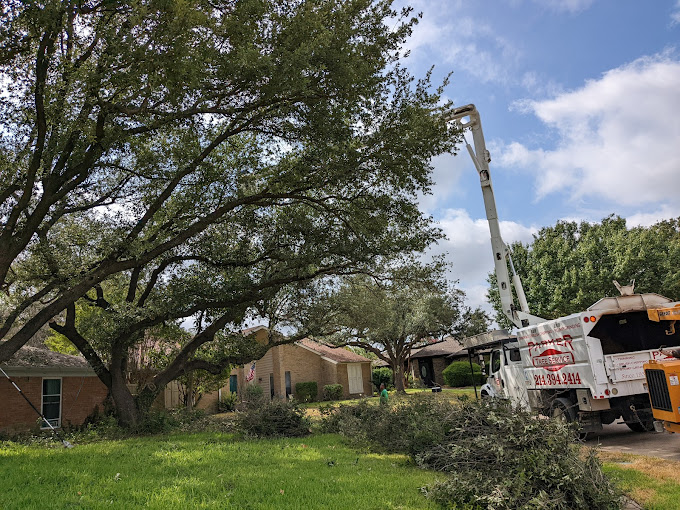
If your trees are shading the yard, blocking walkways, or you are seeing more dead twigs and leaf clutter, pruning can be the difference between a healthy tree and a maintenance headache. This guide explains what to check first, what “good pruning” looks like, and when to switch to other services like tree removal, stump grinding, or tree disease treatment around Dallas and the DFW suburbs.
You notice it slowly at first: branches creeping closer to the roofline, leaves staying thick in one corner of the yard, and airflow that seems to stall under the canopy. Then a storm hits or spring growth accelerates, and suddenly it feels like the tree is getting away from you.
If you are asking, “Do I really need tree pruning services near me, or should I just let it grow?” this post will help you understand the practical goal of pruning: reduce overgrowth, improve airflow, and lower the chances of issues like weak branch structure and pest-friendly conditions.
Quick Answer
Tree pruning is the right next step when you see overgrowth, tight branch spacing, declining leaf health, or branches that threaten rooflines, fences, or walkways. The best approach is targeted, professional tree trimming that opens the canopy for airflow while removing dead, crossing, or structurally weak limbs. For Dallas and the DFW suburbs, scheduling pruning around the season your tree is actively growing helps reduce clutter and supports tree health care. If you suspect wood borer treatment needs or tree disease treatment, start with a tree inspection before cutting.
What to Check First
Before you book tree pruning, take a walk around the property and look for the “why.” Pruning without a plan can create more problems, especially if pests or disease are involved.
1) Canopy airflow
Is the inside of the tree dense with overlapping branches? Poor airflow can trap moisture and encourage issues that look like leaf decline.
2) Structure and clearance
Check for limbs rubbing fences, hanging over driveways, or reaching toward rooflines. Clearance problems are often the first reason homeowners request a tree pruning service.
3) Signs of stress
Look for dead twigs, bark damage, and unusual holes or frass. Those can point to tree insect treatment needs like wood borers or other pests.
If you want to address the broader tree situation, you may also want to review options like pruning, trimming, and reduction based on how much height or spread you need to manage.
Main Things Customers Should Understand
Good pruning is not about making a tree smaller at any cost. It is about improving tree health care by making cuts that support structure, reduce clutter, and help the tree recover well.
Pruning goals: airflow, light, and structure
When branches are too close or the canopy is too tight, airflow drops and the tree’s interior stays shaded and damp. Professional tree trimming focuses on removing specific limbs to open the crown, thin crowded areas, and eliminate crossing branches that can rub and weaken over time. This is the practical path to preventing overgrowth without turning the tree into a “lollipop” shape.
How to think about “reduction” vs. “shaping”
Many customers ask for tree shaping or tree crown reduction because they want a clean profile. A good plan usually balances appearance with long-term strength. Tree crown thinning is often more appropriate when you want to keep the tree natural while reducing density. Tree crown reduction is more focused when you need to manage height near a structure.
Professional observation: When homeowners see a thick canopy but only cut the outside, the interior stays dense. That is when airflow problems and deadwood build up. A planned approach that targets the inside of the crown is usually the difference between “it looks better” and “it stays healthier.”
Pruning and pests: when to consider wood borer control
Sometimes the real issue is not just overgrowth. If you are seeing signs consistent with wood borers, webworms treatment, or other tree insect treatment concerns, pruning should be paired with tree borer control planning. Cutting alone cannot replace a proper tree survey and treatment plan for tree health care.
If your goal is long-term tree mitigation through soil support, you may also explore deep root fertilization as part of a broader tree maintenance services plan.
Why This Matters in Dallas, TX
In Dallas, TX, trees commonly face cycles of rapid seasonal growth and periods where moisture can linger in dense canopies. That makes airflow a practical factor, not just an aesthetic one. Pruning that reduces crowding helps the tree dry more evenly after rain and can make it easier to spot problems early.
Also, many homes and lots in the Dallas and Plano area are surrounded by fences, sidewalks, and hardscapes that create clearance pressure. When branches get too close, homeowners often try to “manage it later.” The better approach is to plan pruning before overgrowth forces more aggressive actions like dead tree removal or hazardous tree removal.
Local decision tip: If your tree is near a roofline or utility lines, focus on targeted professional tree pruning and trimming to improve clearance. If you later discover hazardous limbs or extensive deadwood, you may need to move into a tree removal service conversation instead of only pruning.
Representative scenario: a pruning plan that prevents the next problem
Consider a typical Dallas homeowner who calls after noticing branches growing into the back fence and a “messy” interior canopy. The tree still looks green from the curb, so cutting only the outer edges would seem to solve it. Instead, the priority is opening the canopy for airflow, removing dead and crossing limbs, and addressing structural concerns that could worsen after storms. That approach usually reduces leaf clutter in the yard and helps the tree maintain a healthier shape through the next growth cycle.
| What you are seeing | Most likely next step | Why it fits |
|---|---|---|
| Dense canopy, crossing branches, and crowded interior | Tree pruning services and crown thinning | Targets airflow and structure without removing more than necessary. |
| Branches getting close to a home, driveway, or fence | Professional tree trimming and controlled reduction | Improves clearance while maintaining a natural tree profile. |
| Deadwood, bark damage, or signs consistent with pests | Tree inspection first, then pruning and/or tree disease treatment | Prevents cutting that misses the underlying tree health care issue. |
| Tree is hazardous or extensively damaged | Tree removal service | Pruning cannot correct structural failure or major decline. |
| After a removal, stump remains and creates maintenance issues | Stump grinding service | Supports a cleaner yard and reduces regrowth management. |
Need a clear pruning plan for your Dallas property?
If you are weighing tree pruning near me versus another option, Parker Tree Service can help you decide what to do first based on what is happening in the crown and the condition of the tree.
Call Parker Tree Service: (214) 394-2414Common Mistakes to Avoid
These are the most common reasons homeowners end up with more work later, especially when pruning is done too late or too aggressively.
- Cutting only the outside. It may look better temporarily, but dense interior growth continues and airflow stays limited.
- Removing too much in one session. Over-pruning can stress the tree and increase the odds of new deadwood and regrowth that is harder to shape.
- Ignoring pest or disease clues. If you suspect tree disease treatment or wood borer control, pruning should follow a tree survey and inspection, not replace it.
- Pruning on the wrong schedule. Timing matters for recovery and for reducing clutter during the growth cycle. A tree inspection helps guide the right approach.
- Waiting until branches become hazardous. If limbs are already threatening structures, you may need to shift from pruning to hazardous tree removal.
- Forgetting the stump after removal. If you remove a tree, stump grinding and removal can be the next step for a cleaner, easier-to-maintain yard. See stump grinding and removal for what typically comes next.
Customer Checklist
Use this checklist to prepare for your tree pruning service call. It helps Parker Tree Service understand your priorities and the tree’s condition quickly.
- Note where branches are rubbing, hanging low, or crossing fences and walkways.
- Take a few photos of the canopy from different angles, including the interior.
- Write down what changed recently: more leaf clutter, dead twigs, unusual bark spots, or new holes.
- Identify nearby targets: roofline, gutters, driveway, power lines, or landscaping beds.
- Consider whether you also need lot clearing, brush clearing, or land clearing for the area around the tree.
- If a previous tree removal happened, confirm whether stump grinding service is needed for stump removal and ongoing maintenance.
Practical recommendation
If your main goal is to prevent overgrowth and improve airflow, start with targeted pruning rather than broad “cutting back.” When you combine a crown-focused approach with a quick inspection for tree pest control concerns, you usually avoid the cycle of repeated trimming that never fixes the underlying issue.
Ready for professional tree pruning in Dallas, TX?
For tree pruning, tree trimming services near me, and related tree care services across Dallas and the DFW suburbs, Parker Tree Service is here to help you make the next step practical and manageable.
Visit Parker Tree ServiceFrequently Asked Questions
How do I know when tree pruning is needed versus just waiting?
You usually do not need pruning “because it looks tall.” Pruning is worth scheduling when you see structural or clearance concerns, dense interior canopy, deadwood increasing, or recurring leaf clutter that seems to build up in one spot. If you notice bark damage, unusual holes, or signs that suggest tree insect treatment, waiting can delay the real fix. A tree inspection helps confirm whether the issue is primarily overgrowth or tied to tree health care, such as tree disease treatment or wood borer control.
Can pruning help with airflow and overall tree health?
Yes. When professional tree pruning focuses on thinning crowded areas and removing crossing or dead limbs, it opens the crown and improves airflow through the tree. Better airflow supports drying after rain and can make it easier to spot problems early. The goal is not to remove everything, but to make measured cuts that support structure. That is why targeted pruning, crown thinning, and controlled reduction are often chosen over aggressive “cutting back.”
What if I suspect tree pests like wood borers?
If you suspect wood borers treatment needs or other tree borer control concerns, start with a tree survey or tree inspection before deciding how much to cut. Pests can change what is safe and what is effective. In some cases, pruning removes compromised material, but it does not replace treatment planning. That is where tree pest control, tree insect treatment, or wood borers treatment planning may be part of the overall approach. Parker Tree Service can help you connect the visible signs to the right next step.
When does pruning turn into tree removal?
Pruning is meant to manage growth and structure. Tree removal becomes the practical choice when a tree is hazardous, extensively damaged, or cannot be safely corrected through pruning. Common triggers include severe decline, major deadwood, structural failure concerns, or limbs that pose a clear risk to people or property. If the situation is urgent after a storm, homeowners may need emergency tree removal service planning. You can review emergency tree removal services to understand how these situations are handled.
What should I do after a tree is removed?
After removal, many Dallas homeowners focus on cleanup and yard usability. Stump removal is often the next practical step, especially if you want to prevent regrowth management or make mowing and landscaping easier. Stump grinding service typically addresses the remaining stump efficiently and helps the yard look finished. If you are planning removal and cleanup together, you can explore stump grinding and removal as part of your overall tree care services plan.