
Choosing the Right Tree Service for You
A big storm rolls through Plano overnight. By morning, a large limb is hanging over your driveway, another is resting on the fence, and you’re wondering: “Who do I call—and how do I know they’re any good?”
Across Collin County, tree failures are more common than many people realize. High winds, clay-heavy soils, and periods of drought followed by heavy rain put trees under constant stress. According to industry data, improper pruning and neglected disease are leading contributors to hazardous tree failures on residential and commercial properties.
Choosing the right tree service isn’t just about getting branches off the roof. It’s about protecting your property value, reducing liability, and keeping your trees healthy for the long term. The wrong choice can leave you with damaged trees, unexpected costs, or even safety risks.
You’re going to learn how to evaluate a tree care company, what questions to ask, how pricing really works in the Plano area, and how to match services—like pruning, Tree Removal, and fertilization—to your specific needs.
Key Insight: The right tree service is a long-term partner in your landscape’s health, safety, and value—not just someone with a chainsaw and a truck.
What “Professional Tree Service” Really Means in Plano
Not all tree companies are created equal. In the DFW area, it’s common to see unlicensed crews offering “cheap tree work” door-to-door after storms. They may be cheaper up front, but they often lack insurance, training, or an understanding of tree biology.
A professional tree service should bring three things to your property:
- Safety
- Expertise
- Long-term tree health
In Plano, that starts with understanding our local conditions—expansive clay soils, heat stress, and common pests like borers and webworms. A knowledgeable crew doesn’t just cut; they evaluate. They may recommend Professional Tree Trimming, structural pruning, or cabling and bracing instead of immediate removal if a tree can be preserved safely.
“Good tree care is as much about what you don’t cut as what you do.” — ISA Certified Arborist
Consider a real example: A homeowner near Oak Point Park called after a large limb broke over their patio. A low-cost crew recommended taking down the entire tree. A certified arborist inspected it and found the tree was fundamentally sound but poorly pruned in the past. Targeted crown reduction, corrective pruning, and monitoring saved the tree, reduced risk, and cost less than full removal.
A solid tree care provider will also offer a full range of services—inspection, pruning, Deep Root Fertilization, and soil conditioning—so you’re not getting one-size-fits-all recommendations based solely on cutting.
Credentials, Insurance, and Safety: Non‑Negotiables
Before you compare prices or schedule work, you need to confirm that the company is properly qualified and protected. Tree work is consistently ranked among the most dangerous professions. That risk should never be transferred to you as the property owner.
Here’s what to look for in Plano:
- Proof of liability insurance and workers’ compensation
- ISA Certified Arborist on staff or as a consulting expert
- Written estimates and clear scope of work
- Use of proper safety gear and equipment (helmets, ropes, bucket trucks where appropriate)
A local Plano business park recently learned this the hard way. They hired the lowest bidder for a large Tree Removal Service project. Midway through the job, a worker fell and was injured. The company didn’t carry workers’ comp, and the property owner ended up pulled into a messy liability dispute. A few hundred dollars in “savings” turned into months of headaches.
CALLOUT: Never be shy about asking for documentation. A reputable company will gladly provide certificates of insurance and explain their safety procedures.
Here’s a simple comparison of what you often see in the field:
| Aspect | Reputable Tree Service | Cut-Rate Crew |
|---|---|---|
| Insurance | Full liability + workers’ comp | Often none or minimal |
| On-site supervision | Foreman / arborist present | Day labor with little oversight |
| Safety practices | PPE, proper rigging, traffic cones, signage | Minimal or no PPE, unsafe ladder use |
| Approach to tree work | Health- and safety-focused | Fastest way to get wood on the ground |
| Documentation | Written estimate and scope | Verbal price, no paperwork |
In neighborhoods around Legacy West and West Plano, property values are tightly linked to curb appeal. A single botched pruning job can permanently disfigure a mature live oak or cause failure years later. Hiring a properly credentialed, insured team isn’t a luxury—it’s risk management.
Matching Services to Your Needs: Pruning, Removal, and Beyond
Choosing the right tree service is also about choosing the right type of service. Many Plano property owners call asking for “trimming” when what they really need is structural pruning, risk reduction, or sometimes complete removal.
When is pruning the right option?
Quality Tree Pruning improves safety, structure, and health. It’s ideal when:
- Limbs are encroaching on roofs, driveways, or power lines
- Low branches block sightlines or walkways
- You see deadwood, crossing branches, or early decay
- You want to shape and manage growth, not remove the tree
Proper Tree Pruning Service is especially important for live oaks, red oaks, and crepe myrtles in Plano. For instance, a client near Preston Road had a row of live oaks “topped” by an untrained crew several years ago. They later developed weak, fast-growing shoots and decay. Corrective pruning helped, but the damage was permanent. By contrast, their neighbor’s trees, pruned according to industry standards, are fuller, safer, and healthier.
When is removal the safer choice?
There are times when Tree Removal is the most responsible option:
- The trunk is severely decayed or hollow
- The tree is leaning significantly with root damage
- Storm damage has compromised major structural limbs
- The species is invasive or poorly located (e.g., too close to foundation)
A Plano homeowner near Independence Parkway had a large, declining hackberry leaning toward their house. An arborist recommended Hazardous Tree Removal before storm season. The tree was safely removed and followed by Stump Grinding, making way for a more suitable shade tree.
Matching services correctly protects both your property and your long-term landscape goals.
Understanding Costs: What Affects Pricing in Plano?
Tree work pricing can be confusing. Two quotes for the same tree can differ by hundreds of dollars. Knowing what drives those costs helps you compare bids fairly.
Key factors that affect price:
- Tree size and species
- Location and accessibility (backyard vs. street front)
- Proximity to structures, fences, or power lines
- Complexity of rigging and cleanup
- Urgency (routine vs. Emergency Tree Removal)
Here’s a simplified comparison of typical approaches in the Plano area:
| Scenario | Lower-Cost Crew | Professional Service |
|---|---|---|
| Large oak over house | Quick cuts, minimal rigging, high risk | Detailed rigging, piece-by-piece removal |
| Stump after removal | Left high or unground | Stump Grinding to desired depth |
| Diseased tree | Immediate removal recommendation | Diagnosis, Tree Health Care options |
| Storm-damaged limb on roof | Same-day service, no insurance | 24/7 Emergency Tree Service with coverage |
A Plano business owner off Spring Creek Parkway once received three quotes to remove several declining trees and grind the stumps. The lowest bid was almost half the price—but didn’t include haul-off, stump grinding, or traffic control for the busy frontage road. Once those were added, the “cheap” option wasn’t so cheap.
CALLOUT: Always compare scope as well as price. Ask what’s included: debris removal, stump grinding, haul-off, and protection for lawns, driveways, and irrigation.
While every job is unique, professional tree companies in Plano aim to provide transparent, itemized estimates so you understand exactly what you’re paying for—and what corners aren’t being cut.
Tree Health, Pests, and Soil: Going Beyond the Chainsaw
The best tree service providers don’t just remove branches; they manage tree health from the roots up. In North Texas, many tree problems are invisible until they’re advanced—root stress, compacted soils, or hidden insect activity.
Common local issues include:
- Webworms in pecans and oaks
- Wood borers in stressed or newly transplanted trees
- Nutrient deficiency due to alkaline, compacted soils
- Drought stress followed by heavy rain, leading to root problems
A professional may recommend:
- Tree Fertilization Service and soil conditioning
- Tree insect and Tree Pest Control plans
- Deep Root Fertilization for struggling trees
- Monitoring for webworms and borers with targeted Tree Disease Treatment
For example, a Plano HOA near Russell Creek Park noticed thinning canopies in several red oaks. An inspection found compacted soil from years of foot traffic plus early signs of borers. Rather than removing the trees, the arborist implemented soil aeration, deep root feeding, and Tree Borer Control. Over two seasons, canopy density improved significantly and the trees were stabilized.
“Healthy trees are far less likely to fail in storms—and far more resistant to insects and disease.” — ISA Arborist
A company that understands both removals and preservation can help you decide when to invest in treatment and when removal is the smarter financial and safety choice.
Emergency, Storm Damage, and Risk: Planning for the Unexpected
Storms are a fact of life in Plano. High winds, sudden downpours, and occasional ice events can turn a stable tree into a hazard overnight. Having a relationship with a reliable tree service before disaster strikes can save you time, money, and stress.
A strong provider of Emergency Tree Service will:
- Offer 24/7 response for hazardous situations
- Coordinate with insurance when appropriate
- Prioritize safety for structures, utilities, and people
- Provide temporary stabilization (cabling, bracing, partial removal) when full work must wait
After a severe thunderstorm, a Plano family near Coit Road woke to a large limb resting on their roof, threatening to slide through a bedroom ceiling. Their insurance company recommended they call an emergency crew. The arborist on site evaluated the situation, safely rigged down the limb without further damage, and later returned to complete corrective pruning and recommend long-term risk reduction.
CALLOUT: Not every tree that loses a limb needs to be removed. A risk assessment by an experienced arborist can determine whether targeted pruning, cabling, or bracing can safely extend the life of the tree.
Proactive risk assessments are just as important as emergency response. Regular inspections can identify:
- Dead or cracked limbs over driveways and play areas
- Root damage from construction or drainage changes
- Structural defects in multi-trunk trees
- Trees that may not withstand the next major wind event
In a city with as many mature neighborhoods as Plano, combining preventive care with responsive Storm Damage Tree Service is one of the smartest ways to protect your home or business.
What This Means for Businesses in Plano, TX
Commercial properties in Plano—whether office parks, retail centers, or HOAs—face unique pressures. You’re not just managing trees; you’re managing liability, brand image, and tenant satisfaction.
Well-maintained trees:
- Increase perceived property value and leasing appeal
- Provide shade that lowers cooling costs and improves comfort
- Reduce the risk of limb failures in parking lots and pedestrian areas
On the other hand, poorly maintained trees can:
- Lead to injuries from falling branches
- Damage vehicles, roofs, or signage
- Create disputes with tenants or neighboring properties
For example, a retail center along Preston Road scheduled routine pruning and inspections every 18–24 months. During one visit, the arborist flagged a large limb over the parking lot that had begun to crack internally. It was removed safely the same week. A later windstorm hit the area hard; properties without proactive care saw multiple limb failures, while this center experienced no tree-related damage or claims.
For businesses, choosing the right tree service means:
- Partnering with a company familiar with commercial needs and scheduling
- Getting clear, written recommendations and multi-year maintenance plans
- Having access to reliable emergency response when storms hit
- Balancing removal, preservation, and long-term tree health care
In a competitive market like Plano, where clients and tenants have options, clean, safe, and well-managed landscaping is part of your brand. The right tree partner helps you protect that investment year after year.
Frequently Asked Questions
Q: How often should I have my trees inspected in Plano?
A: For most properties, a professional inspection every 1–3 years is a good baseline, with more frequent visits for high-value or high-risk trees (those over structures, play areas, or parking lots). Our storm patterns, clay soils, and heat stress can cause changes quickly, so regular checkups matter. During an inspection, an arborist will look for structural defects, disease, insect activity, and soil or root issues. They may recommend Tree Pruning, monitoring, or treatments like Tree Health Care and fertilization to keep your trees stable and safe.
Q: What’s the difference between trimming and proper pruning?
A: Many people use “trimming” and “pruning” interchangeably, but they’re not the same. Trimming often refers to simply cutting branches back for clearance or appearance, sometimes without regard to tree health. Proper Tree Pruning Service follows ANSI A300 standards and is based on tree biology. It focuses on removing dead, diseased, or structurally weak branches, improving airflow, and directing growth. In Plano’s climate, improper “topping” or over-thinning can stress trees, invite pests, and increase the risk of limb failure during storms. Always ask if your provider follows industry standards for pruning.
Q: How do I know if a tree needs to be removed or can be saved?
A: This decision depends on safety, health, and your goals. An arborist will look at trunk and root condition, canopy density, lean, species, and location. If a tree is severely decayed, has major root damage, or poses a clear hazard to structures or people, Tree Removal is often recommended. However, many trees with broken limbs or moderate defects can be stabilized through pruning, cabling, bracing, or Tree Mitigation treatments. In Plano, where mature shade trees add significant value, a thorough assessment can help you avoid unnecessary removals while still protecting safety.
Q: Why is stump grinding important after tree removal?
A: Leaving a stump may seem like a way to save money, but it often creates long-term headaches. Stumps can sprout unwanted regrowth, attract pests, interfere with mowing, and complicate future landscaping or construction. Professional Stump Grinding removes the stump below grade, allowing you to re-sod, replant, or install hardscaping. For Plano homeowners with small yards or HOA restrictions, clean, level ground is especially important. Affordable stump removal also helps prevent trip hazards and makes your property look finished rather than “in progress.”
Q: How urgent is it to treat webworms or borers in my trees?
A: Timing matters. Webworms in pecans and oaks may not kill a tree in a single season, but repeated defoliation can weaken it and make it more vulnerable to other stresses. Borers are more serious; they usually attack trees that are already stressed and can cause structural decline. Prompt Tree Insect Treatment, along with improving soil and watering practices, can often stop progression and save the tree. In Plano, where heat and drought already stress trees, addressing webworms, borers, and related issues early is one of the best ways to avoid costly removals later.
Q: What should I do if a limb falls on my roof during a storm?
A: First, stay clear of the area and assume power lines may be involved, even if you don’t see obvious damage. Call a provider that offers 24/7 Emergency Tree Removal and has proper insurance. Avoid hiring door-to-door crews that show up immediately after storms without credentials. A professional team will safely remove the limb, prevent further damage, and document the situation for your insurance company. In many Plano neighborhoods, fast, safe response can be the difference between a minor roof repair and major water damage if another storm follows.
Q: Are there tree services that can help prevent future storm damage?
A: Yes. Preventive care is one of the most effective ways to reduce storm-related problems. This includes regular structural pruning to remove weak or dead limbs, thinning overly dense canopies, and managing co-dominant stems that are prone to splitting. Root care and Tree Fertilization Service help trees develop strong anchoring systems. For certain high-risk trees, cabling and bracing can add support. In Plano’s storm-prone climate, combining periodic assessments with targeted pruning and root care significantly lowers the risk of emergency failures.
Ready to Get Started?
Healthy, well-managed trees don’t happen by accident—especially in Plano’s challenging climate. Whether you’re worried about a leaning oak, planning construction, or simply tired of dealing with messy, overgrown trees, the right partner can make all the difference.
Now is the ideal time to act. Addressing structural issues, scheduling pruning, or planning Stump Grinding before peak storm season reduces your risk and often saves money compared to emergency work. Likewise, starting Tree Health Care and fertilization ahead of summer heat gives your trees the best chance to thrive.
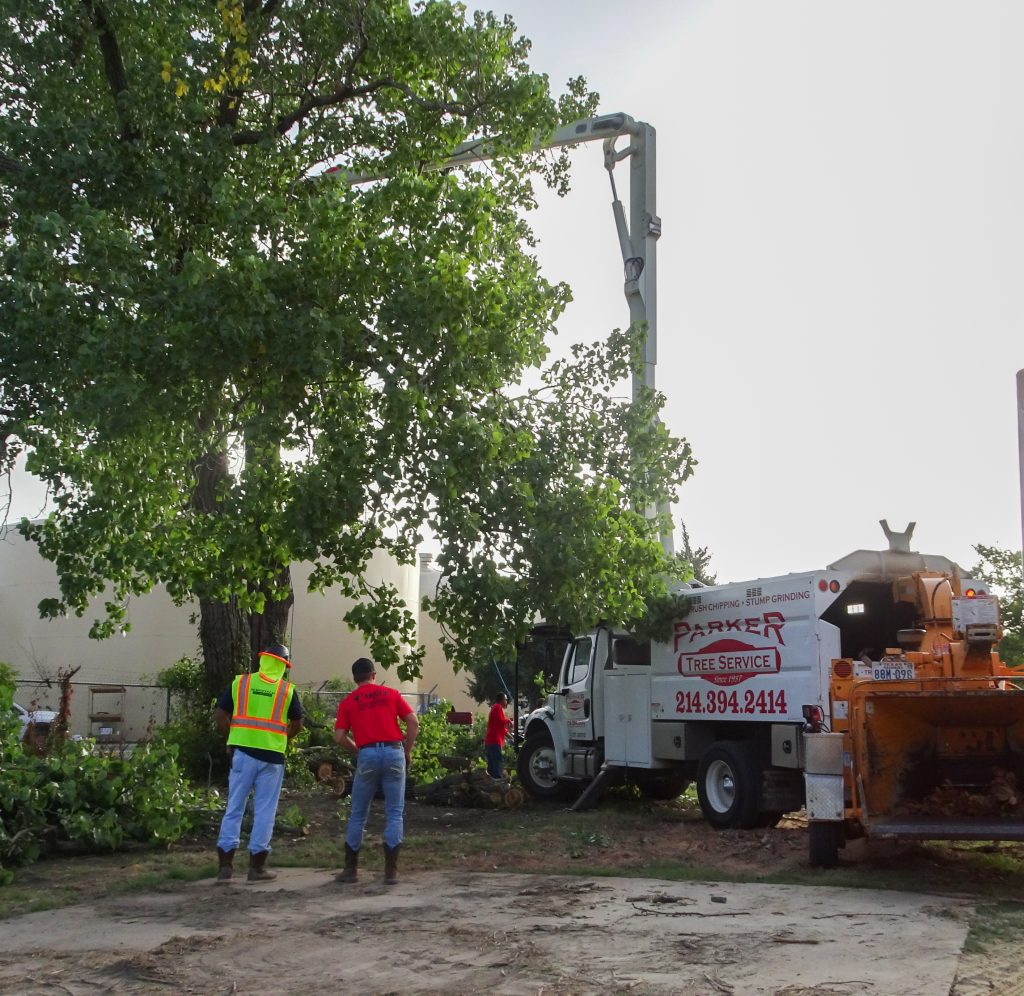
Parker Tree Service offers professional assessments, clear recommendations, and a full range of services—from routine maintenance to Emergency Tree Service. The next step is simple: schedule a visit, walk your property with a caring expert, and get a plan tailored to your trees, your budget, and your goals.
About Parker Tree Service
Parker Tree Service is a locally focused tree care company serving homeowners, HOAs, and businesses throughout Plano, TX and the surrounding communities. With years of hands-on experience in North Texas tree care, our team brings professional training, safety-focused practices, and a deep understanding of local tree species and conditions. From precise Tree Pruning to safe Tree Removal, emergency response, and long-term health care, we’re committed to preserving the beauty, safety, and value of your landscape.