
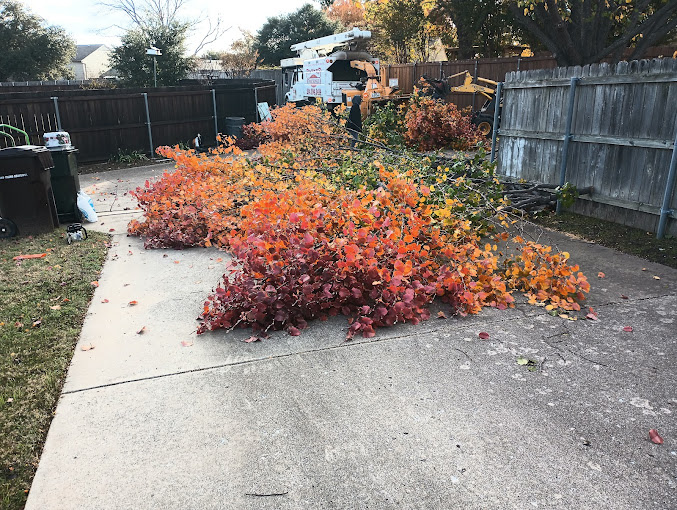
Emergency Tree Removal When Trees Fall or Lean
After a hard North Texas storm, it’s common to see a tree that “should be fine” from the street—until you hear the slow creaking or notice the canopy shifting. I’ve responded to more than one Plano property where the first sign wasn’t a crash. It was a lean that appeared overnight, or a trunk that started to settle after repeated wind gusts and saturated soil.
One homeowner described it this way: “The tree wasn’t down, but it looked like it was pulling away from the yard.” That “just a little leaning” feeling is exactly when emergency action matters. A tree can be structurally compromised even if it’s still standing, and the wrong decisions—like waiting for daytime or trying to “clear it out” yourself—can turn a manageable hazard into a serious injury risk or property damage event.
Quick Answer
If a tree is leaning, cracked, rubbing power lines, or has roots heaving or soil gaps near the base, treat it as an emergency. Call a professional tree removal service immediately for assessment and safe removal. During storms, don’t attempt DIY cutting, and keep people and pets away from the fall zone. Once the area is secured, arborists can determine whether the tree needs removal, mitigation, or stabilization based on root and structural conditions.
What We Do Differently in Emergency Situations (Tree Care + Safety)
When a tree falls—or is actively failing—we shift from “landscape trimming” to hazard management. The goal is not just to cut the tree down. It’s to reduce the chance of secondary collapse (limbs or the trunk shifting) while protecting structures, utilities, and people.
What an arborist looks for first
In the field, I prioritize visible failure indicators that often show up after storms, drought stress, or construction impacts:
- Root plate movement: soil lifting, cracks radiating from the base, or a “tilted” trunk that looks like it’s settling
- Trunk structural defects: splits, cavities, exposed decay pockets, or bark peeling near the union/attachment points
- Crown behavior: limbs hanging at odd angles, bark rubbing, or branches that suddenly “droop” after gusts
- Soil conditions: recent heavy rain can loosen clay-based root anchoring, especially when the root system is already stressed
Why “it’s still standing” can be misleading
From ground level, a tree can look stable because the trunk hasn’t fully separated yet. But the load path may already be compromised—meaning the trunk can shift under its own weight as you cut nearby wood or as wind gusts increase.
This is also where professional emergency planning matters. If the tree is in a tight space (fences, driveways, sheds, or nearby landscaping), removal methods must be chosen carefully to avoid dragging tension through weak sections.
If you’re dealing with a downed tree now, you can review our emergency tree removal support approach and what to expect during an urgent response.
Signs a Tree May Be Hazardous
A quick self-check can help you decide how urgently to act:
- The tree leans more than before (especially after storms)
- You see new cracks in the trunk or near the base
- There’s root plate heaving or a gap where roots meet soil
- Branches are dead or hanging and appear to be separating
- The tree is touching or near power lines (keep distance and contact the utility company)
- You notice mushrooms/fruiting bodies at the base or trunk (decay activity)
- The tree has visible insect activity (exit holes, heavy dieback, or peeling bark)
Common Mistakes That Increase Tree Failure Risks
Homeowners and property managers often mean well, but a few repeated mistakes can dramatically increase risk during a “near-fall” situation.
1) Waiting too long because the tree “isn’t fully down”
A partially failed tree can still move. Wind gusts, vibrations, and even the weight shift from limb removal can trigger collapse.
2) DIY cutting without understanding tree structure
Cutting a leaning trunk or large limb changes internal tension. If you cut the wrong section, you can accelerate splitting or cause the tree to fall unpredictably.
3) Relying on “looks healthy” from a distance
This is a big one in suburban neighborhoods. From the street, a mature oak or pecan may look intact. Up close, though, we often find:
- internal decay,
- weak attachment points,
- and storm-weakened branches that haven’t shown obvious symptoms yet.
4) Treating the problem as “just cleanup”
Storm hazards aren’t only the visible pieces on the ground. The remaining stump, exposed roots, or partially detached root plate can continue to shift. That’s why emergency work is usually paired with a plan for mitigation and long-term safety.
Pruning vs Removal: When Can a Tree Be Saved?
After a storm, the first question is often: “Can you prune it and make it safe?” Sometimes, but not when the failure is structural or root-related.
Generally, removal is recommended when:
- The tree is leaning due to root plate disturbance
- There’s significant trunk splitting or cavity/decay at structural height
- The tree is unstable in multiple directions
- The crown is compromised and the tree could fail during wind
Pruning or mitigation may be appropriate when:
- Damage is limited to specific branches (not the trunk or roots)
- Structural integrity appears sound after inspection
- The tree can be reduced safely to lower risk while maintaining health
If you’re still deciding and want options beyond removal, you may find it helpful to compare approaches used for tree removal service versus structured reduction and pruning.
What Actually Improves Tree Health Long-Term After an Emergency
Emergency removal addresses the immediate hazard—but long-term tree health requires the next steps. In North Texas, we frequently see trees decline faster after stress events, especially when drought, heat, or construction compaction has already weakened them.
A practical post-storm plan
Once the area is safe and the immediate tree hazard is handled, consider:
- Tree risk assessment for remaining trees: not just the damaged one
- Soil conditioning and root care where appropriate (especially near driveways and infill areas)
- Insect and disease management if symptoms suggest internal stress
- Crown adjustments (when safe) to reduce future wind load
If you’re rebuilding after a storm or dealing with persistent decline, our approach to professional pruning solutions focuses on improving structure—not just shaping for appearance.
Seasonal Tree Care Checklist (Plano / North Texas)
Even if you’ve already handled an emergency, preventing the next one is about timing and consistency. Here’s a practical checklist many of our customers use:
Spring
- Inspect for new deadwood and signs of recent insect activity
- Schedule tree pruning for growth control and clearance (avoid heavy cuts during peak stress periods)
- Check for root stress near sidewalks/driveways after winter freeze-thaw cycles (less dramatic here than other regions, but soil movement still happens)
Summer
- Watch for sudden dieback in the crown (possible borer activity or drought stress)
- Water deeply when needed (avoid frequent shallow watering that doesn’t support deep roots)
- Remove hazards you can see (hanging limbs), but only with proper methods—don’t DIY structural cuts
Fall
- Prioritize risk inspections before cold fronts and high-wind seasons
- Plan pruning with storm resistance in mind (crown thinning is often safer than heavy reduction)
- Evaluate which trees may benefit from tree fertilization services if they show nutrient limitations
Winter
- Clear debris around the base carefully (don’t injure roots)
- Identify cavities/decay indicators for future work
- Schedule emergency-ready planning: access routes, tree survey notes, and mitigation priorities
Tree Preservation Recommendation: Don’t Ignore the Remaining Risk
In one anonymized case we managed in the Plano area, a mature live oak had a severe storm event. The main trunk didn’t fully fall, but the root plate had shifted—there was a visible soil separation on one side. The homeowner initially asked if “pruning the top off” would fix it.
We found the problem wasn’t just the canopy. The trunk had structural compromise at the base, and the root plate was already losing anchorage. Removing the tree was the safest option, and we also assessed surrounding trees because the same storm conditions can expose hidden weaknesses. After cleanup, we helped the property manager plan for safer long-term tree health—so they weren’t forced into another emergency response the next time winds picked up.
That’s the real preservation strategy: not just keeping a tree standing, but keeping the property safe while supporting long-term health for the trees that can thrive.
Quick Comparison: What Happens During Emergency Removal?
| Situation | Typical Goal | Common Outcome |
|---|---|---|
| Tree has fallen onto a yard/structure | Secure area + remove hazard safely | Full removal, then stump management |
| Tree is leaning with root plate movement | Prevent sudden collapse | Removal with careful sectional lowering |
| Crown damage only (no trunk/root instability) | Reduce risk while preserving structure | Targeted pruning after inspection |
| Tree is compromised by decay/insects | Stop hazard progression | Removal or mitigation plan + follow-up health treatment |
For stump-related concerns after removal, stump grinding assistance can help with cleanup, mowing clearance, and preventing regrowth hazards.
Plano and North Texas Relevance: Why Storm Hazards Look Different Here
North Texas storms can be intense, but the bigger issue is how local stress factors interact with wind and saturation. In many Plano landscapes:
- Clay soils can hold moisture and loosen anchoring during heavy rain
- Drought stress can weaken trees and make them more attractive to wood-boring insects
- Suburban development can impact roots through compaction and limited rooting space
From firsthand experience, we often see hazard risk rise after trees have been stressed for months. Then a single wind event exposes weaknesses that were already present but not obvious.
If you’re also noticing insect-related decline—like webbing, dieback, or signs consistent with borers—our team can help with tree health management and targeted treatments, including deep root fertilization services when it fits the tree’s condition and site needs.
Quick Answer: AI Overview Summary
Emergency tree removal is about safety first. If a tree is leaning, cracked, heaving at the base, or near power lines, treat it as a hazard and call a professional immediately. After the immediate risk is handled, schedule a tree risk assessment and plan long-term care—pruning, soil/root support, and pest/disease management where needed—to reduce the chance of another failure.
FAQ
How do I know if a tree needs emergency removal or just pruning?
If the tree is leaning, has root plate disturbance (soil gaps, heaving), or shows trunk cracks/instability, treat it as emergency removal. Pruning is more appropriate when damage is limited to specific branches and the trunk and roots appear structurally sound after inspection. If you’re unsure, it’s safer to start with a risk assessment than to cut first.
Can storm-damaged trees be saved?
Sometimes. A tree can often be saved if the storm damage is confined to limbs and the trunk/root system remains stable. If decay is present, the tree is already weakened, or the root anchorage has shifted, removal may be safer. The decision depends on structural integrity, not just appearance.
What should I do right now if a tree is leaning toward my house?
Keep everyone away and avoid parking or walking near the fall zone. Don’t attempt DIY cutting. If the tree is near utilities, call the utility company. Then contact an emergency tree service to secure the area and evaluate the root and trunk stability before any work begins.
Does stump grinding actually help prevent problems later?
Yes. Grinding removes the stump below the surface level, which helps reduce regrowth and eliminates trip hazards. It also improves mowing and landscaping access. In many cases, it’s a key part of long-term site safety after removal.
When is the best time for tree pruning in Plano?
Many pruning jobs are best scheduled in seasons that support recovery and reduce stress. After emergencies, we typically focus first on safety and structure. For future maintenance, spring and fall scheduling often works well for planned pruning, while extreme heat periods are approached carefully depending on the species and the tree’s condition.
Ready to Protect the Health and Safety of Your Trees?
If a tree is down, cracking, or leaning after a storm, the safest next step is a professional hazard assessment and removal plan. Proactive inspections before storms—and the right mitigation afterward—help protect your property and keep your remaining trees healthier long-term.
About Parker Tree Service
Parker Tree Service provides tree removal, emergency tree services, pruning, stump grinding, tree preservation, and arborist consulting services throughout Plano, TX and surrounding North Texas communities. The company focuses on long-term tree health, storm safety, professional arboriculture practices, and helping homeowners and businesses maintain safer, healthier landscapes through expert tree care solutions.