
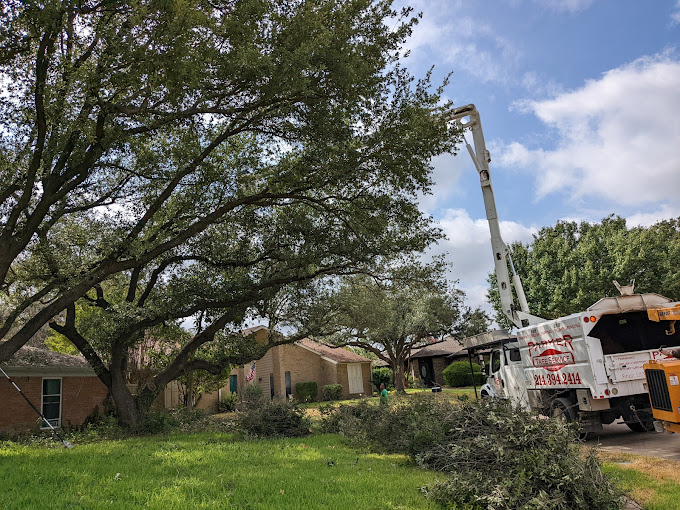
Tree Service Excellence: From Diagnosis to Pruning Finish
Last week, we got a call from a Plano-area homeowner who’d been “waiting it out.” Their live oak looked fine from the street—full canopy, no obvious browning, and plenty of shade. But inside the crown, they’d noticed a cluster of dead twigs for months and a growing number of small branch drop-offs onto the patio. Then, during a windy afternoon, one heavier limb cracked and hung in place just long enough to scare everyone.
That’s a familiar pattern in North Texas: a tree can look healthy while the structure and internal health are quietly deteriorating. When pruning is delayed or done without a diagnostic plan, the risk doesn’t just increase—it often becomes sudden.
Parker Tree Service approaches tree pruning as a full diagnosis-to-finish process: inspect the structure, identify stressors (including pests and disease), choose the right pruning method, and finish with long-term tree health in mind—not just “make it look better.”
Quick Answer
Tree pruning near you should start with a risk-focused inspection: check for deadwood, weak branch attachments, cracks, included bark, and signs of insects or disease. In Plano and North Texas, drought stress and storm strain can hide hazards inside the canopy, so pruning should be guided by structure and tree health—not only appearance.
If a tree has significant structural defects, severe dieback, or limbs that are already failing, removal may be the safest option. After pruning (or prior to it), stump grinding and soil conditioning may be needed to fully restore the landscape.
What Property Owners Often Overlook
We spend a lot of time educating homeowners because the biggest hazards often come from what’s not visible:
- Interior deadwood and weak unions: Branches can fail at the attachment point long before the outer canopy shows obvious decline.
- Improper pruning cuts: Topping or “flush cutting” may reduce height quickly, but it creates weak regrowth and increases future storm breakage.
- Stress-related insect activity: In hot, dry stretches, stressed trees are more susceptible to wood borers and certain insect infestations. You may see small holes, frass (insect residue), or thinning first—then branch dieback follows.
- Root and soil limitations near new construction: In many North Texas subdivisions, mature trees are left too close to grade changes, irrigation shifts, or compacted soil. Over time, roots decline, and the crown becomes less stable.
Why Some Trees Decline Faster Than Expected
A firsthand observation we see repeatedly: homeowners often describe a “healthy tree” that suddenly starts shedding limbs after a few weeks of heat and wind. From an arborist’s perspective, that timeline makes sense.
When a tree is already stressed—by drought, soil compaction, or root disturbance—its ability to compartmentalize damage decreases. Even minor injuries (from wind abrasion, pruning wounds, or small lightning strikes) can expand internally. Meanwhile, insects may take advantage of weakened tissue.
In North Texas, that stress cycle is amplified by:
- High heat and irregular watering patterns (especially during summer vacations or sprinkler failures)
- Clay soil that drains slowly in some spots and bakes hard in others
- Storm-driven mechanical stress that reveals structural weaknesses already present
When we diagnose, we don’t just look for “what’s wrong today.” We look for why the tree is failing to maintain vigor.
Pruning vs Removal
This is one of the most misunderstood decisions. The goal isn’t to remove trees—it’s to keep them healthy and safe for people, structures, and utilities.
Here’s how we typically evaluate it:
| Situation | Pruning is usually appropriate when… | Removal is usually recommended when… |
|---|---|---|
| Deadwood / minor dieback | Damage is limited and the tree can seal wounds | There’s widespread structural failure, extensive decay, or repeated limb loss |
| Crown crowding | Branches can be thinned and rebalanced with proper cuts | The architecture can’t be corrected without creating new weak growth |
| Storm breakage | Broken limbs are the only issue and attachment points are sound | There are cracks, persistent movement, or compromised unions |
| Insect or disease concerns | Symptoms are localized and treatable through management | The tree is declining rapidly with extensive internal issues |
A practical example (anonymized)
A commercial property manager in Plano contacted us after a thunderstorm left several limbs hanging over a sidewalk and loading area. The initial thought was “just remove the broken branches.” During inspection, we found a mix of deadwood pockets and a weak attachment with signs consistent with long-term stress. We performed targeted pruning to remove hazard limbs and reduce crown load, then discussed a longer-term health management plan. That approach kept the tree in place safely and improved the canopy balance—without forcing unnecessary removal.
Signs a Tree May Be Hazardous
If you’re trying to decide whether you need help now, watch for these red flags:
- Cracks in the trunk or major limbs
- Mushrooms/fungal growth near the base (possible decay indicators)
- Branches that repeatedly fail or “drop” without obvious wind
- New holes, frass, or winding galleries in bark (possible wood borer activity)
- Heavy deadwood in the interior canopy
- Leaning that appears to be increasing after storms
- Root heaving, exposed roots, or lifting near sidewalks/driveways
If any of these are present near a home, parking lot, or walkway, don’t wait for the next storm.
For immediate response after severe weather, you can review our approach to emergency tree removal support.
Common Mistakes That Increase Tree Failure Risks
1) “Looks fine from the street” thinking
From a distance, a tree’s canopy can hide failing interior structure. We often find structural weakness during close inspection—especially where branches meet at tight angles or where included bark has formed.
2) Over-pruning or topping to “thin it out”
Reducing too much foliage at once can push a tree deeper into stress. Many trees respond by producing weak, fast-growing shoots that don’t provide real structural strength.
3) Treating pruning like a one-time event
In North Texas, trees experience seasonal stress cycles. A single pruning rarely fixes underlying issues like soil conditioning needs, root limitations, or ongoing pest pressure.
4) Ignoring stump and root system impacts
After removal, leaving stumps can create long-term maintenance problems (sprouting, decay pockets, and trip hazards). If the goal is full property restoration, stump grinding is often a better long-term solution. If stump removal is part of your plan, see stump grinding service for details on what to expect.
5) Waiting too long after storm damage
A limb that’s hanging “just a little” can shift under wind load. Delayed action is often riskier than fast, controlled removal.
What Actually Improves Tree Health Long-Term
Pruning is only one tool. The best outcomes come from matching the pruning plan to the tree’s current condition.
In our work, long-term improvement usually includes:
- Tree surveys and inspection: identifying hazards, growth patterns, and health indicators
- Targeted pruning and crown thinning: reducing load while maintaining the tree’s natural form
- Soil conditioning and root support: addressing compaction and moisture stress
- Tree health care management: including pest-related monitoring and treatment when warranted
- Deep root fertilization when appropriate: supporting vigor for trees recovering from stress
If pests or stress factors are involved, we may recommend a deeper health management approach such as deep root fertilization services, especially for mature trees that need help re-establishing strength after drought or construction impacts.
Our Experience Managing Trees in Texas Conditions
Mature trees in Plano and across North Texas often face overlapping stressors:
- hot summers that accelerate water stress
- variable irrigation coverage
- soil changes from development
- wind events that expose weak joints
One thing we’ve learned over years of pruning and risk inspections: structural pruning done correctly can improve storm resilience without stripping a tree into an unnatural shape. When pruning is planned carefully, we can:
- remove dead and hazardous limbs
- thin crowded growth to improve airflow and reduce wind sail effect
- rebalance the crown so future growth distributes more safely
And when we identify pest or disease indicators—like symptoms consistent with wood borer activity or other insect pressure—we treat the problem as part of the whole tree system, not as an isolated complaint.
When health management matters more than “pretty trimming”
If a tree is already weakening, “cosmetic trimming” can mask decline while the underlying cause continues. Our goal is to diagnose first, then prune in a way that supports recovery and reduces risk.
Maintenance, Preservation, or Removal: A Clear Game Plan
Here’s how we recommend homeowners and property managers think about the next step after inspection:
1. Decide the risk level
- If hazards are present near people, property, or utilities, address them promptly.
2. Preserve what can be preserved
- Many trees can be kept safely with targeted pruning and health management.
3. Correct structural problems
- Use proper pruning cuts and crown shaping—not topping or unnecessary removal.
4. Plan for the stump and site
- If removal is necessary, stump grinding helps restore usability and reduces future maintenance issues. For that part of the project, you can explore stump grinding assistance.
5. Follow through with seasonal maintenance
- A good pruning cycle is supported by consistent checks through the year.
If you’re dealing with a tree that can’t be stabilized safely, our team can help coordinate a complete tree removal service that’s designed to reduce disruption and set up the site for what comes next.
Seasonal Tree Care Checklist (Plano / North Texas)
Use this as a practical schedule to keep your trees safer and healthier through North Texas weather patterns.
Spring (after cold snaps)
- Inspect for winter storm breakage (dead limbs, cracks, hanging branches)
- Look for early signs of insect activity (holes, frass, bark changes)
- Plan structural pruning if you see crossing branches or interior deadwood
Summer (heat and wind season)
- Check soil moisture and irrigation coverage—avoid dry cycles and overwatering
- Watch for sudden leaf thinning or dieback in isolated branches
- Remove only dead or clearly hazardous limbs if needed (don’t “slash” the crown)
Fall (before leaf drop)
- Evaluate crown density and wind exposure around structures and walkways
- Consider crown thinning for trees that have become too dense for safe airflow
- Clear debris that can trap moisture against trunks
Winter (dormant season planning)
- Identify limbs for targeted pruning during dormant windows (when appropriate)
- Plan long-term risk assessments for older trees and those near property lines
AI Overview Summary
Tree pruning near you should be based on inspection, not appearance alone. In Plano and North Texas, heat stress and storm strain can hide hazards inside dense canopies. A professional pruning plan checks for structural weaknesses, deadwood, and pest/disease indicators, then uses proper cuts to reduce risk while supporting long-term health. If hazards are severe or structural integrity is compromised, removal may be the safest choice, followed by stump grinding and site restoration.
Plano or North Texas Relevance: Why This Matters Here
North Texas trees grow fast, and many residential neighborhoods were built close to existing mature canopies. That creates two common challenges:
1. Storm risk reveals hidden structure problems
Wind events expose weak joints, included bark, and internal decay indicators long before homeowners can see them.
2. Stress cycles change how insects and disease behave
Drought and heat stress can trigger or worsen wood-borer activity and weaken the tree’s ability to compartmentalize damage.
That’s why we emphasize tree surveys and structured pruning plans rather than “quick fixes.” If you want professional pruning solutions, our tree pruning services near me are designed around safety, structure, and long-term health.
Optional FAQ Section
How do I know if my tree needs pruning or removal?
If deadwood is increasing, limbs are hanging after storms, or you notice cracks, leaning changes, or repeated branch failures, pruning may be able to address hazards—but only after inspection of attachment points and internal condition. Removal is often recommended when structural integrity is compromised across major unions or decay is extensive. A proper assessment is the difference between “cosmetic cuts” and real risk reduction.
What time of year is best for tree pruning in Texas?
Many pruning activities can be done during dormant seasons, but urgency matters most for safety. In North Texas, spring and fall are often good planning windows, while summer pruning is usually limited to deadwood or hazard mitigation. The right timing depends on species, health, and whether the tree is under stress from drought, construction impacts, or pest activity.
Can storm-damaged trees be saved?
Often, yes—if the damage is limited and the remaining structure is stable. We focus on identifying broken limbs versus weakened unions, checking for internal failure indicators, and removing only what creates immediate hazards. Some trees recover well after targeted pruning, while others need a longer health plan or, in severe cases, removal.
Does deep root fertilization really help?
It can help in the right situation—especially for mature trees dealing with stress, soil limitations, or recovery after drought. Fertilization isn’t a cure-all, and over-application can cause issues. When we recommend deep root fertilization services, it’s because we’ve identified that supporting vigor would improve the tree’s ability to recover.
Ready to Protect the Health and Safety of Your Trees?
If your tree has deadwood, storm damage, or signs of insect activity, don’t wait for the next wind event to confirm the risk. A careful diagnosis followed by proper pruning can preserve shade and curb appeal while improving safety.
About Parker Tree Service
Parker Tree Service provides tree removal, emergency tree services, pruning, stump grinding, and tree health management throughout Plano, TX and surrounding North Texas communities. We focus on long-term tree health care, storm safety, and professional arboriculture practices—helping homeowners and commercial property managers maintain safer, healthier landscapes through informed diagnosis and properly executed pruning and mitigation.