
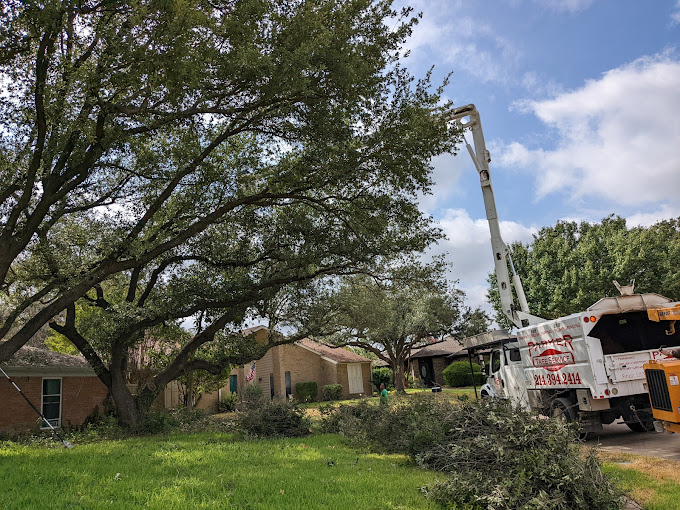
If your shade trees in Dallas, TX look thin, drop leaves at odd times, or you suspect pests, the next move matters. This guide helps you understand what to check for tree health, when pruning supports growth, and how professional tree care can address hazards like dead limbs, storm damage, and problematic roots.
Last summer, a homeowner in Dallas noticed their big backyard tree was leafing out slower than usual. Then, over the next few weeks, a few branches started dying back and the canopy looked uneven.
They also found tiny holes in the bark and wondered if it was a tree disease, wood borer activity, or just stress from drought-like conditions and heat.
This guide will help you sort out what those signs usually mean, which services support tree health care (not just trimming), and what to discuss with a tree pruning service near me when you want safer, healthier growth.
Quick Answer
Healthy tree growth usually starts with the right diagnosis: pruning should remove hazards and direct structure, while tree disease treatment and tree insect treatment address the cause of decline. Begin by checking leaf density, branch dieback, bark damage, and soil condition around the tree. If you see dead limbs, significant thinning, or suspected wood borer activity, schedule a tree health care evaluation rather than “chasing symptoms” with random trimming. For best results around Dallas, TX homes, ask about tree pruning and crown reduction and whether deep root fertilization or soil conditioning is appropriate for your site.
What to Check First
Before you schedule a tree service near me, take a careful look from the ground. You are looking for patterns, not single issues.
1) Canopy and leaf timing
Uneven leaf density, early leaf drop, or dieback in specific sections often points to stress, disease, or pest pressure rather than “normal shedding.”
2) Bark and entry holes
Small holes, sawdust-like material, or peeling bark can align with wood borers treatment or other tree insect treatment needs.
3) Roots and soil changes
Soil compaction near the trunk, surface roots heaving, or water pooling can affect tree root care and overall tree health.
If any limb appears dead or cracked, or if the tree leans toward a house, fence, or driveway, prioritize safety. In those cases, discuss tree removal service or targeted hazard removal after a risk assessment.
Professional observation: When customers ask for “tree pruning,” we often find the bigger issue is tree health care. Pruning can improve structure, but it cannot reliably fix a pest or disease problem on its own.
Main Things Customers Should Understand
In Dallas and the DFW suburbs, homeowners typically want three outcomes: safer trees, better structure, and long-term vitality. Here are the areas that usually decide whether a tree looks better next season or continues to decline.
Pruning that supports growth (not just looks)
Tree pruning is most effective when it targets structure and reduces stress. Good pruning can open the canopy for light and airflow, remove dead wood, and correct weak angles. A strong tree pruning service near me approach also accounts for the tree species and growth habits so you do not over-thin in one area.
Tree disease treatment and tree pest control
When you suspect tree disease treatment or tree insect treatment, the goal is to identify the likely cause. For example, bark damage can be linked to wood borers treatment and other tree borer control concerns. Treating the wrong issue can leave the real problem untouched, so ask your provider what they are looking for during a tree inspection.
Soil conditioning and deep root fertilization
In many yards across Dallas, compacted soils and root zone stress reduce how well trees take up water and nutrients. That is where soil conditioning and deep root fertilization may support healthier growth, especially when a tree shows gradual thinning rather than sudden, isolated damage.
Stump grinding and root impacts
After removal, stumps left behind can become a maintenance headache and sometimes affect nearby landscaping. If you are planning replanting, discuss stump grinding service and whether additional site prep is needed for the next tree.
Storm damage and tree mitigation
Storms can create broken limbs, unstable branches, and compromised structural connections. If you are cleaning up after wind or heavy weather, you may need storm damage tree service guidance for fallen tree removal and hazardous tree removal.
If you see a “half dead” branch or a crack near the trunk, do not assume pruning will solve it. Those signs can indicate internal weakness. A tree risk assessment helps determine whether selective pruning, cabling and bracing, or hazardous removal is the right next step.
| What you notice | What it may indicate | Service to ask about | Why it matters for growth |
|---|---|---|---|
| Dead tips, dieback in sections, or weak branch angles | Structural risk, decline, or localized stress | Tree pruning and crown reduction | Removes hazards and supports better canopy development |
| Small bark holes, frass-like material, or repeated dieback | Possible wood borer activity or other tree insect treatment needs | Tree surveys and wood borer control discussion | Targets the cause so pruning is not just cosmetic |
| Gradual thinning, poor vigor, or stressed root zone | Soil conditioning and nutrient uptake limitations | Deep root fertilization | Supports long-term tree health care |
| Large stump left after removal, interfering with yard work | Ongoing maintenance and replant planning issues | Stump grinding and removal | Clears the way for future landscaping and planting |
Why this matters in Dallas, TX
Dallas and the DFW suburbs often have a mix of mature residential lots and established commercial property landscaping. That matters because older trees can have hidden weaknesses from past growth patterns, construction activity, or repeated stress events. In neighborhoods around Plano and other DFW suburbs, we commonly see trees competing for space with driveways, utilities, and nearby structures.
A professional approach to tree maintenance services balances growth goals with realistic constraints. That includes deciding how much to remove, where to thin for airflow, and whether the root zone needs attention before you expect a full canopy rebound.
Need help figuring out the cause of poor growth?
Parker Tree Service can help you plan the right next step for tree pruning service, tree health care, and site-specific needs in Dallas, TX and the DFW suburbs.
Contact Parker Tree ServiceCommon Mistakes to Avoid
Homeowners often try to fix tree decline quickly. Unfortunately, a few common actions can make the problem worse or delay the real solution.
- Pruning the wrong branches: Cutting dead or weak limbs without assessing the underlying cause can leave the tree still under stress.
- Over-thinning the canopy: Removing too much at once can reduce the tree’s ability to recover, especially in hot weather.
- Ignoring bark signs: If you suspect wood borer control due to holes or frass, don’t treat only the appearance.
- Compacting the root zone: Heavy equipment, repeated foot traffic, or landscaping changes near the trunk can worsen root care problems.
- Waiting after storms: A cracked limb or unstable branch can fail later, not immediately. Address hazard concerns early.
If your situation involves immediate hazards after a weather event, use the right service category first. For storm-related concerns, review emergency tree removal services so your plan matches the risk.
Customer Checklist
Use this short checklist before you call. It helps you describe what you see accurately and helps your tree care provider choose the right inspection and service plan.
- Note timing: When did leaf thinning or dieback start, and did it follow heat, drought stress, or storms?
- Map the problem: Which sections look worse (one side, upper canopy, near the trunk, or specific limbs)?
- Inspect bark carefully: Look for holes, loose bark, or signs that may suggest tree borer control.
- Check the base: Any soil heaving, water pooling, or roots lifting near sidewalks or driveways?
- Confirm hazards: Any dead branches overhead, leaning growth, or cracks you can see from the ground?
- Share your goal: Are you trying to improve tree growth, reduce risk, prepare for planting, or clear a lot?
Representative scenario: from “it’s just shedding” to a clear plan
A property manager in the Dallas area reported that a large ornamental tree “wasn’t bouncing back.” The canopy looked patchy, and there were small bark entry points on one side. They initially asked for tree trimming near me to “even it out.”
During a tree survey, the team identified that the decline pattern aligned with stress in the same canopy section where bark signs were visible. The plan focused on targeted pruning to remove compromised wood, paired with a discussion about tree pest control and whether soil conditioning or deep root fertilization would support recovery. The result was a safer structure and a clearer path for long-term tree health care.
Frequently Asked Questions
What’s the difference between tree trimming services and professional tree pruning services?
Tree trimming services often focus on shaping or removing visible overgrowth. Tree pruning services typically aim for structure and health: removing dead wood, correcting weak angles, and supporting airflow and light through the canopy. A professional tree care provider will usually look for hazards and underlying causes of decline before deciding what to cut and how much to remove.
How do I know if my tree needs tree disease treatment or tree insect treatment?
Start with patterns. Gradual thinning and poor vigor can suggest root zone stress or nutrient limitations. Localized dieback on one side, bark holes, or recurring branch failures can point toward tree insect treatment needs like wood borer control. If you are unsure, ask for a tree inspection or tree survey that connects the visual signs to the likely cause, then choose the service that addresses the cause, not only the symptoms.
When should I call about emergency tree removal in Dallas, TX?
Call when a tree or limb creates an immediate hazard. That includes fallen tree removal needs, broken branches that are hanging or cracked near the trunk, and unstable limbs over driveways, sidewalks, or structures. After storms, hazards can become worse as wood dries and tension changes. If you are dealing with active risk, contact emergency tree removal services so the next steps match the situation.
Is stump grinding the same as stump removal?
Stump grinding service typically reduces the remaining stump into smaller wood pieces below the surface, which helps with cleanup and landscaping planning. Stump removal is the broader idea of dealing with the stump after a tree is gone. In practice, many homeowners want stump grinding after removal so they can rework the area safely, prepare for planting, and reduce future maintenance. Discuss your yard goals and the condition of the surrounding ground.
Can deep root fertilization help a declining tree?
It can, depending on the reason the tree is declining. Deep root fertilization and soil conditioning are usually considered when the root zone is stressed or nutrient uptake is limited. If the tree’s issue is primarily structural failure or an active pest concern, pruning and tree pest control may need to come first. A practical approach is to inspect the tree and then match the service plan to the cause so you support recovery, not just appearance.
Ready for healthier growth and safer trees?
Parker Tree Service provides tree care services for residential tree service and commercial tree service needs across Dallas, TX and the DFW suburbs, including Plano.
Call (214) 394-2414