
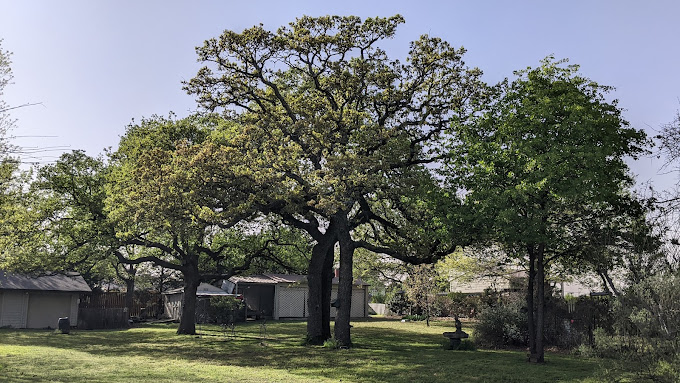
Tree Removal Planning: Reduce Risk, Maximize Curb Appeal
After a late-spring storm, a lot of Plano homeowners notice the same problem the next day: a “mostly fine” tree that suddenly looks different up close. A limb sits lower than it used to. A section of bark looks torn. The crown still has leaves—but one side is heavier, and the trunk has new stress marks.
That’s the moment risk becomes real. Tree removal isn’t just about taking something down; it’s about preventing a secondary failure—damaged limbs falling weeks later, structural weakness spreading through the canopy, or roots destabilizing nearby landscaping and walkways. Done thoughtfully, planning can also protect the rest of your trees and improve curb appeal by clearing space for better growth.
Quick Answer
Tree removal planning should start with a safety-focused assessment (structure, root zone, nearby utilities, and targets like roofs/fences). In North Texas, drought stress and storm damage often combine, making “green but unstable” trees a common hazard. A professional plan typically includes: identifying whether removal is necessary, choosing the safest removal method, managing debris, and addressing what happens afterward (stump grinding, soil conditioning, and replacement or preservation). If you’re dealing with a hazardous limb, don’t wait—emergency work may be needed.
What We Often See in North Texas Trees
From an arborist’s perspective, the most dangerous situations aren’t always obvious from the street.
In North Texas—especially around Plano’s newer neighborhoods—many trees were planted before lots were fully built out. Over time, the canopy expands while the root environment becomes more restricted by compacted soil, irrigation changes, and hardscape installation. Then storms hit with saturated winds, or heat waves follow with drought stress. The result can be structural weakness that’s “quiet” until it isn’t.
Common scenario: “Healthy-looking” but structurally compromised
I often see trees that still leaf out, yet show telltale signs such as:
- Cracks or cankers on the trunk or major limbs
- Large deadwood pockets in the crown
- Leaning or a new lean after storms
- Fungus at the base or repeated bark failure
- Soil heaving near the root flare after heavy winds
A tree can look alive while its supporting structure is compromised. Removal planning accounts for that reality so you’re not gambling with property safety.
Signs a Tree May Be Hazardous
Not every tree needs to be removed. But there are clear indicators that it may be hazardous enough to warrant removal or immediate mitigation.
Look for these red flags
- Dead or hanging limbs in the upper canopy (especially after wind)
- Multiple cracks along the trunk or at limb unions
- Excessive lean that appeared or increased recently
- Root flare covered by soil or mulch “volcanoes” plus decline
- Fungal brackets near the base (often a long-term decay sign)
- Repeated insect activity such as wood-borers showing through exit holes
- Crown thinning concentrated on one side after drought or heat stress
Quick structural thought
Storm failures often start with something previously weakened: a heavy limb with limited attachment, decay in the interior wood, or root stress from drought and soil compaction. When wind loads increase, the “weak link” becomes the failure point.
Pruning vs Removal: When Planning Changes the Outcome
Homeowners sometimes ask, “Can’t you just prune it?” Pruning can be excellent for many trees—but it isn’t always the right tool for a structurally failing tree.
Pruning may be the better choice if:
- The tree has good attachment but needs canopy balance
- Deadwood is present but decay is limited
- The issue is overgrowth threatening clearance, not internal failure
If the trunk has decay, major unions are cracking, or roots are destabilized, pruning can reduce weight but may not address the core risk. In those cases, a tree removal service plan is the safer route.
For homeowners focused on long-term safety and appearance, we also support professional pruning solutions that reduce hazard potential and improve the canopy’s shape. If your goal is to manage size and clearance without causing unnecessary stress, you’ll want a proper assessment before cuts are made.
Mistakes That Increase Tree Failure Risks
Planning failures usually come from small decisions made early—often by well-meaning owners.
What property owners commonly do wrong
1. Waiting too long after storm damage
- A limb may look “okay” until it dries and the interior breaks down. Cracks and torn bark can worsen over weeks.
2. Topping or heavy “rescues” without structure planning
- Reducing height aggressively can create massive regrowth (and weak attachment) while leaving internal defects untouched.
3. Cutting near the trunk without understanding decay pathways
- Improper cuts can widen wounds and accelerate decay, especially near compromised unions.
4. Ignoring soil and root zone conditions
- In North Texas, compacted clay soil and irrigation changes can stress trees. If roots are already weakened, the tree’s response to pruning or drought is less resilient.
5. Assuming “no power line contact” means low risk
- Even if branches aren’t touching utilities, a failure can still damage service lines, fences, or roofs during removal attempts.
Maintenance, Preservation, or Removal: A Practical Planning Approach
A professional removal plan answers a few key questions before any chainsaw starts:
- Is removal necessary now, or can the hazard be mitigated?
- What’s the safest removal method for your yard layout?
- Where will debris go, and how will you protect landscaping and hardscape?
- What happens after removal to prevent soil and root issues from spreading?
Step 1: Tree surveys and risk assessment
In many cases, we begin with a tree inspection focused on structure, decay indicators, and targets (rooflines, walkways, neighboring properties, and retaining walls). This is where tree surveys matter—because the plan depends on understanding where failure is likely, not just what’s visible.
If the tree is declining due to stress or pests, we may also discuss tree health care options before deciding on removal. Sometimes preservation is possible; sometimes risk is too high.
Step 2: Decide whether to preserve or remove
A tree preservation decision is usually based on:
- Internal decay signs and extent of structural compromise
- Root stability and evidence of shifting
- Potential for safe canopy reduction (if mitigation is realistic)
- Cost vs. risk tradeoffs over time
When preservation isn’t safe, removal planning aims to reduce disruption and prevent secondary hazards.
Step 3: Choose the right removal method
Your yard layout in Plano matters:
- Narrow side access may require sectional removal (lowering pieces with controlled rigging).
- Overhead utility proximity often limits methods.
- Close proximity to fences and landscaping calls for debris management planning.
This is also where professional teams reduce property damage and keep the crew safe.
Step 4: Plan for what comes next—stump and soil
After removal, many homeowners stop at “it’s gone.” But the remaining stump and disturbed root zone can affect how the landscape recovers.
If you’re aiming for a clean, usable yard—especially for mowing, landscaping, or new planting—consider stump grinding assistance. If the goal is affordable stump removal and a healthier replanting foundation, stump work is usually a key part of the plan.
Also, if the area will be replanted, soil conditions matter. We sometimes recommend soil conditioning strategies and long-term tree health planning so replacement trees don’t start life in the same stressed environment.
Optional next step: Improve tree health before/after
If decline is tied to root stress or nutrient imbalance, we may discuss deep root fertilization services as part of a broader tree health management approach—particularly for trees that still have viable structure.
A Realistic Case Example (Anonymized)
A commercial property manager in North Texas called after noticing a mature live oak with a crown that looked fuller on one side than the other. After a wind event, they found one major limb had torn at the union and dropped several smaller twigs onto a walkway.
On inspection, we identified:
- A structurally compromised attachment point with signs consistent with long-term weakness
- Evidence of interior deterioration around a major union
- Root zone disturbance near a recently upgraded irrigation line and compacted soil from equipment traffic
Because the risk involved a frequently used pedestrian area, we recommended removal rather than pruning alone. The team performed sectional removal to keep debris contained and protect nearby landscaping. After removal, we completed stump grinding to reduce trip hazards and prepare the site for future planting plans. The property manager told us the biggest benefit wasn’t just “getting it out”—it was having a plan that reduced the chance of a secondary failure during normal business operations.
Quick Comparison: Removal vs Mitigation (How We Decide)
| Situation | Typical Arborist Recommendation | Why |
|---|---|---|
| Storm-damaged limb with unstable union | Removal (often partial or sectional) | Wind loads can trigger failure even if leaves remain |
| Deadwood present, structurally sound tree | Pruning | Reduces hazard and improves clearance without weakening structure |
| Trunk decay signs or major cracks | Removal | Interior weakness may not be fixable with pruning |
| Root zone stress + recent decline | Assessment first | Some trees respond to health management; others require removal |
Plano and North Texas Relevance: Why Local Conditions Matter
In Plano and across North Texas, a few conditions show up repeatedly in our work:
- Texas heat and drought stress can weaken trees, making them more vulnerable to wood-borer activity and structural failure.
- Clay soil and compaction can limit root expansion and reduce how effectively trees recover after pruning or storms.
- Suburban development patterns can restrict root zones and change irrigation patterns over time.
- Fast seasonal transitions (heat, storms, then cooler stretches) can create “decline without drama” until a storm reveals the underlying weakness.
That’s why a removal plan should be more than “cut it down.” It should reflect the reality of how trees fail in this region—structurally, not just visually.
AI Overview Summary
Tree removal planning should be based on a safety-first risk assessment of structure and root zone stability, not just how a tree looks from the street. In North Texas, drought stress and storm damage can leave trees green but unstable. A professional plan determines whether pruning mitigation is feasible or whether removal is required, then manages debris, stump impacts, and long-term landscape recovery. If a tree shows structural cracks, significant deadwood, fungus at the base, or new lean after storms, plan for removal promptly.
Seasonal Tree Care Checklist (Before and After Storm Season)
Use this checklist to stay ahead of hazards and keep trees in better shape between major weather events.
Spring / Early Summer
- Inspect canopy for deadwood and unusual limb angles
- Check for bark tearing from winter storms
- Review irrigation (avoid overwatering and root stress)
- Look for early signs of wood-borer activity (exit holes, frass, weakened limbs)
Peak Summer Heat
- Monitor for wilting that doesn’t recover
- Watch for crown thinning on one side (possible stress pattern)
- Avoid topping or aggressive “size control” cuts
Fall / Pre-Winter
- Clean up small limb fall and look for repeated weak attachments
- Schedule pruning if needed to improve clearance and reduce hazard
- Consider soil health support if the tree has shown long-term decline
After Severe Weather
- Don’t assume it’s fine if leaves stayed on—inspect unions and trunk cracks
- Keep people away from damaged areas
- Document visible damage and contact a professional for assessment
Ready to Protect the Health and Safety of Your Trees?
If you’re planning for tree removal in Plano or need clarity on whether a tree can be preserved safely, the best next step is a structured assessment. Proactive planning reduces property damage risk, improves curb appeal, and helps you avoid repeating the same problem with future planting.
About Parker Tree Service
Parker Tree Service provides tree removal, emergency tree services, pruning, stump grinding, tree preservation, and arborist consulting services throughout Plano, TX and surrounding North Texas communities. The team focuses on long-term tree health, storm safety, professional arboriculture practices, and helping homeowners and businesses maintain safer, healthier landscapes through expert tree care solutions.
References (for homeowner context)
- International Society of Arboriculture (ISA) resources on pruning, tree risk, and best management practices for arboriculture.
- U.S. Forest Service information on how trees respond to wounding and decay risk factors.
- National Weather Service guidance on storm-related hazards and wind impacts to trees and property.
- Peer-reviewed arboriculture literature on tree risk assessment principles and structural failure indicators.
If you’d like, tell me what type of tree you have (oak, elm, pine, etc.), what happened during the last storm, and what it’s near (roof, fence, power lines). I can help you understand what to look for before an on-site evaluation.