
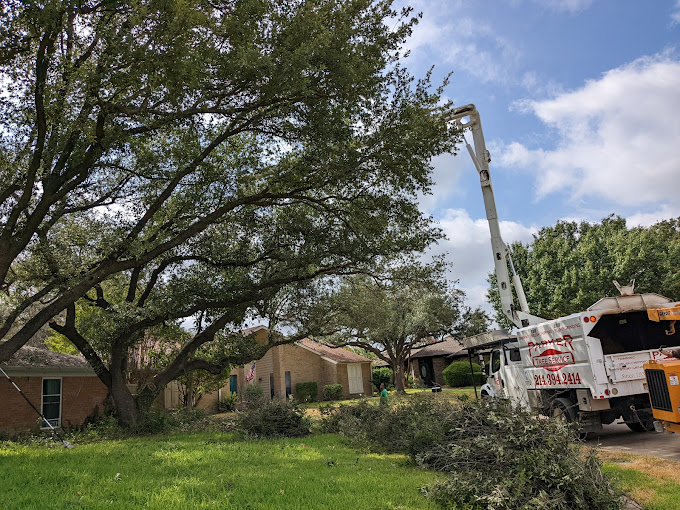
Comprehensive Tree Service for Residential Needs
Storms roll through Plano fast. One hour your trees are providing cool shade over the patio, and the next you’re wondering if that leaning oak is about to come down on the roof. Between North Texas heat, clay soil, and sudden windstorms, your landscape trees work hard—and they need the right care to stay safe, healthy, and beautiful.
For Plano homeowners, trees aren’t just decoration. They add curb appeal, lower energy bills, and boost property value. Studies show mature trees can increase residential property values by 7–19%, and strategic shade trees can cut cooling costs by up to 25%. But neglected or unsafe trees can have the opposite effect—causing costly damage or becoming a real hazard.
This guide walks you through what a truly comprehensive residential tree service looks like. You’ll learn how professional pruning, safe removal, stump grinding, and deep-root fertilization work together to protect your home, your family, and your investment—specifically in Plano’s unique climate and soil conditions.
Key Insight: Healthy, well-managed trees don’t happen by accident. They’re the result of consistent, professional care tailored to your property, your goals, and North Texas conditions.
Beyond “Just Cutting”: What Comprehensive Residential Tree Care Really Means
Most homeowners call a tree company when something is obviously wrong—a broken branch, a dead tree, or a post-storm emergency. But comprehensive tree care is about much more than reacting to problems. It’s a long-term plan for the health, safety, and appearance of every tree on your property.
A true residential tree care program typically includes:
- Regular inspections and Tree Maintenance Services
- Structural and safety pruning
- Hazardous Tree Removal when needed
- Stump Grinding and site cleanup
- Soil conditioning and Tree Fertilization Service
- Tree disease and pest diagnosis and treatment
- Storm preparation and Emergency Tree Service
In Plano, many neighborhoods have a mix of older oaks, pecans, crepe myrtles, and newer ornamental plantings. Each species has different needs. For instance, live oaks benefit from careful structural pruning when young, while mature pecans may require Tree Cabling and Bracing to reduce limb failure risk over driveways or roofs.
A recent example: a homeowner near Legacy West called because a limb had dropped from a mature red oak, narrowly missing their car. A full inspection revealed multiple weak branch unions and decay in the upper canopy. Rather than just removing the one problem limb, a comprehensive approach included:
- Full canopy assessment
- Selective Tree Crown Thinning to reduce weight
- Removal of dead and crossing branches
- A follow-up plan for monitoring decay
“Quick fixes often ignore the real issue: tree structure and long-term stability.” — ISA Certified Arborist
Pruning and Trimming: Shaping Safer, Healthier Trees in Plano Yards
Thoughtful Tree Pruning is one of the most powerful tools to keep your trees healthy and your property safe. Done right, it improves structure, reduces storm damage risk, and enhances your home’s appearance. Done wrong, it can stress trees, invite disease, and create hazards.
Why professional pruning matters
Plano’s frequent wind events and occasional ice storms reveal weak branches fast. Professional Tree Trimming focuses on:
- Removing dead, diseased, or rubbing branches
- Improving branch structure and spacing
- Lifting low limbs over sidewalks, driveways, and roofs
- Reducing wind resistance through strategic Tree Crown Reduction and thinning
A homeowner in West Plano had a large live oak with heavy, low limbs scraping their roof and blocking driveway access. They’d considered topping the tree (cutting it straight across), but topping is one of the most damaging things you can do. Instead, a proper Tree Pruning Service:
- Selectively reduced limb weight
- Lifted the canopy to improve clearance
- Preserved the tree’s natural form
- Reduced risk of limb failure in high winds
“Good pruning looks almost invisible. The tree simply looks healthier, lighter, and more balanced.” — Parker Tree Service Arborist
Traditional vs. professional pruning approaches
| Approach | Typical Result | Long-Term Impact in Plano Climate |
|---|---|---|
| Homeowner DIY with saw/lopper | Random cuts, stubs, torn bark | Higher disease risk, weak regrowth |
| Topping / lion-tailing | Sparse canopy, sunburned bark | Stress, decay, shorter tree lifespan |
| Certified arborist pruning | Clean cuts, strong structure, natural form | Better storm performance, healthier growth |
Safe Tree Removal: Knowing When a Tree Has to Go
Not every tree can or should be saved. Sometimes the safest, most responsible choice is professional Tree Removal, especially when a tree is dead, severely diseased, or structurally unsound near your home.
Signs a tree may need to be removed
In Plano’s clay soil and storm-prone environment, watch for:
- Significant lean that’s worsened over time
- Large dead sections or canopy dieback
- Cracks in the trunk or major limbs
- Fungal growth at the base or visible root damage
- Soil heaving around the base after heavy rain
One homeowner near Oak Point Park noticed a large post oak starting to lean after a spring storm. At first glance it looked fine, but a closer inspection by an arborist showed:
- Compromised root system on one side
- Soil upheaval and voids beneath the lawn
- Cracks forming at the base of the trunk
In this case, Dead Tree Removal wasn’t the issue—the tree was still alive. But it was classified as Hazardous Tree Removal due to the risk to the home and neighboring property. A crane-assisted Tree Removal Service brought it down in controlled sections, protecting the roof, fence, and landscape.
Planned removal vs. emergency removal
| Type of Removal | When It Happens | Cost & Risk Level in Plano |
|---|---|---|
| Planned Tree Removal | Scheduled, non-urgent | Lower cost, safer, more options |
| Emergency Tree Removal | After storm, tree has failed or is about to fail | Higher cost, time-sensitive, more complex |
“Removing a hazardous tree before it fails is almost always cheaper—and far safer—than dealing with it after a storm.” — Parker Tree Service
Stump Grinding and Site Restoration: Finishing the Job Properly
After a tree comes down, the work isn’t really finished until the stump is addressed. Leftover stumps can:
- Attract pests like termites and carpenter ants
- Harbor fungi that may spread to nearby trees
- Create trip hazards for kids and guests
- Make mowing and landscaping difficult
That’s where a professional Stump Grinding Service comes in.
Why stump grinding is usually the best option
In Plano’s smaller residential lots, space is at a premium. Digging out a stump and root ball can tear up irrigation lines, flower beds, and lawn. Grinding is:
- Less invasive
- Faster (often under an hour per stump)
- Easier to restore with soil and sod or new plantings
A family near Preston Road had removed two aging Bradford pears that were constantly splitting. The stumps sat for months, sprouting suckers and attracting insects. When they finally scheduled Affordable Stump Removal, the crew:
- Ground both stumps below grade
- Removed grindings and backfilled with soil
- Prepared the area for new, better-suited shade trees
“Stump grinding is like closing the chapter properly—so you can replant or reclaim the space without future problems.” — Parker Tree Service Technician
Stump grinding vs. leaving the stump
| Option | Short-Term Impact | Long-Term Impact in Plano Yards |
|---|---|---|
| Leave stump in place | Cheaper now, visible eyesore | Pest risk, decay, mowing obstacles |
| DIY chemical rotting | Slow, inconsistent results | May take years, still leaves void |
| Professional Stump Removal | Clean, fast, minimal disruption | Ready for new landscaping or trees |
Tree Health Care: Fertilization, Soil Conditioning, and Pest Management
Healthy trees start underground. In much of Plano, heavy clay soil, construction compaction, and limited root space make life hard for roots. That’s why Tree Health Care and Soil Conditioning are key parts of comprehensive service.
Deep root fertilization and soil care
Traditional “throw some fertilizer on the lawn” doesn’t do much for trees. A targeted Deep Root Fertilization program:
- Delivers nutrients directly into the root zone
- Improves soil structure and aeration
- Helps trees cope with drought, heat, and urban stress
One Plano homeowner near the Dallas North Tollway had several declining red oaks with thinning canopies and early leaf drop. A Certified Arborist inspection found:
- Compacted soil from years of construction traffic
- Limited organic matter
- Iron chlorosis symptoms in the leaves
A combination of Tree Root Care, deep root fertilization, and mulch application led to noticeable canopy improvement over the next two growing seasons.
Pest and disease management
North Texas trees face a variety of insect and disease pressures, including:
- Webworms on pecans and oaks
- Wood borers in stressed trees
- Fungal leaf spots and cankers
Professional Tree Insect Treatment and Tree Disease Treatment may include:
- Targeted Webworms Treatment
- Systemic Tree Pest Control injections
- Wood Borer Treatment and ongoing Tree Borer Control
- Sanitation pruning of infected limbs
“Most serious pest and disease issues start with stress. Healthy trees in healthy soil are your best defense.” — ISA Certified Arborist
Storm Preparation and Emergency Response for Plano Homeowners
Between spring thunderstorms and occasional winter ice, Plano homeowners know how quickly weather can change. A big part of comprehensive tree service is preparing trees for storms—and being ready to respond when something goes wrong.
Storm risk assessment and mitigation
A professional Tree Risk Assessment looks at:
- Branch structure and weight distribution
- Proximity to homes, driveways, and power lines
- Root stability and soil conditions
- History of past limb failures
In one east Plano neighborhood, a homeowner with several large elms had already experienced one limb failure over their driveway. Before the next storm season, they requested a full assessment. The arborist recommended:
- Strategic Tree Crown Thinning to reduce wind sail
- Removing a few high-risk limbs over the roof
- Installing Tree Cabling and Bracing in a key junction
That combination greatly reduced the chance of storm damage and extended the life of otherwise valuable shade trees.
When you need emergency tree service
Sometimes, even well-maintained trees fail. That’s when a 24/7 Emergency Tree Removal team makes a huge difference.
Typical emergency calls in Plano include:
- Fallen tree on a roof or vehicle
- Large broken limbs hanging over walkways
- Uprooted trees leaning on structures
- Storm-damaged trees blocking driveways or streets
With professional Storm Damage Tree Service, the crew:
- Secures the site to protect people and property
- Removes hazardous limbs or trees in sections
- Coordinates with utilities if power lines are involved
- Helps document damage for insurance if needed
“Speed matters in an emergency, but so does experience. Poorly handled emergency work can create more damage than the storm did.” — Parker Tree Service Crew Leader
What This Means for Homeowners in Plano, TX
Plano’s tree canopy is a big part of what makes neighborhoods here feel established, shaded, and welcoming. From older areas near Downtown Plano to newer developments around Legacy, trees are central to curb appeal and quality of life.
But our local conditions—expansive clay soils, intense summer heat, and sudden storms—create unique challenges:
- Trees planted too deep or in compacted soil struggle without Tree Root Care and Soil Conditioning.
- Fast-growing, weak-wooded species are more prone to storm damage without regular Tree Trimming Services Near Me.
- Construction and renovation projects can damage roots, requiring Tree Preservation Services and Tree Mitigation plans.
A comprehensive approach to tree care helps you:
- Protect your home from falling limbs and failing trees
- Increase property value with healthy, well-shaped trees
- Reduce long-term costs by catching problems early
- Create safer, more enjoyable outdoor spaces for your family
Whether you’re dealing with a single problematic tree or managing a lot full of mature oaks, having a reliable partner for Residential Tree Service in Plano means you’re not guessing. You’re making informed decisions based on expert assessment and industry best practices.
And if you also own or manage local commercial property, the same principles apply. Proactive Commercial Tree Service, Tree Surveys, and Tree Consultation help protect buildings, signage, and parking areas—and send the right message to customers and tenants.
Frequently Asked Questions
Q: How often should I have my trees pruned in Plano’s climate?
A: Most established shade trees in Plano benefit from professional Tree Pruning every 3–5 years, but the exact interval depends on species, age, and location. Fast-growing trees or those overhanging roofs, driveways, or play areas may need more frequent attention. Young trees often need structural pruning in the first 5–10 years to prevent future problems. A Certified Arborist Near Me can recommend a schedule after a Tree Inspection, focusing on safety, health, and appearance rather than an arbitrary calendar date.
Q: What’s the difference between a tree service and a Certified Arborist?
A: Any company with a chainsaw can call itself a Tree Service, but a Certified Arborist has passed rigorous exams and maintains ongoing education in tree biology, safety, and best practices. When you search “ISA Arborist Near Me,” you’re looking for someone qualified to diagnose problems, design Tree Health Care plans, and balance preservation with safety. In Plano, that expertise is especially important for issues like Tree Disease Treatment, Tree Mitigation for development, and long-term planning for mature oaks and pecans.
Q: How do I know if a tree needs to be removed or can be saved?
A: It often takes a trained eye to decide between Tree Trimming and Tree Removal. Signs favoring removal include extensive decay, large dead sections, severe lean, major root damage, or repeated failures. However, some trees that look bad can be stabilized with Tree Cabling and Bracing, corrective pruning, or Tree Fertilization Service. A formal Tree Risk Assessment from an arborist weighs the likelihood of failure and the potential targets (home, cars, neighbors) to help you make an informed decision about Dead Tree Removal or Hazardous Tree Removal.
Q: Are emergency tree services more expensive than regular work?
A: Yes, Emergency Tree Removal usually costs more than scheduled work. Crews may be called out at night or during storms, and the work is often more complex due to unstable trees, damaged structures, or downed power lines. That said, addressing risk early with regular Tree Maintenance Services and Tree Risk Assessment can reduce the chance you’ll ever need urgent Fallen Tree Removal. When you do need Emergency Tree Service, choosing an experienced, insured provider in Plano can prevent additional damage and safety issues.
Q: Can you plant new trees where old ones were removed?
A: In many cases, yes—but it should be done thoughtfully. After Stump Removal, the soil may be full of old roots and wood chips, which can decompose and cause settling. A professional Stump Grinding Service will typically remove grindings and backfill with quality soil, creating a better environment for Tree Planting. In Plano’s clay soils, species selection and proper planting depth are critical. A Tree Consultation can help you choose the right tree for the right place, and even plan for future Tree Transplanting or Tree Preservation Services if you’re renovating.
Q: What pests and diseases should I watch for on my Plano trees?
A: Common local problems include webworms on pecans and oaks, borers on stressed trees, various fungal leaf spots, and root issues from poor drainage. Watch for thinning canopies, early leaf drop, unusual holes in bark, sawdust-like frass, or mushrooms at the base of trees. Early Tree Insect Treatment, targeted Webworms Treatment, and Wood Borers Treatment can often prevent minor issues from becoming lethal. Pairing pest control with Deep Root Fertilization and Soil Conditioning creates a holistic Tree Health Care plan that addresses the underlying stress, not just the symptoms.
Q: Do you offer both residential and commercial tree services in Plano?
A: Yes. While this guide focuses on Residential Tree Service, the same expertise applies to Commercial Tree Service, Lot Clearing, Brush Clearing, and Land Clearing for developments or renovations. For businesses and HOAs, services like Tree Surveys, Tree Risk Assessment, and Tree Preservation Services help with compliance, safety, and long-term planning. Whether you’re a homeowner managing a single mature oak or a property manager overseeing dozens of trees, working with a single trusted provider creates consistency and peace of mind.
Ready to Get Started?
Trees don’t show stress overnight. By the time you see big problems—large dead limbs, leaning trunks, or major dieback—the issue has often been building for years. Addressing your trees now, before the next major storm or heatwave, can prevent costly damage and protect the character of your property.
If you’ve been meaning to schedule Tree Trimming Near Me, get a suspicious tree checked, or finally take care of that old stump, this is the ideal time. A comprehensive assessment from Parker Tree Service in Plano gives you a clear picture of your trees’ condition, prioritized recommendations, and a plan that fits your budget.
Start with a visit and walkthrough of your property. From there, you can decide whether to tackle pruning, Tree Removal, Stump Grinding, or Tree Fertilization Service first—or schedule phased work over time.
You’ll gain safer outdoor spaces, healthier trees, and the peace of mind that comes with having a trusted local expert just a phone call away.
About Parker Tree Service
Parker Tree Service is a locally focused tree care company serving Plano, TX and surrounding communities. Our team includes ISA Certified Arborists and experienced crews who specialize in Arborist Services, Tree Care Services, and long-term Tree Maintenance Services for residential and commercial properties. From precision pruning and Tree Preservation Services to safe removals and emergency response, we’re committed to protecting both your trees and your home.