
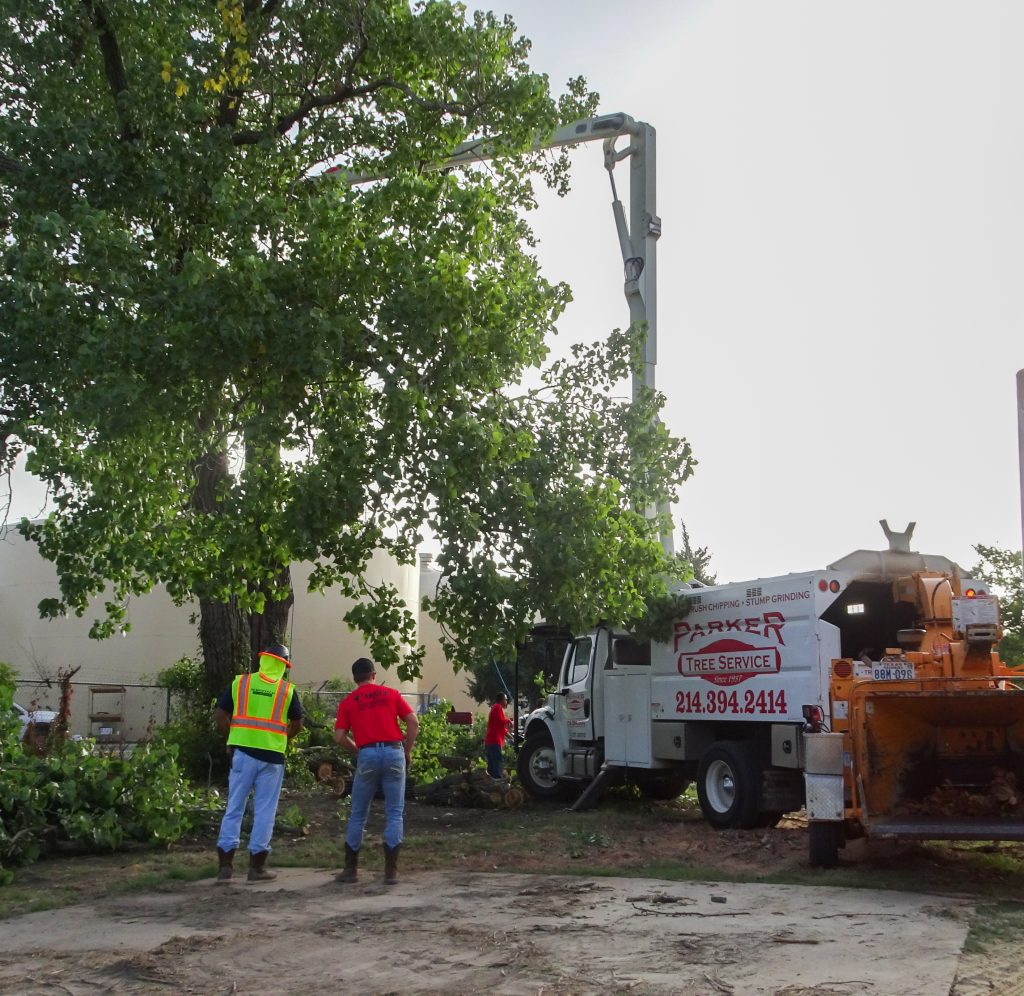
Most homeowners in Plano don’t actually have a “tree problem” – they have a pruning problem. Trees that look too big, unsafe, messy, or “past saving” are often just poorly pruned, or not pruned at all. People either ignore their trees for years and hope for the best, or they go to the opposite extreme and hack off random branches with no plan, leaving trees stressed, lopsided, and vulnerable. The result is a yard that never quite looks finished, shade that doesn’t fall where you want it, and trees that struggle instead of thriving.
Expert tree pruning is not about taking as much off as possible; it’s about knowing exactly what to leave. When pruning is done correctly, your trees become natural design elements that frame your home, highlight your landscaping, and create comfortable outdoor spaces you actually want to spend time in. The difference between a yard with neglected trees and a yard with professionally pruned trees is dramatic: cleaner sightlines, healthier canopies, more sunlight where you need it, and a sense of intentional design instead of overgrowth. In Plano’s climate, where storms, heat, and clay soils can already stress trees, expert pruning is one of the most powerful tools you have to enhance both beauty and safety.
Parker Tree Service has spent years working with homeowners in Plano, TX who thought they needed to cut trees down, only to discover that precise, thoughtful pruning completely transformed their yards. By reshaping canopies, removing hazardous limbs, and guiding growth, expert arborists can make your existing trees work for you instead of against you. If your yard feels dark, cluttered, or unsafe, it may not be a landscaping issue at all – it may simply be that your trees are overdue for the kind of professional pruning that brings out their best.
Why Pruning Changes Everything
When people think about improving their yard, they usually start with grass, flowers, or mulch. Trees are often treated as a fixed backdrop: “That’s just how they are.” But trees are actually the largest, most influential design element on your property, and pruning is the steering wheel that directs how they grow. Proper pruning can open up a view to the street, bring more natural light into your living room, or create a shaded retreat over a patio – all without new construction or major landscaping changes. In many Plano neighborhoods, a single well-pruned oak or pecan can redefine the entire feel of a front yard.
From a health standpoint, pruning is like preventive medicine for your trees. By removing dead, diseased, rubbing, or weakly attached branches, you reduce the risk of limb failure during storms and help the tree channel its energy into stronger, healthier growth. In North Texas, where sudden storms and high winds are common, structurally sound trees are not a luxury; they are a safety essential. Parker Tree Service technicians know how to identify structural defects that most homeowners never notice until a limb breaks.
Pruning also changes the way your entire landscape functions. Thinning the canopy can improve air circulation, which helps reduce fungal problems and pest issues. Allowing more filtered light to reach the ground can revive struggling turf or allow you to plant more diverse shrubs and perennials. Instead of fighting shade and overgrowth, you start to work with the natural architecture of your trees. Done correctly, pruning becomes a way to design microclimates in your yard: cooler spots for seating, sunnier pockets for gardens, and safer, more open play areas for kids.
Key Benefits For Plano Homeowners
In Plano, TX, many residential lots are not huge, which means every square foot of yard space matters. Overgrown or badly shaped trees can make a yard feel cramped and dark, even when there is technically plenty of room. Expert pruning can lift low-hanging branches over driveways and sidewalks, reclaim headroom over patios, and streamline the canopy so your outdoor spaces feel larger and more inviting. Instead of ducking under branches every time you mow or park, you get clean, comfortable clearance that respects how you actually use your property.
Safety is another major benefit that is easy to underestimate until something goes wrong. Heavy limbs hanging over roofs, fences, or play equipment may look stable, but internal decay or weak branch unions can make them a liability. Parker Tree Service crews are trained to spot these hazards early and remove or reduce them before they become emergencies. In storm-prone North Texas, proactive pruning can mean the difference between minor cleanup and expensive damage to shingles, vehicles, or windows.
There is also a clear financial upside. Healthy, well-shaped trees can significantly boost curb appeal and perceived property value. Prospective buyers notice a yard that feels bright, safe, and well maintained – and they also notice trees that look neglected or threatening. Regular expert pruning extends the lifespan of valuable shade trees, which would be costly and time-consuming to replace. Compared to the expense and disruption of major Tree removal, investing in professional pruning is often the more economical and environmentally responsible choice.
What Expert Pruning Actually Involves
Many people imagine pruning as simply “cutting branches off,” but professional tree pruning is more like surgery combined with long-term planning. The first step is an assessment: identifying the tree species, its age, its current structure, and any signs of stress or disease. Plano yards often feature live oaks, red oaks, elms, crape myrtles, and ornamental pears – each with different growth habits and ideal pruning approaches. Parker Tree Service arborists take all of this into account before making a single cut.
The next step is deciding what type of pruning is appropriate. Structural pruning focuses on developing a strong, stable framework, especially important for younger and mid-sized trees. Crown thinning removes select branches to reduce weight and wind resistance while allowing more light through. Crown raising lifts the canopy by removing lower limbs to improve clearance and views. Sometimes a combination of these techniques is used to achieve both aesthetic and safety goals. The decisions are deliberate, not random: every cut has a purpose.
Equally important is how the cuts are made. Proper pruning respects the tree’s natural defense systems by cutting at the right place, just outside the branch collar, and by avoiding unnecessary large wounds. Topping – the practice of cutting back all the main branches to the same height – is never a part of expert pruning, because it weakens trees, encourages unstable regrowth, and often leads to decay. Parker Tree Service follows industry standards that focus on long-term tree health, not quick cosmetic fixes that create problems down the road.
Seasonal Timing In North Texas
Plano’s climate has its own rhythm, and expert pruning works with that rhythm rather than against it. In general, the dormant season (late fall through winter) is ideal for many shade trees. With leaves off, arborists can clearly see the branch structure, and the trees experience less stress from pruning. Disease pressure is also lower in cooler months, which is especially important for oaks because of the risk of oak wilt. In many cases, Parker Tree Service will recommend scheduling major structural work for this time of year.
However, not all pruning can or should wait for winter. Light pruning, clearance adjustments, and removal of dead or dangerous limbs can be done year-round as needed, particularly when safety is involved. Storms don’t wait for the “right season,” and neither should corrective pruning for broken or hanging branches. In the heat of a Plano summer, careful thinning can also help reduce wind sail and allow more air flow through dense canopies, which can lower stress on the tree during extreme heat.
Flowering and ornamental trees may follow different timing rules. For example, many species that bloom in spring are best pruned shortly after flowering, so you don’t sacrifice next year’s buds. Crape myrtles, which are common in Plano, are often victims of severe, unnecessary topping each year, but proper timing and light shaping can keep them blooming beautifully without disfiguring their natural form. An expert will consider not only tree health, but also how pruning will affect flowering, shade patterns, and overall yard aesthetics across the seasons.
How Pruning Enhances Yard Design
Think of your trees as the ceiling and walls of your outdoor rooms. Pruning allows you to raise or lower that ceiling, open or close those walls, and decide how each space feels. In a Plano backyard, you might want a dense canopy over a sitting area for maximum afternoon shade, but a more open canopy near a garden bed to let in morning sun. By selectively removing or shortening certain limbs, Parker Tree Service can help shape these micro-environments so your yard matches how you live, not just how the trees happened to grow.
Pruning also improves visual flow and focal points. Strategic thinning can reveal attractive branch structure, frame views of your home’s architecture, or draw attention to a feature like a pergola or pool. Instead of a solid wall of foliage, you get layers of depth: glimpses of sky through branches, dappled light on the lawn, and cleaner lines around walkways and driveways. In front yards, lifting canopies can showcase your home’s facade and make entryways feel more open and welcoming.
Another design benefit is compatibility with other landscaping. Overgrown trees can smother shrubs, flowers, and even neighboring trees. By managing canopy size and density, you give other plants room to breathe and light to grow, allowing you to diversify your plantings. This can be especially important in Plano subdivisions where lots are close together and trees from one yard easily impact another. Well-pruned trees respect property lines, views, and shared spaces while still providing shade and privacy.
Why Professional Help Matters
Climbing a ladder with a chainsaw and guessing which branches to remove is not pruning; it is risk-taking. Beyond the obvious danger of falls and injuries, improper cuts can permanently damage trees or create future hazards. Removing too much foliage at once, leaving long stubs, or cutting in the wrong place can invite decay, sunscald, and weak regrowth that is more likely to break in storms. Many of the worst tree failures in Plano trace back to poor pruning choices made years earlier.
Professional arborists bring training, experience, and the right equipment to the job. They understand how different species respond to pruning, how weight is distributed in the canopy, and how each cut will affect the tree’s structure over time. Parker Tree Service teams use ropes, harnesses, and specialized tools to access branches safely and lower large limbs without damaging roofs, fences, or landscaping. This is especially important in tight suburban yards where there is little margin for error.
There is also a strategic advantage to having an ongoing relationship with a local tree service. Trees are long-lived organisms, and their needs change as they grow. A young tree may need structural training, while a mature tree may require periodic thinning and risk reduction. By working with professionals who know Plano’s soils, weather patterns, and common tree issues, you get pruning that fits into a long-term plan rather than one-off cuts. That continuity helps your yard evolve gracefully instead of lurching from overgrown to overcut and back again.
Frequently Asked Questions
How often should my trees be pruned in Plano, TX? Most mature shade trees in Plano benefit from professional pruning every 3 to 5 years, depending on species, growth rate, and site conditions. Fast-growing or structurally weak trees may need attention more frequently, while slower-growing specimens might go longer between visits. Younger trees often need more frequent but lighter pruning to establish a strong framework. An on-site evaluation from Parker Tree Service can help set an appropriate schedule for each tree instead of using a one-size-fits-all timeline.
Will pruning make my trees weaker or more likely to fall? When done correctly, pruning actually makes trees safer and more resilient. The goal is not to strip away foliage, but to remove dead, diseased, poorly attached, or excess branches that create unnecessary weight and wind resistance. Proper cuts encourage strong, well-spaced limbs and reduce the chance of breakage during storms. Problems arise when trees are over-pruned, topped, or cut incorrectly; that kind of damage can weaken a tree. Professional pruning by Parker Tree Service focuses on structural integrity and long-term health, not just short-term appearance.
Can I prune my own trees, or should I always hire a professional? Homeowners can safely handle very minor tasks, such as removing small, low branches with hand pruners or loppers, provided they know where to cut and avoid damaging the branch collar. However, anything involving ladders, power tools, or branches larger than a few inches in diameter is best left to professionals. The risks of injury, property damage, and long-term harm to the tree increase rapidly with size and height. In many cases, what looks like a simple cut can have serious structural consequences, so it is wise to let experienced arborists handle the more significant work.
Is there a best time of year to prune my trees in North Texas? For many large shade trees, late fall through winter is ideal because the trees are less active, disease pressure is lower, and the branch structure is easier to see. This is particularly important for oaks, which should be pruned during cooler months to minimize the risk of oak wilt. That said, dead, damaged, or hazardous limbs should be addressed promptly regardless of season, especially after storms. Light pruning and clearance adjustments can also be done throughout the year. Parker Tree Service can recommend timing based on your specific tree species and objectives.
What signs indicate that my trees need professional pruning? Common indicators include low branches hitting vehicles or blocking sidewalks, dense canopies with little light penetration, crossing or rubbing limbs, deadwood in the upper canopy, and branches hanging over roofs or power lines. You might also notice fungus on branches, cracks where limbs meet the trunk, or sudden changes in leaf density. If your yard feels darker, more cluttered, or less safe than it used to, it is often a sign that your trees have outgrown their current shape. A professional inspection from Parker Tree Service in Plano can quickly determine what kind of pruning, if any, is needed to restore health, safety, and beauty.