
Researchers have found that a properly pruned tree can live up to 20% longer and withstand storms significantly better than an unmaintained one. Yet many property owners still think pruning is just about cutting off a few branches that look messy. In reality, mastering tree pruning for optimal growth is more like practicing careful surgery than casual yard work, and the difference shows in the health, safety, and beauty of your landscape.
When pruning is done correctly, a tree responds by directing energy into strong, balanced growth, better flowering, and improved resistance to pests and disease. When it is done poorly, the same tree can become weak, stressed, and hazardous, even if it looks “cleaned up” on the surface. That is why professional guidance is so important, especially in a place like Plano, TX, where our heat, storms, and clay soils already challenge trees. Parker Tree Service focuses on pruning as a long-term investment, not just a quick cosmetic fix.
Whether you have a single shade tree over your driveway or a yard full of oaks and ornamental trees, understanding the principles behind pruning will help you protect your property and get the most from your landscape. By learning what to cut, when to cut, and how much to cut, you can transform pruning from a risky guess into a confident, strategic practice that supports optimal growth year after year.
Why Pruning Matters
Pruning is not simply about appearance; it is about directing a tree’s limited resources. Every branch, leaf, and bud competes for sunlight, water, and nutrients. When Parker Tree Service prunes a tree in Plano, TX, the goal is to remove the parts that are weak, crowded, or hazardous so the remaining structure can thrive. This selective removal reduces stress on the tree, improves air circulation, and encourages stronger, more resilient branches.
In our local climate, where sudden storms and high winds are common, structure matters. Poorly pruned trees often develop long, heavy limbs with weak attachment points that become dangerous during severe weather. Correct structural pruning early in a tree’s life can prevent these problems by encouraging a strong central leader, balanced branch spacing, and proper angles of attachment. This pays off years later in fewer broken limbs and less emergency cleanup after storms.
Pruning also plays a direct role in disease prevention. Dead, crossing, or rubbing branches can trap moisture and create entry points for fungi and insects. By removing these problem areas, you reduce the chance of decay working its way into the main trunk. In Plano, where species like live oaks and red oaks are susceptible to specific diseases, careful pruning technique and timing can significantly reduce the risk of infections spreading through wounds.
Understanding Tree Biology
To master tree pruning, it helps to understand what happens inside the tree when a branch is cut. Trees do not “heal” the way humans do. Instead of repairing damaged tissue, they compartmentalize it. When Parker Tree Service removes a branch, the tree responds by forming a protective barrier around the wound, sealing off the injured area from decay organisms. The cleaner and more precise the cut, the more efficiently the tree can do this.
Each branch connects to the trunk or a larger limb at a specialized area called the branch collar. This swollen area contains important tissues that help the tree close over pruning wounds. Cutting into the branch collar or leaving a stub beyond it interferes with the tree’s natural defense system. That is why professional arborists are meticulous about cut placement; it is not just about neatness, but about biology and long-term health.
Energy distribution is another important biological concept. A tree’s canopy is essentially its solar panel system. If too much foliage is removed at once, the tree loses a large portion of its ability to photosynthesize and store energy. In Plano’s hot summers, this can be especially stressful. Correct pruning removes only a safe percentage of the live crown, preserving enough leaf area to keep the tree vigorous while still shaping and strengthening its structure.
Timing Pruning In Plano
Not all seasons are equal when it comes to pruning. In North Texas, timing can influence how well a tree responds and how vulnerable it is to pests and disease. Generally, late winter through early spring, before bud break, is ideal for many species because the tree is still dormant. Pruning then allows the tree to direct new growth in response to the cuts as soon as the growing season begins.
However, some trees in Plano, TX require more careful scheduling. For example, oaks should not be pruned during periods of high oak wilt activity, because fresh wounds can attract sap-feeding beetles that spread the disease. This is one of the reasons homeowners often rely on Parker Tree Service: knowing when not to prune can be just as important as knowing when to prune.
Summer pruning also has its place. Light pruning to remove dead, damaged, or hazardous branches can be done almost any time of year. In summer, you can also see the tree’s full leaf canopy, making it easier to identify crossing branches, dense interior growth, and areas that are shading roofs or structures too heavily. The key is to avoid heavy thinning during extreme heat or drought conditions, which can further stress the tree.
Essential Pruning Techniques
There are several core techniques used to shape and maintain trees, and understanding these can help you better communicate your goals with a professional service. One common approach is crown cleaning, which focuses on removing dead, diseased, or broken branches. This is the foundation of safe, healthy pruning and is often the first step Parker Tree Service takes when working on mature trees in Plano neighborhoods.
Crown thinning is another technique, used to selectively remove smaller branches within the canopy to reduce density. When done correctly, thinning allows more sunlight and air to move through the tree without changing its natural shape. This can be particularly useful for species prone to fungal problems, as improved airflow helps leaves and branches dry more quickly after rain or irrigation.
Crown raising and reduction are more structural techniques. Raising involves removing lower branches to provide clearance for sidewalks, driveways, and structures, while reduction carefully shortens the overall height or spread of the canopy. Reduction is not the same as topping, which is a harmful practice that leaves large, weak stubs. Proper reduction uses targeted cuts back to strong lateral branches, preserving the tree’s form and strength while addressing size or clearance concerns.
Common Mistakes To Avoid
Many tree problems in residential areas begin with well-intentioned but incorrect pruning. One of the most damaging mistakes is topping, where the upper portion of the tree is cut off to reduce height. This practice creates large wounds, weak regrowth, and structural instability. In Plano, topped trees are often the ones that fail first in storms, resulting in property damage and costly removals that could have been avoided with proper reduction techniques.
Another frequent issue is over-thinning the interior of the canopy. Some people believe that removing a large number of interior branches will “open up” the tree and let in more light. In reality, this can create a lopsided weight distribution, with most of the mass at the ends of long, slender limbs. Instead of improving safety, this makes branches more likely to break. Parker Tree Service focuses on balanced pruning that respects the tree’s natural architecture.
Improper cuts are also a problem. Leaving long stubs, cutting too close to the trunk, or tearing bark by not using proper three-cut methods can all interfere with the tree’s ability to compartmentalize wounds. Over time, these poor cuts become weak points where decay can enter. This is why professional pruning is about much more than just having a chainsaw; it requires training, experience, and an understanding of tree physiology.
Why Professional Help Matters
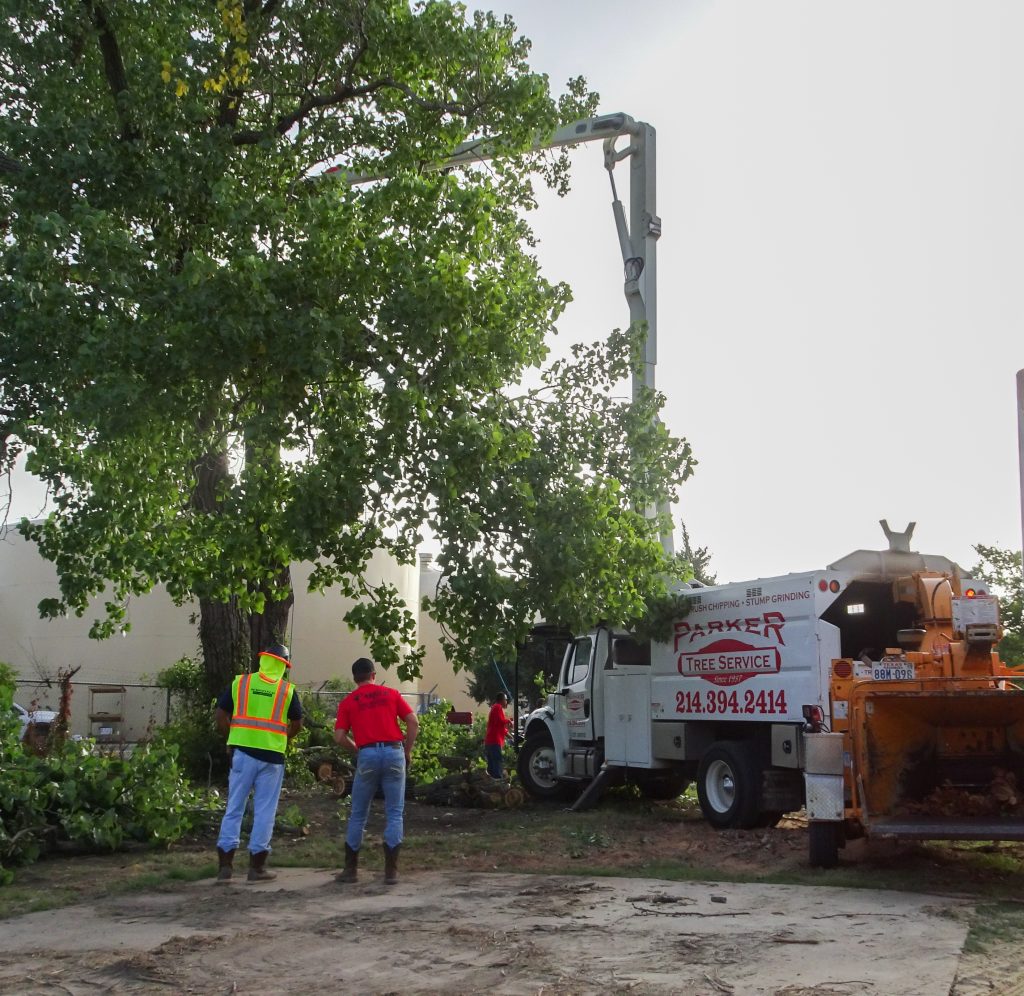
On the surface, pruning might look like a simple weekend project. But once you factor in tree biology, safety risks, local pest and disease pressures, and proper equipment, the value of professional expertise becomes clear. In Plano, TX, where many properties feature large shade trees close to homes, vehicles, and power lines, working at height with cutting tools is inherently risky. Parker Tree Service uses specialized gear, safety protocols, and trained crews to manage these risks effectively.
Professional arborists also bring a long-term perspective to each pruning decision. Instead of just reacting to what looks overgrown today, they consider how each cut will affect the tree in five, ten, or twenty years. This includes anticipating how branches will grow, how weight will be distributed, and how the tree will respond to our local climate extremes. That strategic outlook is what turns basic trimming into true pruning for optimal growth.
In addition, a reputable tree service can integrate pruning with other aspects of tree care such as soil management, pest monitoring, and structural assessments. A tree that is pruned correctly but growing in compacted, nutrient-poor soil may still struggle. By looking at the entire picture of tree health, professionals can recommend a plan that supports vigorous growth from roots to canopy. For property owners, this means fewer surprises, healthier trees, and a more attractive landscape over time.
For those who need detailed evaluation or planning before major work, services like Tree Surveys can help document tree conditions and guide pruning priorities, especially on larger properties or commercial sites.
Planning A Pruning Strategy
Effective pruning is not a one-time event; it is a cycle that follows the tree’s growth over its lifetime. Young trees require formative pruning to establish a strong structure. This might involve selecting a central leader, choosing well-spaced scaffold branches, and removing competing or weak limbs early. In Plano’s newer neighborhoods, this early attention can prevent many of the structural issues that commonly appear in mid-life trees.
Mature trees, on the other hand, benefit from periodic maintenance pruning. This includes removing deadwood, addressing minor structural concerns, and managing clearance around roofs, driveways, and sidewalks. The frequency of this maintenance depends on species, site conditions, and previous care, but many trees do well with a professional evaluation every few years. Parker Tree Service can help homeowners set up practical schedules that fit both the trees’ needs and the property owner’s budget.
It is also wise to incorporate pruning into broader risk management for your property. Trees near structures, play areas, or parking spaces should be inspected more frequently, especially after major storms. Identifying and correcting weak branch unions, cracks, or decayed limbs before they fail is far more cost-effective than dealing with emergency removals and repairs. A thoughtful pruning strategy turns your trees from potential liabilities into long-term assets.
Frequently Asked Questions
How often should my trees be pruned in Plano, TX? The ideal pruning interval depends on the tree’s age, species, and condition. Young, fast-growing trees may benefit from light structural pruning every 2–3 years to guide their form. Mature shade trees often do well with a professional inspection and maintenance pruning every 3–5 years, unless storm damage or disease creates a more urgent need. Parker Tree Service typically recommends starting with an assessment, then setting a customized schedule based on your specific trees and site conditions.
Is there a “best” time of year to prune trees here? For many species in Plano, late winter to early spring, while trees are still dormant, is a very good time to perform more extensive pruning. The tree experiences less stress, and new growth can quickly respond when the growing season starts. That said, dead, broken, or hazardous branches should be removed as soon as they are noticed, regardless of season. Some species, especially oaks, have specific timing considerations related to disease risk, so it is wise to consult a professional before scheduling major pruning.
What is the difference between pruning and topping? Pruning is a targeted, science-based process that removes specific branches to improve tree health, structure, and safety. Cuts are made back to natural branch unions, preserving the tree’s form and strength. Topping, by contrast, is the indiscriminate cutting of large branches or the top of the tree to reduce height. It leaves large wounds, encourages weak, fast-growing sprouts, and often leads to long-term structural problems and decay. Parker Tree Service does not recommend or practice topping, instead using proper reduction techniques when size management is necessary.
Can I safely prune my own trees, or should I always hire a professional? Homeowners can often handle very light pruning from the ground, such as removing small, low branches with hand tools. However, once ladders, chainsaws, or larger branches are involved, the risks increase quickly. Working at height around power lines, roofs, or fences is particularly dangerous without proper training and equipment. Additionally, incorrect cuts can permanently damage a tree. For most medium to large trees in Plano, TX, it is safer and more effective to hire a professional service like Parker Tree Service to ensure both your safety and the tree’s long-term health.
How can I tell if my tree needs professional pruning? Several visible signs suggest it is time for a professional evaluation. These include dead or hanging limbs, branches rubbing against your roof or siding, low limbs obstructing driveways or sidewalks, dense interior growth that blocks airflow and light, cracks or splits at branch unions, and visible decay or cavities. If you notice any of these issues, or if it has been several years since your last pruning, scheduling an assessment with a qualified tree service in Plano is a smart step toward protecting both your trees and your property.