
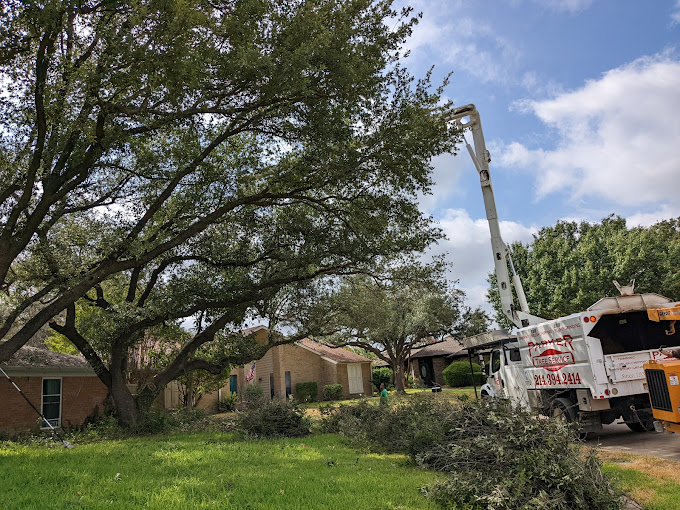
When a tree in your yard suddenly looks thin, lopsided, or crowded with dead branches, the problem usually started years earlier with poor or neglected pruning. The way a tree is pruned while it is young, and how it is maintained as it matures, directly shapes its strength, safety, and long-term health. In a fast-growing city like Plano, TX, where storms, heat, and development all stress trees, using the right pruning techniques is one of the most important things you can do to protect your landscape investment.
Tree pruning is not just about appearance or “neatening up” branches. Every cut changes how a tree moves water, nutrients, and energy. Correct cuts help trees close wounds quickly, resist pests and diseases, and grow with strong structure. Poor cuts, done at the wrong time or in the wrong place, can weaken a tree permanently. That is why homeowners in Plano increasingly turn to professionals like Parker Tree Service to guide pruning decisions, especially for large shade trees that anchor their yards and add value to their homes.
Understanding how pruning affects tree biology, and learning which techniques match each growth stage, can mean the difference between a resilient, storm-ready tree and a hazardous liability. Whether you have live oaks, red oaks, elms, pecans, or ornamental trees, the principles of healthy pruning remain the same, but the details matter. Below, we will break down practical, science-based pruning techniques that support healthy tree growth in our North Texas climate, and explain when it is wise to call in an experienced arborist.
How Pruning Supports Tree Health
Healthy pruning begins with understanding how trees naturally grow. Trees allocate energy to leaves, branches, roots, and trunk in a delicate balance. When you remove a branch, the tree responds by redirecting energy to remaining parts. Strategic pruning uses this response to encourage strong branch structure, better light penetration, and balanced growth. Rather than forcing a tree into an artificial shape, good pruning works with its natural form, enhancing what the tree is already trying to do.
In Plano, TX, trees face intense sun, clay soils, and periods of drought followed by heavy rains. These conditions can stress root systems and weaken branches, making them more prone to breakage. Pruning helps reduce that risk by eliminating weak, crossing, or overly heavy limbs. It also improves air circulation within the canopy, which reduces moisture buildup that can lead to fungal issues. By removing diseased or infested branches early, you prevent problems from spreading through the tree’s vascular system.
Another key health benefit of proper pruning is wound management. Every cut is a wound, and trees cannot “heal” in the way animals do. Instead, they compartmentalize damage, forming barriers around the wounded area. When Parker Tree Service prunes a tree, the goal is to make cuts that the tree can seal over efficiently, minimizing decay. This means cutting at the right place, at the right angle, and at the right time of year for each species. Done correctly, pruning actually extends a tree’s life; done poorly, it can shorten it dramatically.
Timing Pruning In North Texas
Even perfect technique can cause problems if the timing is wrong. In North Texas, the ideal pruning window depends on the species and the objective. For many shade trees, late winter through very early spring is often preferred, because trees are dormant and less vulnerable to insects and diseases. With no leaves in the way, arborists can also see the branch structure clearly and make more precise decisions. As the weather warms, trees quickly start compartmentalizing those cuts.
However, Plano homeowners must be particularly cautious with oak trees due to oak wilt concerns. For live oaks and red oaks, pruning should generally be limited to the coldest months (roughly mid-winter) when insect activity is low. Any cuts on oaks must be handled with extra care, including proper wound painting when recommended, to reduce the risk of disease transmission. This is one area where professional guidance from Parker Tree Service is especially important, because timing mistakes can be costly.
There are also situations where summer pruning is appropriate. Light thinning, removal of water sprouts, or addressing broken branches after a storm can be done in the growing season. Summer pruning can help slow overly vigorous growth and improve light penetration in dense canopies. The key is moderation: avoid heavy pruning during extreme heat or drought, because a stressed tree may not recover well. Understanding the seasonal growth cycles of your specific trees helps you choose pruning windows that support, rather than strain, their health.
Core Pruning Techniques Explained
Most healthy pruning work falls into a few core techniques: cleaning, thinning, raising, and reduction. Tree cleaning involves removing dead, dying, diseased, or broken branches. This is often the first step Parker Tree Service takes on a property in Plano, because it immediately improves safety and tree health. Dead wood can fall without warning, especially during our spring storms, and it also invites pests and decay fungi. Removing it allows the tree to focus resources on sound tissue.
Crown thinning is a more selective technique that focuses on removing interior branches to improve light and air movement. Unlike topping or random cutting, proper thinning targets small, competing branches while preserving the tree’s natural outline. This reduces wind resistance, lowers the risk of branch failure, and helps sunlight reach interior leaves and the ground below. For homeowners, it can mean a brighter, healthier lawn or garden under mature shade trees.
Crown raising removes lower branches to provide clearance for walkways, driveways, roofs, or views. In Plano neighborhoods, this is common over sidewalks and streets, where low limbs can interfere with vehicles or pedestrians. The key is not to remove too many lower branches at once, which can weaken the trunk and stress the tree. Finally, crown reduction is used to reduce the size of a tree’s canopy without topping. It involves cutting back to strong lateral branches that can take over as new leaders. This is more complex and is best left to professionals, because poor reduction cuts can seriously damage tree structure.
Proper Cuts And What To Avoid
Knowing where and how to cut is the heart of good pruning. Each branch connects to the trunk or a larger limb at a branch collar, a slightly swollen area with specialized tissue. Proper cuts are made just outside this collar, without cutting into it and without leaving a long stub. When done correctly, the tree can quickly form protective tissue over the wound. Parker Tree Service trains its crews to recognize these subtle structures on many species common in Plano, from crepe myrtles to oaks and elms.
One of the most damaging practices to avoid is topping, where the upper part of the tree is cut back to random stubs. Topping creates large, open wounds that decay easily, and forces the tree to produce weak, fast-growing shoots in response. These shoots are poorly attached and highly likely to break in storms. Topped trees often become more hazardous and unattractive, and they rarely regain their natural form. Instead of topping, proper reduction and structural pruning should be used when height or spread must be managed.
Another mistake is over-thinning, sometimes called “lion-tailing,” where too many inner branches are removed, leaving foliage only at the ends of long limbs. This shifts weight outward, increasing the risk of snapping, and exposes previously shaded bark and branches to sudden sun, which can cause sunscald. Balanced pruning preserves enough interior foliage to support the branch while still improving light and air flow. Correct tool use also matters: sharp, clean tools make smoother cuts that close more efficiently, while dull or dirty blades tear bark and can spread disease.
Structural Pruning For Young Trees
The best time to influence a tree’s long-term strength is in its early years. Structural pruning focuses on creating a strong, stable framework of branches that will support the canopy as the tree matures. For single-trunk shade trees, this usually means establishing one dominant central leader and well-spaced lateral branches. In Plano subdivisions where new trees are often planted close to houses or driveways, early structural work can prevent future conflicts and reduce the need for heavy pruning later.
During the first 5–10 years after planting, small, regular pruning adjustments can correct competing leaders, remove narrow crotch angles, and prevent branches from rubbing or crossing. Because the branches are smaller at this stage, cuts are less stressful and wounds close faster. Parker Tree Service often recommends a schedule of periodic inspections for newly planted or young trees to guide this process. It is much easier and safer to remove a small, poorly placed branch early than to cut a large limb over a roof decades later.
Structural pruning also takes into account the ultimate size and shape of the species. For example, live oaks naturally spread wide, so the goal is to establish a low, broad, strong framework without over-thinning. Upright species like cedar elms or red oaks may need more attention to prevent co-dominant stems, which are two or more leaders of similar size that join at a weak attachment. Correcting these issues early helps trees better withstand the strong winds and occasional ice events that Plano experiences.
When Professional Help Is Essential
Homeowners can safely handle some light pruning, such as removing small, low branches with hand pruners or a small pruning saw. However, once work involves ladders, power lines, heavy limbs, or large trees, it becomes a job for trained professionals. Tree work is consistently ranked among the most dangerous trades because of falls, falling branches, and electrical hazards. In Plano’s mature neighborhoods, many trees tower over roofs, fences, and utility lines, increasing the risk of DIY attempts.
Certified and experienced tree care professionals bring more than just equipment. They understand species-specific needs, local ordinances, and how pruning interacts with soil, irrigation, and pest pressures common in North Texas. Parker Tree Service evaluates not just the branch you want removed, but how that cut will affect the entire tree’s health and structure in the long term. This holistic approach is especially important for older, valuable specimen trees that add shade and character to your property.
Another advantage of professional pruning is integration with other tree care services. A tree that is struggling due to compacted soil or nutrient deficiencies may not respond well to heavy pruning until underlying issues are addressed. Combining thoughtful pruning with proper watering, mulching, and services like Stump Grinding Service and other root-focused care can dramatically improve a tree’s vigor and resilience. In this way, pruning becomes part of a complete health plan for your landscape, rather than a one-time cosmetic fix.
Frequently Asked Questions
How often should my trees be pruned in Plano, TX? For most established shade trees, a professional pruning cycle of every 3–5 years is common, though younger, fast-growing trees may need light structural adjustments more frequently. The actual interval depends on species, age, location, and past pruning history. Trees near homes, streets, or play areas often require more regular attention for safety. A certified arborist from Parker Tree Service can assess each tree and recommend an appropriate schedule based on its current condition and growth rate.
Can pruning help protect my trees from storm damage? Yes, thoughtful pruning is one of the best defenses against storm damage. By removing dead, weak, or poorly attached branches and reducing excessive weight at the ends of limbs, pruning lowers the chance of breakage during high winds or heavy rain. Crown thinning can also reduce wind resistance, allowing air to move more easily through the canopy. However, over-pruning or improper cuts can have the opposite effect, so it is important that storm-preparation pruning be done by experienced professionals who understand tree biomechanics.
Is it okay to prune my trees myself? Light pruning of small, easily reachable branches (typically under 1–2 inches in diameter) can be done safely by many homeowners using clean, sharp tools. You can remove small dead twigs, suckers at the base, or minor branches that obstruct walkways. Anything involving climbing, ladders, chainsaws, large limbs, or proximity to power lines should be left to professionals. Improper DIY cuts can create hazards, spread disease, or cause long-term structural problems, so when in doubt, consulting Parker Tree Service is the safest approach.
What are signs that my tree needs pruning? Common signs include dead or broken branches, limbs rubbing against each other or against structures, low branches obstructing sidewalks or driveways, and dense, tangled growth that blocks light and airflow. You might also notice branches with narrow, V-shaped crotches, which are more likely to split, or heavy limbs extending far from the trunk without interior support. If your tree looks unbalanced, has branches close to your roof, or drops a lot of dead twigs after wind, it is a good time to schedule a professional evaluation.
Will pruning hurt my tree or slow its growth? When done correctly and at the right time, pruning does not harm a healthy tree and can actually improve its growth and longevity. The key is moderation and proper technique. Removing too much live foliage at once, making large, improper cuts, or pruning during periods of extreme stress can indeed weaken a tree. Professional arborists aim to remove only what is necessary for safety, structure, and health, while preserving enough leaf area for strong photosynthesis. Over the long term, a well-pruned tree typically grows more reliably and remains safer than one that is never pruned or is pruned incorrectly.