
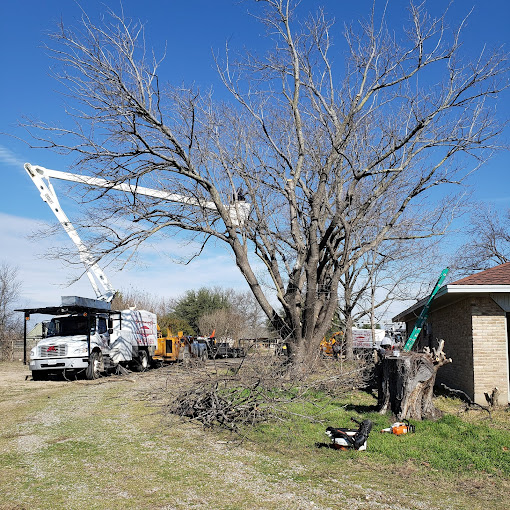
Expert Tree Pruning Techniques for Healthy Growth
On a hot July afternoon in Plano, a mature live oak drops a heavy limb across a driveway without warning. No storm, no wind gust—just a loud crack and a very close call. When our team arrived, the cause was obvious: years of poor pruning and neglected structure had left the tree weak and unbalanced.
That’s the hidden risk many property owners face. Trees can look “green and full” on the outside while developing dangerous structural problems on the inside. Smart, strategic pruning keeps your trees healthy, attractive, and safe—and it can add real value to your property.
Research from the Arbor Day Foundation shows that well-maintained trees can increase property value by up to 15%. On the other hand, insurance data consistently ties costly claims to falling branches and preventable tree failures.
In this guide, you’ll learn how expert pruning works, why timing and technique matter so much in North Texas, and what to watch for if you’re considering professional help. You’ll also see real-world examples from right here in Plano that show the difference proper care can make.
Key Insight: Thoughtful, science-based pruning doesn’t just “shape” your trees—it builds long-term health, prevents hazards, and saves you money on avoidable Tree Removal and emergency calls.
Why Proper Pruning Is Essential for North Texas Trees
Plano’s trees face a tough combination: clay-heavy soils, intense summer heat, periodic drought, and the occasional ice or windstorm. Under these conditions, your pruning decisions can either help trees adapt or push them toward decline.
Pruning is more than cutting branches. Done correctly, it:
- Removes weak, dead, or diseased limbs before they fail
- Improves airflow and light penetration through the canopy
- Encourages strong branch structure and balanced growth
- Reduces weight on heavy limbs that could split or fail
For example, we recently inspected a row of red oaks along a commercial parking lot off Preston Road. They’d been “lion-tailed” by a discount crew—leaves stripped from inner branches, foliage left only at the ends. It looked tidy at first, but lion-tailing forces weight to the tips, increases wind resistance, and weakens branches. Several limbs had already cracked during a spring storm.
“Improper pruning can create long-term structural defects that no amount of later work can fully undo.” — ISA Certified Arborist, Parker Tree Service
By contrast, professional thinning maintains foliage throughout the branch, distributing weight and reducing stress. That difference directly affects whether you’ll need a costly Emergency Tree Removal after the next big wind.
Proper pruning is also your first line of defense against pests and disease. Removing deadwood and rubbing branches reduces entry points for wood borers and fungal infections, often preventing the need for intensive Tree Disease Treatment later.
Understanding Crown Structure: Thinning, Reduction, and Shaping
Healthy trees have a balanced crown: a clear central leader (in many species), strong scaffold branches, and evenly distributed foliage. Expert pruning focuses on shaping and maintaining that structure—not forcing a tree into an unnatural form.
Key Pruning Techniques
- Crown Thinning
Selective removal of small, interior branches to improve airflow and light penetration while preserving the tree’s natural shape.
This helps reduce wind resistance and the risk of storm damage.
- Crown Reduction
Shortening the overall height or spread by cutting back to appropriate lateral branches. This is used when trees are too close to structures, signs, or power lines. Done properly, it’s a controlled alternative to topping.
- Tree Shaping
Guiding young or mid-aged trees into strong, attractive forms—particularly important for street trees, parking lot plantings, and front yard focal trees.
In a Plano HOA near Legacy West, we were called in after repeated storm breakage in their common-area trees. Many had long, overextended limbs stretching over sidewalks and parking areas. Instead of recommending immediate Tree Removal Service, our arborists designed a multi-year crown reduction and thinning plan.
After two pruning cycles:
- Canopy clearance over walkways improved
- Hazardous, overextended limbs were shortened safely
- The trees maintained a full, natural look instead of a harsh, “topped” appearance
Traditional vs. Modern Pruning Approaches
| Approach | Traditional “Hack & Stack” | Modern, Arborist-Guided Pruning |
|---|---|---|
| Goal | Fast trimming, short-term clearance | Long-term health, safety, and structure |
| Cuts | Random, often leaving stubs | Targeted, at branch collar, sized cuts |
| Impact on Tree Health | High stress, decay, weak regrowth | Strong structure, lower disease risk |
| Aesthetic Result | Harsh, flat-topped, uneven | Natural, balanced, species-appropriate |
| Long-Term Cost in Plano | Frequent call-backs, more failures and removals | Fewer emergencies, extended tree lifespan |
By understanding the difference, you can better evaluate proposals for Tree Trimming Services Near Me and choose a partner who protects your investment.
Timing, Species, and Weather: Pruning Smart in Plano’s Climate
Not all pruning windows are equal, especially in North Texas. The same cut made in January can have a very different impact than one made in July.
Seasonal Timing
- Late Winter (typically January–early March)
Ideal for many shade trees like oaks, elms, and pecans. Trees are dormant, wounds seal more efficiently, and pruning helps set structure for spring growth.
- Mid to Late Spring
Good for post-bloom shaping of ornamental trees and shrubs. Light pruning only for stressed trees to avoid overtaxing them as they leaf out.
- Summer
Selective pruning is possible—especially for clearance and safety—but avoid heavy thinning in extreme heat to reduce stress.
- Fall
Generally a lighter window. Strategic pruning is sometimes done ahead of forecasted ice storms to reduce risk, but not all species should be pruned heavily at this time.
We recently worked with a business park off the Dallas North Tollway that had delayed oak pruning until late spring for several years. The result: dense, heavy canopies that suffered repeated limb failures during summer thunderstorms.
By shifting their maintenance to late winter with a structured Tree Pruning Service plan, we reduced storm-related damage and extended the life of their trees—without disrupting tenant operations.
Species-Specific Considerations
- Live Oaks & Red Oaks – Need careful timing and tool sanitation to minimize disease risk.
- Crape Myrtles – Often over-pruned (“crape murder”). Proper technique focuses on removing crossing branches and seed heads, not cutting trunks back to stubs.
- Cedar Elms & Chinese Pistache – Benefit from structural pruning while young to avoid costly corrective work later.
“Knowing when not to prune is just as important as knowing how to prune.” — Parker Tree Service Arborist
Weather also matters. In drought conditions, for example, we often recommend lighter pruning combined with Deep Root Fertilization to support recovery instead of aggressive canopy reduction that can shock the tree.
Safety, Risk Reduction, and When Pruning Isn’t Enough
Healthy pruning is about more than appearance—it’s a core part of risk management for both residential and commercial properties in Plano.
How Pruning Reduces Risk
Strategic pruning can:
- Remove dead, cracked, or hanging limbs over driveways, sidewalks, and roofs
- Reduce weight on long, overextended branches
- Improve clearance around buildings, signage, and lighting
- Help prevent failures that lead to property damage or injuries
In a Plano medical office complex, a large limb from an aging pecan tree split and fell across a patient drop-off area during a mild storm. Fortunately, no one was hurt, but the damage to the canopy made it clear the tree had long-standing structural issues.
After a full Tree Risk Assessment, our team determined that targeted structural pruning combined with cabling and bracing could stabilize the tree safely. In other cases, like a severely decayed hackberry leaning toward power lines, the safest option was a controlled Hazardous Tree Removal.
When Pruning Is Not Enough
Pruning can’t correct:
- Extensive internal decay or hollow trunks
- Severe root damage from construction or soil compaction
- Advanced pest or disease that has structurally compromised the tree
In those situations, a professional Tree Removal Near Me may be the most responsible option, followed by Stump Grinding to remove tripping hazards and open the space for replanting.
| Situation | Pruning Viable? | Recommended Action in Plano Context |
|---|---|---|
| Minor deadwood over driveway | Yes | Targeted pruning and periodic inspection |
| Co-dominant trunks with early cracking | Sometimes | Structural pruning, cabling, monitoring |
| Large cavity at base, mushrooms present | Rarely | Full risk assessment, likely Fallen Tree Removal prevention |
| Roots cut during driveway replacement | Limited | Evaluation, possible mitigation, often phased removal |
Thoughtful pruning and honest evaluation work together to keep your property safe while preserving as many trees as reasonably possible.
Integrating Pruning with Overall Tree Health Care
Pruning is powerful, but it’s only one part of a complete tree care plan. In Plano’s challenging soils and climate, integrating pruning with nutrition, soil care, and pest management can dramatically improve outcomes.
Soil and Root Health
Many local trees struggle because of compacted, alkaline clay soils that limit oxygen and nutrient uptake. After a proper pruning, the tree is already investing energy into recovery and new growth; supporting that process pays off.
We often pair pruning with:
- Deep Root Fertilization – Injecting a balanced nutrient solution and soil conditioners into the root zone to improve structure, aeration, and fertility.
- Soil Conditioning – Addressing compaction and pH issues to promote healthier root systems and better water infiltration.
A Plano homeowner near Oak Point Park had several stressed red oaks with thinning canopies and deadwood. Instead of jumping straight to Tree Removal, we:
1. Performed corrective pruning to remove dead and crossing branches
2. Applied deep root fertilization
3. Recommended improved mulching and watering practices
Within two growing seasons, canopy density improved noticeably, and no further dieback was observed.
Pest and Disease Management
Open wounds from improper cuts can attract pests like wood borers and create entry points for fungal pathogens. Professional pruning minimizes wound size and promotes proper closure, which reduces the need for intensive Tree Insect Treatment or Wood Borers Treatment.
“Healthy trees are naturally more resistant to pests and disease. Good pruning supports that natural defense system.” — Parker Tree Service Arborist
Common local issues that intersect with pruning include:
- Webworms in pecans and other species
- Borer activity in stressed or over-pruned trees
- Cankers and dieback associated with poor pruning practices
By aligning pruning with a broader Tree Health Care strategy, you extend the life of your trees and reduce the likelihood of future emergencies.
Choosing the Right Tree Pruning Partner in Plano
The difference between a well-pruned tree and a future hazard often comes down to who does the work. In the Dallas–Fort Worth area, you’ll find everything from fully insured, ISA-certified arborists to door-to-door crews with chainsaws and no training.
What to Look For
- Credentials and Experience
Ask if an ISA Certified Arborist oversees the work. Certification shows a commitment to ongoing education and industry standards.
- Insurance and Safety Practices
Verify general liability and workers’ compensation coverage. Tree work—especially near structures—is high risk.
- Local Knowledge
Plano’s tree species, soil conditions, and weather patterns are unique. A local provider understands how live oaks respond to pruning here versus in other regions.
- Service Range
A company that also offers Stump Grinding Service, Tree Fertilization Service, and risk assessment can support your trees through their entire life cycle.
We were recently called to a property where a low-bid crew had “trimmed” several oaks. They left:
- Large, flat cuts flush with the trunk
- Topped leaders and stubbed branches
- Debris scattered across the lawn
Within a year, decay had started around the largest cuts, and rapid, weakly attached sprouts were forming—a textbook case of poor pruning. Corrective work was possible but more expensive than doing it right the first time.
Cost vs. Value in Plano
| Option | Upfront Cost (Plano Typical) | Long-Term Impact |
|---|---|---|
| Lowest-bid, non-arborist crew | Lowest | Higher risk, more frequent failures |
| Mid-range professional trimmer | Moderate | Varies widely based on training |
| Arborist-led pruning service | Moderate–Higher | Fewer emergencies, longer tree life |
What This Means for Businesses in Plano, TX
For Plano businesses—whether you manage a small office building, a retail center, or a large corporate campus—trees are part of your brand and your risk profile.
Healthy, well-pruned trees:
- Create shade that makes parking lots and walkways more comfortable in Texas heat
- Enhance curb appeal and tenant satisfaction
- Reduce complaints about blocked signage or overhanging branches
- Lower the odds of costly claims from falling limbs or blocked access
On the flip side, neglected or improperly pruned trees can lead to:
- Emergency closures after limb failures
- Damage to vehicles, roofs, and outdoor HVAC units
- Safety hazards on walkways and entry areas
- Forced Emergency Tree Removal at the worst possible time
For a Plano retail center near Park Blvd, our team developed a phased pruning plan focused on:
- Structural pruning for large oaks and elms
- Clearance trimming around signs and lighting
- Regular inspections ahead of storm season
Over three years, they’ve seen fewer storm-related incidents, improved tenant feedback, and no unplanned closures due to tree failures.
By integrating professional pruning into your broader property maintenance schedule—along with routine Tree Inspection and soil care—you protect both your investment and your reputation.
Frequently Asked Questions
Q: How often should I have my trees pruned in Plano’s climate?
A: For most mature shade trees in Plano, a 3–5 year pruning cycle is typical, but it depends on species, age, and location. Fast-growing or structurally weak trees may need more frequent attention, while slow-growing, well-structured trees may go longer between visits. Commercial properties often benefit from annual inspections with pruning scheduled as needed to maintain clearance over parking areas, sidewalks, and buildings. An arborist-led Tree Maintenance Services plan ensures you’re not over-pruning, which can stress trees in our hot, dry summers, or under-pruning, which increases risk of breakage.
Q: What’s the difference between pruning and simple “tree trimming”?
A: Many people use the terms interchangeably, but there’s a meaningful difference. “Trimming” often refers to quick cuts for appearance or clearance, without attention to structure or long-term health. Professional pruning follows industry standards, respects branch collars, and considers how each cut will affect growth, stability, and health. A true Professional Tree Trimming service should always be guided by pruning principles, not just aesthetics. When you’re comparing Tree Trimming Near Me, ask whether an ISA Certified Arborist is involved in planning and oversight.
Q: Can pruning help avoid emergency tree removals during storms?
A: Yes, strategic pruning is one of the most effective ways to reduce storm damage. By removing dead or structurally weak limbs, reducing weight on overextended branches, and improving canopy balance, you lower the chance of breakage in high winds or ice events. While no tree can be made “storm-proof,” properties that follow a regular pruning plan typically have fewer calls for Storm Damage Tree Service and Fallen Tree Removal. An arborist can prioritize which trees on your Plano property pose the greatest risk and address them before storm season.
Q: Is it safe to prune my own trees, or should I always hire a professional?
A: Light pruning on small trees—such as removing low, small-diameter branches with clean hand tools—can be safe for many property owners. However, once you’re dealing with ladders, power lines, heavy limbs, or cuts that could affect a tree’s main structure, it’s time to call a pro. Tree work is one of the most dangerous home maintenance tasks. A qualified Arborist Near Me has the training, equipment, and insurance to manage those risks. Improper cuts can also create long-term problems, leading to decay or the need for premature Tree Removal Service.
Q: My tree has pests—should I prune it or treat it first?
A: It depends on the type and severity of the infestation. In many cases, combining careful pruning with targeted Tree Borer Control or Webworms Treatment is the most effective approach. Pruning can remove heavily infested or dead branches, reducing pest populations and improving spray coverage if treatments are needed. However, aggressive pruning on a severely stressed tree can make matters worse. An arborist can determine whether to stabilize the tree’s health first with Tree Fertilization Service and soil care, then prune once it’s better able to recover.
Q: Will pruning hurt my tree or make it grow faster and out of control?
A: When done correctly, pruning supports tree health rather than harming it. Each cut is planned to minimize wound size and promote proper closure. Over-pruning, on the other hand, can stress a tree and sometimes trigger a flush of weak, rapid growth—especially if large branches are removed all at once. That’s why standards recommend never removing more than about 25% of a healthy tree’s canopy in a single season. A reputable Tree Pruning Near Me provider will explain how much they plan to remove and why, so you know your tree isn’t being overworked.
Q: How do I know if my tree needs pruning or should be removed entirely?
A: Signs that pruning may be enough include dead or crossing branches, minor storm damage, or clearance issues around structures. Removal becomes a stronger consideration when there’s significant trunk decay, major root damage, severe leaning, or repeated large limb failures. In Plano, construction damage and soil issues often play a big role. A thorough Tree Inspection by a certified arborist can reveal internal decay, root problems, and structural defects that aren’t obvious from the ground. From there, you can make an informed choice between corrective pruning, monitoring, or Hazardous Tree Removal.
Ready to Get Started?
Trees don’t send calendar reminders when they need attention. The signs show up in more subtle ways—heavier canopies, low-hanging limbs over driveways, deadwood you keep meaning to deal with “later.” In Plano’s climate, waiting often means small issues become big, expensive problems, especially when storm season or extreme heat arrives.
Now is the ideal time to schedule a professional assessment and set up a pruning plan that fits your property and budget. Whether you manage a commercial site with liability concerns or a home with mature shade trees you love, an arborist-led Tree Service approach protects both your safety and your landscape investment.
Parker Tree Service can inspect your trees, identify structural or health issues, and recommend the right mix of pruning, soil care, and, when necessary, safe Tree Removal or Affordable Stump Removal. You’ll know exactly what your trees need—and what can wait—so you can plan confidently.
Take the next step toward healthier, safer trees across your property. Schedule a consultation today and put an expert pruning strategy to work for you.
About Parker Tree Service
Parker Tree Service is a locally focused tree care company serving Plano, TX and surrounding communities. Our team includes ISA Certified Arborists and experienced crews who specialize in pruning, Tree Care Services, safe removals, and long-term tree preservation. For years, we’ve helped homeowners, HOAs, and businesses protect their properties with science-based tree care tailored to North Texas conditions. Learn more about our services and approach at Parker Tree Service.