
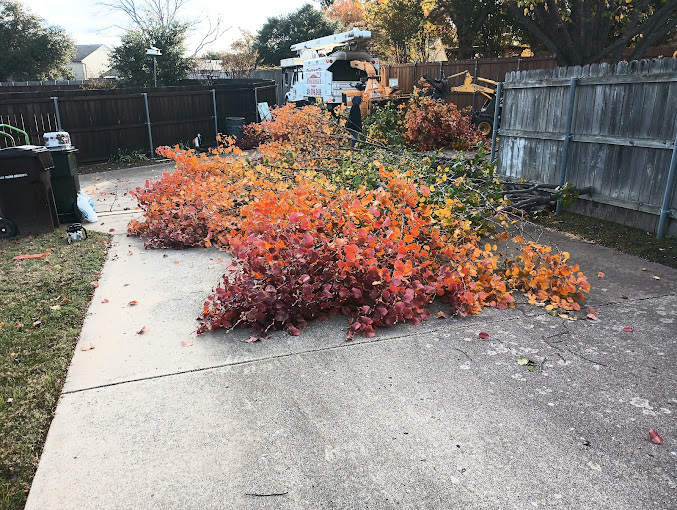
When a tree starts leaning, cracking, or dropping limbs, the risk is not just cosmetic. In Dallas, TX and the DFW suburbs, stormy weather and fast-growing landscape trees can turn a small problem into costly damage. This guide helps you spot the warning signs that mean professional tree removal and tree risk assessment are the smarter, safer choice.
A mature tree in your yard can look stable for years, then one summer heat wave, a heavy wind, or a period of missing leaves makes you notice new movement. Maybe branches are rubbing the roofline, roots are lifting a walkway, or you keep finding bark that looks “chewed up” near the trunk.
At that point, your main question is usually simple: is this something you can wait on, or do you need tree removal to prevent damage to your home, garage, or power lines?
This guide breaks down what to check, what professional services typically address, and how to make a decision that protects your property and your landscape health.
- Quick Answer
- What to Check First
- Main Things Customers Should Understand
- Why This Matters in Dallas, TX
- Common Mistakes to Avoid
- Customer Checklist
- Frequently Asked Questions
Quick Answer
If you’re seeing leaning, cracking, dead or hanging limbs, or signs of serious damage near structures, treat it as a potential hazard and get a professional tree removal service evaluation. For many homeowners, the safest path is not “wait and see,” but a site-based tree risk assessment that considers stability, proximity to buildings, and whether pruning trimming and reduction could address the issue. If the tree is compromised, removal can prevent fallen tree removal and storm damage tree service problems before they happen. Parker Tree Service can help you decide what to do next in Dallas, TX.
What to Check First
Start with observations that directly relate to risk. Look for structural changes (leaning, unusual gaps in the trunk, or visible cracks), canopy problems (dead branches, frequent limb breakage, or heavy dieback), and contact points (branches touching roofs, fences, or power service areas). Then check the ground: lifting pavement, new soil heaving, or root exposure can signal instability.
Structural warnings
Leaning toward the house, trunk splitting, or multiple codominant stems that don’t look tightly formed.
Branch and crown concerns
Dead tree removal indicators like brittle limbs, extensive thinning, or branches hanging with no live growth.
Root and soil clues
Raised sidewalks or soil conditioning needs around the base, especially when combined with trunk movement.
Main Things Customers Should Understand
Professional tree removal is not just cutting the trunk. A good decision is based on whether the tree can fail under stress, how it’s positioned relative to your property, and whether the problem is localized or systemic. In practice, companies like Parker Tree Service evaluate the tree’s condition, then recommend the least disruptive option that still reduces hazard risk.
Professional observation: In Dallas, TX yards, we often see risk issues show up after storms or during seasonal stress. A tree may still look “mostly green,” but internal weakness and crown imbalance can make it unpredictable when wind and heavy rain hit.
Removal is considered when hazards are structural or not realistically correctable
Some trees can be managed with professional tree trimming, tree crown reduction, or tree crown thinning, especially when the main issue is overgrowth near structures. But when you have hazardous tree removal indicators such as splitting, severe decay, or major instability, pruning alone may not stop future failure.
Tree pruning services can reduce risk, but only when the tree is healthy enough
If the canopy is too heavy for the tree’s structure, a reduction approach may help rebalance the crown. If the tree is declining due to tree disease treatment needs, wood borer treatment, webworms treatment, or other tree insect treatment concerns, removal may still be the safer long-term mitigation.
Stumps matter, too
After a removal, stumps can interfere with mowing, create tripping hazards, and attract decay-related issues. If you want the area cleared for landscaping or safer foot traffic, stump grinding and stump removal are common next steps. For example, Parker Tree Service offers stump grinding and removal to help finish the job cleanly.
Why This Matters in Dallas, TX
In the Dallas, TX area and the DFW suburbs, residential properties often have mature shade trees close to driveways, garages, sidewalks, and overhead utility corridors. That proximity matters during wind events, when a damaged crown or compromised trunk can swing into structures or break limbs unpredictably. Plano homeowners especially run into practical challenges like keeping growth controlled near rooftops and managing yard access after storms.
Local decision tip: If your tree has storm damage indicators, don’t assume a “quick cleanup” is enough. A professional tree inspection can help determine whether emergency tree removal is the right step or whether pruning trimming and reduction can reduce risk without creating new hazards.
| Situation you notice | What may help | Why a pro decision matters |
|---|---|---|
| Branches rubbing the roofline or fence | Professional tree trimming, tree crown thinning | Reduces contact points, but the work should match the tree’s health and structure. |
| Dead limbs and recurring limb breakage | Tree pruning services near me evaluation, possible dead tree removal | A pattern can indicate instability that pruning alone cannot correct. |
| Leaning trunk, visible cracks, or shifting at the base | Tree removal service, tree risk assessment | Structural weakness can fail under wind, even if the canopy looks “fine.” |
| After a storm: hanging limbs or unstable branches | Emergency tree removal, storm damage tree service | Getting the hazard addressed quickly helps prevent additional property impact. |
| Stump-related access issues | Stump grinding service or affordable stump removal | Finishing the job improves safety and opens space for replanting or maintenance. |
Need help deciding between pruning and tree removal?
Tell us what you’re seeing around your home in Dallas, TX. Parker Tree Service can help you understand whether trimming and reduction will address the risk or whether removal is the safer mitigation step.
Contact Parker Tree ServiceCommon Mistakes to Avoid
Homeowners in Dallas, TX often try to solve tree risk with shortcuts that increase danger. The goal is to avoid actions that can worsen instability or spread damage.
- Waiting too long when you see leaning, trunk cracking, or repeated limb failure.
- Using “cleanup” pruning as a substitute for a tree inspection after storm damage.
- Ignoring pest and disease clues such as wood borer activity or webbing, which can weaken branches and structure.
- Attempting DIY removal near structures or overhead lines, which increases the risk of property damage.
- Forgetting the stump after removal, leading to ongoing tripping hazards or landscaping problems.
Customer Checklist
Before you schedule tree work, gather a few details. This helps the crew understand the situation quickly and helps you make a clear decision about tree removal, tree pruning, or tree mitigation options.
Quick checklist to prepare:
- Note when the problem started (after a storm, a season change, or gradual decline).
- Walk the property and mark contact points where branches touch roofs, fences, or outbuildings.
- Look for trunk movement, cracks, or gaps, and check the base for lifting or exposed roots.
- List any visible pest signs related to tree insect treatment, wood borers treatment, or webworms treatment.
- Decide what “done” looks like for your property: removal only, or removal plus stump grinding and removal.
Representative Scenario
A Plano homeowner noticed a large limb hanging lower than it used to, and after a windy week, a few smaller branches fell near the driveway. The tree still had leaves, but the homeowner also saw bark damage close to the trunk. Instead of cutting branches at random, they arranged an evaluation. The technician checked stability, assessed crown imbalance, and confirmed that pruning alone would not eliminate the risk. After removal, the property owner chose stump grinding and removal to restore safe access and prepare for future landscaping.
Emergency Tree Removal
If you’re dealing with fallen tree removal or unstable branches after a storm, consider emergency tree removal services to address the hazard safely.
Tree Pruning and Reduction
When the goal is to reduce stress on the canopy and keep growth controlled, explore pruning, trimming, and reduction.
Tree Health Care
If your tree’s decline seems linked to soil condition or deep root needs, ask about deep root fertilization as part of broader tree health care.
Frequently Asked Questions
How do I know if I need a tree removal service or just tree pruning near me?
Pruning is often appropriate when the tree is generally healthy and the main issue is shape, clearance, or manageable canopy weight. Removal is more likely when you see structural warnings such as leaning, trunk cracking, or repeated limb breakage that suggests instability. A professional tree risk assessment considers the tree’s condition, proximity to structures, and how it could fail under wind. If the problem started after a storm, prioritize an inspection before deciding on trimming.
What does a tree risk assessment include for Dallas, TX properties?
Typically, it focuses on visible stability concerns (trunk and base), canopy health (dead or hanging limbs, dieback, and imbalance), and how the tree relates to nearby buildings and hardscape. In Dallas, TX and the DFW suburbs, the goal is to understand how likely the tree is to fail during common stress events like heavy wind. The assessment also helps determine whether pruning trimming and reduction can reduce risk or whether hazardous tree removal is the safer mitigation.
Can tree disease treatment or wood borer control prevent the need for removal?
Sometimes, addressing pests and tree health care needs can improve long-term outcomes, especially when the damage is limited and the structure is still sound. However, if the tree has compromised stability or extensive internal weakness, treatment may not eliminate hazard risk. A professional evaluation helps match the right approach, which can include tree insect treatment and wood borer control when appropriate, but also removal when structural failure is the concern.
Should I schedule stump grinding after tree removal?
Many homeowners choose stump grinding because it improves safety and helps the yard function normally again. A stump can be a tripping hazard, interfere with mowing, and create ongoing maintenance issues. If you plan to replant, build a garden area, or simply want the area cleared, stump grinding and removal is often the practical next step after tree removal. Parker Tree Service provides stump grinding and removal options to help finish the job.
What should I do after I notice storm damage to a tree?
Keep people and vehicles away from the area under the tree and treat hanging or cracked branches as potential hazards. If the tree shows signs of instability or if limbs are falling, emergency tree removal services are often the safest direction. After the immediate hazard is addressed, you can then plan longer-term tree maintenance, which may include pruning trimming and reduction, tree disease treatment, or other tree health care steps based on what the inspection finds.
Get help with tree removal planning in Dallas, TX
If you’re concerned about property damage from a tree that’s leaning, cracking, or dropping limbs, Parker Tree Service can help you choose the right next step for your lot and your safety needs.
(214) 394-2414
Parker Tree Service
Parker Tree Service provides tree services for homeowners and property managers in Dallas, TX and the DFW suburbs, including Plano. Our approach focuses on practical risk reduction, from tree pruning and trimming to tree removal service planning, emergency tree removal services when needed, and follow-through like stump grinding and removal.
If you need tree care services for a hazardous tree removal situation, a storm-damaged canopy, or ongoing tree health care, contact Parker Tree Service through our website or call (214) 394-2414.