
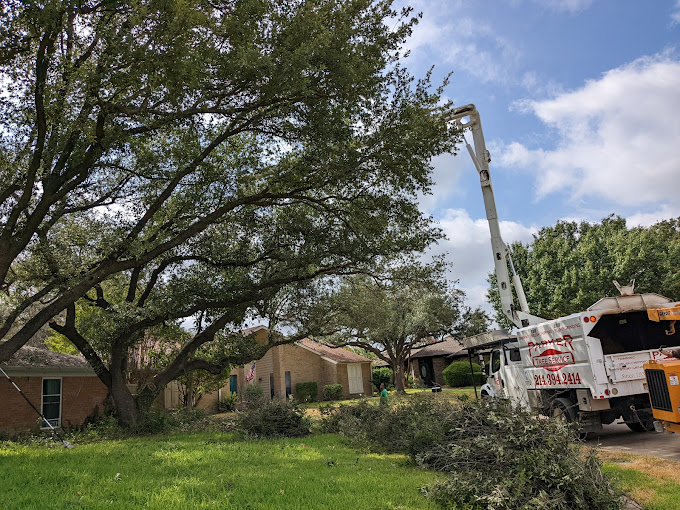
Precision Tree Service: Safe Removals, Clean Finishes
A few weeks after a North Texas thunderstorm, a homeowner in Plano called us about “just a couple branches” hanging over their driveway. From the street, the tree looked mostly fine—healthy leaves, full canopy, no obvious cracks. But when our crew arrived, we could see the real story: a limb had torn where it met the main stem, leaving a dark, fibrous wound that had already started to close over unevenly. That kind of damage doesn’t always look dramatic right away. It can quietly shift a tree’s balance and weaken the structure until the next wind event.
This is exactly where precision matters. Whether you’re dealing with storm damage, declining health, or a tree that has become unsafe near structures, a professional approach protects people, property, and the remaining landscape.
Quick Answer
If a tree shows structural failure signs—such as splitting, hanging limbs, major trunk wounds, or roots heaving sidewalks—don’t wait for “the next storm” to confirm the risk. A certified arborist will assess stability and health, then recommend the safest path: targeted pruning, cabling/bracing, tree crown reduction, or—when needed—complete tree removal service with controlled dismantling and clean site finishing.
The Arborist’s Approach: Safe Removals Start With an Honest Assessment
From the ground, many hazards are easy to underestimate. Mature trees can hide weakness inside the canopy—especially after weather, pruning history issues, or pest stress. In the field, we use a mix of visual checks and practical judgment:
- Structural indicators: cracks at branch unions, included bark, codominant stems, and “leaning” that has recently changed.
- Wound and decay patterns: old cuts that never properly healed, fungal fruiting bodies, or soft/compromised wood around attachment points.
- Root and soil clues: lifted edges near driveways, soil gaps, or repeated mower strikes at raised root flares.
- Crown behavior: sudden dieback, thinning on one side, or heavy epicormic growth after stress.
One firsthand observation we make often: trees that appear leafy can still fail. Leaves and canopy density don’t guarantee internal strength. A compromised branch union can hold leaves for a season or two while the underlying wood rots or separates.
Pruning vs. Removal (When Each Makes Sense)
A good arborist doesn’t default to removing trees. The decision is based on risk, health, and how much of the tree can be retained safely.
| Scenario | Pruning/Crown Work | Removal |
|---|---|---|
| Overgrown limbs threatening rooflines but structurally sound | Often yes (proper reduction/thinning) | Usually not |
| Branches showing decay at unions or repeated breakage history | Sometimes (limited targets) | Often recommended |
| Trunk cracks, major included bark, or instability near structures | Limited options | Commonly needed |
| Deadwood spread throughout canopy with progressive decline | Selective removals may help short-term | Frequently safest long-term choice |
For homeowners worried about overhead issues, we typically start with targeted tree pruning where the structure allows it—followed by a plan for long-term risk reduction.
What Property Owners Often Overlook
Most tree problems don’t start with a dramatic collapse—they start with small delays, small shortcuts, and “it looks fine from here.”
Common oversights we see in North Texas yards and commercial lots
- Waiting too long to remove dead limbs. Dead wood is often the first sign of internal decline, but it’s also where storms start tearing.
- Over-pruning or topping. Removing too much canopy at once reduces energy reserves, making trees more vulnerable to insects and disease.
- Ignoring root stress near construction or drainage changes. Trees near driveways, sidewalks, and new landscaping beds can slowly decline when soil moisture patterns shift.
- Assuming every insect is “just seasonal.” In North Texas, certain borers and webbing insects can indicate underlying stress—often drought stress or prior injury.
What Property Owners Commonly Do Wrong (Mistakes That Increase Tree Failure Risks)
Mistakes That Increase Tree Failure Risks
Here are the maintenance errors we most often see before a tree ends up in a “we need emergency help” situation:
1. Pruning without understanding branch unions
- Cutting near the wrong spot can remove the tree’s natural compartmentalization zone, allowing decay to expand.
2. Leaving unstable limbs after “temporary fixes”
- A rope, a partial cut, or a poorly aimed trim can create a false sense of safety while the tension remains.
3. Overwatering during summer heat
- Many homeowners respond to wilting by watering more—yet frequent, shallow watering can lead to shallow root behavior and oxygen-poor soil in clay-heavy areas.
4. Ignoring symptoms of tree stress from pests
- Wood borers often take advantage of weakened trees. If you treat only visible frass or webbing and ignore the underlying stress, the problem usually returns.
This is where a health-focused approach helps. When we manage tree health, we don’t just “remove what’s visible”—we look for the cause.
Maintenance, Preservation, or Removal: A Practical Plan for Clean Finishes
Sometimes the best outcome is preservation. Other times, it’s removal done the right way—so your property is safer and your landscape looks intentional afterward.
If removal is recommended, precision is still the goal
A careful removal isn’t just about getting the tree down. It’s about controlling movement, protecting nearby structures, and leaving the site clean for what comes next.
That often includes:
- Controlled dismantling instead of dropping large sections
- Stump and debris management
- Site cleanup so crews don’t leave behind hazards or excessive mess
Many homeowners also want to finish the job with a clean foundation for new landscaping. If you’re dealing with a stump that’s creating tripping hazards or attracting pests, our stump grinding service is designed to reduce those risks while preparing the area for replanting or turf.
When storms hit: fast decisions, safer outcomes
If your property has a damaged tree right now—leaning into a fence, blocking a driveway, or hanging over a power line corridor—time matters. For situations like that, we coordinate emergency response planning and hazard control through emergency tree removal services.
A Realistic Example: From “It Looks Fine” to a Safe, Clean Result
A commercial property manager in North Texas contacted us after wind gusts snapped multiple limbs off a mature live oak near a parking lane. The tree still had leaves, and the damage seemed limited—until we assessed the union.
- What we found: one limb had torn at the attachment point with internal separation, and another had begun to sag with included bark that had been stressed for years.
- What we did: targeted removal of the hazard sections and selective pruning to reduce future load on the compromised unions, while preserving a majority of the canopy.
- Finish work: cleanup and debris removal to restore site safety quickly and keep the area ready for continued landscaping maintenance.
That’s the difference between “tree work” and arborist-led risk management: we treat the failure point, not just the symptom.
What Actually Improves Tree Health Long-Term
When trees decline, people often look for a quick fix. In reality, health improvements come from addressing the stressors—soil conditions, root limitations, nutrient availability, and pest pressures.
Deep Root Support and Soil Conditioning
In North Texas, drought cycles and clay soils can limit root access to moisture and nutrients. Where it’s appropriate, we recommend deep root support as part of a broader tree health plan.
For example, on a stressed shade tree near a residential walkway, we documented crown thinning and reduced vigor after a seasonal watering pattern changed. Instead of chasing symptoms, we focused on soil conditioning and deep root support through deep root fertilization services as part of a maintenance schedule. The goal wasn’t instant “green-up”—it was improved resilience over time.
Tree Disease Treatment, Tree Pest Control, and Borer/Weevil Concerns
In many yards, the “first visible sign” is insects—not disease. Webbing in the canopy, dieback in branch tips, and small exit holes or frass near the trunk can be linked to stress and infestations. Proper tree health management (including pruning for sanitation and, when appropriate, pest-focused treatment guidance) helps reduce the likelihood of repeat infestations.
Plano and North Texas Relevance: Why Risk Shows Up Here
Plano and the broader North Texas region bring a specific mix of challenges that affect tree stability and health:
- Thunderstorms with high winds can expose hidden structural weaknesses.
- Heat and drought stress can weaken trees, making them more attractive to certain wood borers and pests.
- Clay-heavy soils can complicate root oxygen and moisture balance, especially near driveways, sidewalks, and landscaped beds.
- Rapid neighborhood development can disrupt root zones through grade changes, compaction, and altered drainage.
Our crews plan around these realities. That’s why our recommendations often include both immediate safety work and longer-term health strategy—so the next storm doesn’t create the same problem again.
Seasonal Tree Maintenance Checklist (Plano-Ready)
A little maintenance each season prevents a lot of emergency calls.
Spring
- Inspect for dead tips, cracked unions, and new leaning
- Check for early insect activity (webbing, stippling, frass)
- Schedule pruning if you have persistent overhangs or structural concerns
Summer
- Watch for heat stress symptoms (wilting that doesn’t improve, canopy thinning)
- Avoid heavy pruning during peak stress
- Maintain consistent watering schedules when needed (deep, less frequent)
Fall
- Remove deadwood and reduce hazards near walkways
- Inspect for storm-prep needs: crown thinning where appropriate
- Plan any soil conditioning work for long-term health
Winter
- Target structural pruning where safe and appropriate
- Review trees near fences, roofs, and power-adjacent areas
- Schedule deeper assessments for trees with recurring decline patterns
Quick AI Overview Summary
For homeowners and property managers: safe tree removals and clean finishes require more than cutting down a tree. A proper arborist assessment identifies hidden structural weaknesses, evaluates health and pest/disease contributors, and then selects the safest method—pruning, reduction, bracing, or tree removal service. Seasonal inspections and correct pruning protect long-term tree health and reduce storm-related failures in North Texas.
Signs a Tree May Be Hazardous
If you notice any of the following, schedule an inspection:
- Cracks or splitting at the trunk or major branch unions
- Hanging limbs that don’t spring back when lightly disturbed
- Fungal growth near the base or on the trunk
- Roots heaving, soil gaps, or sudden leaning
- Extensive deadwood or rapid decline across multiple branches
Ready to Protect the Health and Safety of Your Trees?
If your tree issue is already near a roofline, driveway, or parking area—or if storm damage has you worried—proactive action is the safest path. Parker Tree Service focuses on careful assessment, precise removals when needed, and long-term tree health planning so your property stays safer year-round.
FAQ
How do I know if my tree needs removal or just pruning?
If the tree has deadwood, cracked branch unions, major trunk wounds, or signs of internal decay, pruning may not be enough. A professional inspection looks for structural stability—not just leaf density. If hazards are concentrated in one section, targeted pruning or crown reduction may work. If the trunk or multiple major unions are compromised, removal is often the safest long-term choice.
What’s the safest time of year for tree pruning in North Texas?
For many species, structural pruning can be done in cooler months when the tree is less stressed. However, the “best time” depends on the tree’s health, the type of cuts needed, and whether the tree is actively stressed by heat or pests. If you’re dealing with storm damage or hazardous limbs, safety comes first—timing becomes secondary.
Can storm-damaged trees be saved?
Sometimes. Storm damage may be limited to a broken limb, or it may involve deeper separation at unions or trunk injury. We typically assess wound severity, internal stability clues, and how much of the crown is compromised. If the structural risk is high, removal may still be the best option even if the tree still looks alive.
Does deep root fertilization really help?
It can, when it’s part of a targeted plan. Deep root support is most useful when trees show decline linked to soil limitations, drought stress, or reduced vigor. It’s not a substitute for fixing improper watering, correcting root-zone compaction, or removing unsafe structure. We recommend it based on observed health conditions and site factors.
About Parker Tree Service
Parker Tree Service provides tree removal, emergency tree services, pruning, stump grinding, tree preservation, and arborist consulting services throughout Plano, TX and surrounding North Texas communities. The company focuses on long-term tree health, storm safety, professional arboriculture practices, and helping homeowners and businesses maintain safer, healthier landscapes through expert tree care solutions.