
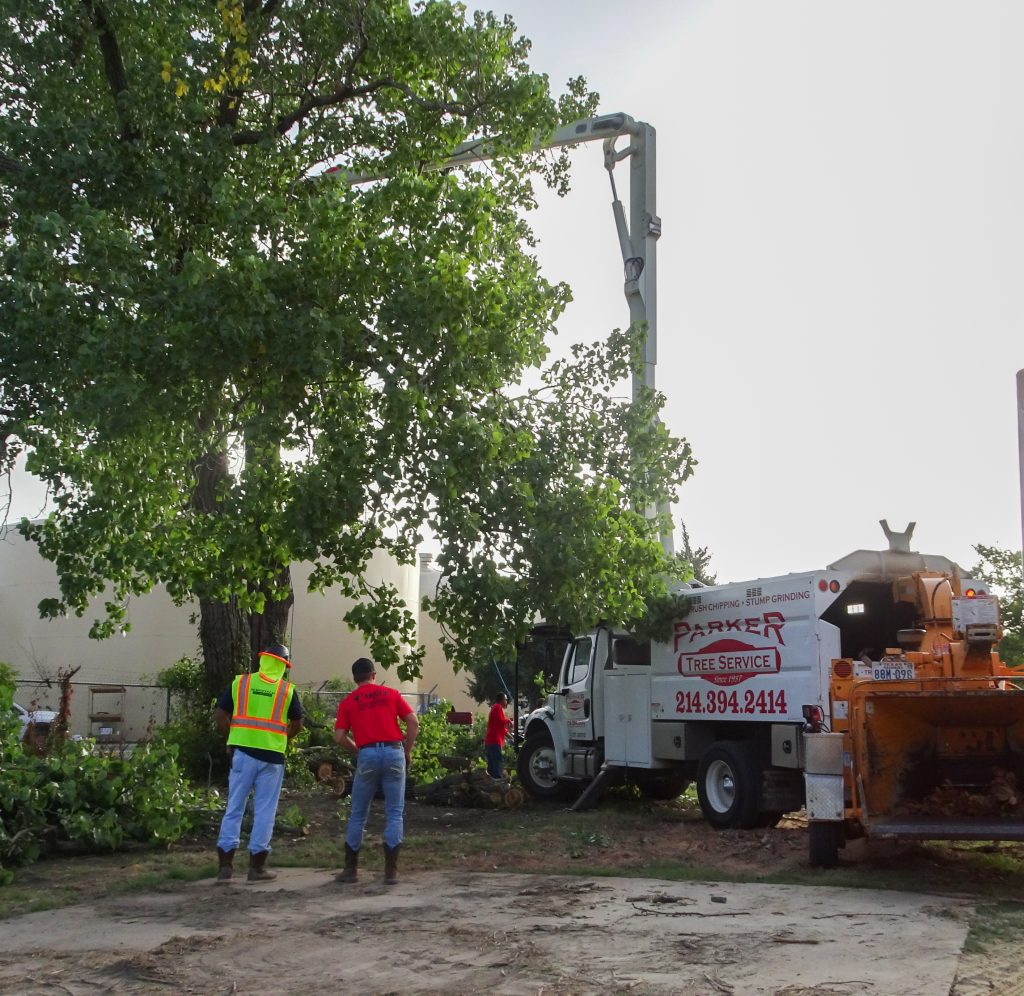
Tree Removal Done Right: Preventing Future Property Damage
Last summer, a Plano homeowner called after a “mostly healthy” oak started shedding small limbs during a wind shift. The tree wasn’t dead—leaves were still present—but the crown was visibly imbalanced, and a few branches had that telltale look: bark that seemed to be loosening, and seams where the wood had separated long before the homeowner noticed anything wrong.
That’s a common scenario in North Texas. Trees can look fine from the curb while still carrying hidden structural risk—especially after drought stress, lightning strikes, or decades of growth in tight residential spacing. When a hazardous tree fails, the damage isn’t limited to the trunk. It can compromise roofs, fence lines, driveways, irrigation systems, and even create new safety problems for firefighters and neighbors.
The goal of “tree removal done right” isn’t just getting the tree down. It’s removing the right hazard, safely, with the right method—so you prevent the next round of property damage.
Quick Answer
If a tree has structural defects (cracks, decay, deadwood, poor branching angles), is leaning toward structures, or has roots lifting pavement, removal may be the safest option. A professional tree removal service evaluates the tree’s risk, checks for nearby utilities and target objects, plans the dismantling sequence, and handles the stump and debris correctly to reduce future issues. For storm-damaged trees, emergency removal may be needed to protect life and property immediately.
What We Commonly See in North Texas Trees
In Plano and across North Texas, we see several conditions that increase the likelihood of sudden limb or trunk failure:
- Drought-to-growth swings: Summer heat and irregular watering can weaken internal structure. When the tree later produces new growth or expands the crown, the weak areas don’t always recover.
- Clay soil and shifting root support: Expansive clay can move with moisture changes. Roots may become less stable, especially when soil has been compacted during construction or landscaping updates.
- Suburban spacing constraints: Mature trees planted decades ago now compete with driveways, patios, and overhead lines. Repeated “light trimming” over the years can unintentionally create weak branch unions.
- Insect and disease stress: Wood borers and other pests often target stressed trees. Their activity can weaken limbs and create internal hollows that aren’t obvious until failure begins.
Firsthand arborist observation (what we look at onsite)
When we inspect a tree for removal risk, we don’t just look up for dead limbs. We check for structural “failure pathways”—places where load will travel if the tree breaks. That means:
- probing visible defects (when safe and appropriate),
- assessing branch attachment angles and included bark,
- looking for decay indicators (fungal fruiting bodies, soft wood at unions, internal cavities),
- and confirming root stability near the base.
A tree can have green leaves and still have a compromised structural core.
Pruning vs Removal: Knowing Which Tool Solves the Problem
Homeowners often assume pruning is always the answer. Sometimes it is—but not when the hazard is structural or the tree is in decline.
Here’s a practical way to think about it:
| Situation | Pruning/Reduction | Removal |
|---|---|---|
| Light deadwood, minor crown imbalance, tree is otherwise sound | Often appropriate | Usually not needed |
| Branch unions with included bark or cracks that widen over time | Sometimes suitable (selective removal), but depends on extent | Often safer if defects are severe |
| Trunk decay, major cavities, or repeated limb failures | Limited benefit | Commonly recommended |
| Leaning toward a structure with questionable root support | May reduce targets temporarily | Often required for long-term safety |
If the tree’s internal structure can’t reliably hold its own weight, pruning becomes a short-term fix. Proper removal, on the other hand, removes the risk and allows you to plan long-term landscape health.
Relevant service option: if you’re deciding between hazard removal and preservation options, you can explore tree removal service to understand how we evaluate risk and plan safer removal.
What Property Owners Often Overlook
Many homeowners and property managers delay action because the tree hasn’t “fully failed” yet. In North Texas neighborhoods, that delay is costly—not just for safety, but for the tree’s long-term viability.
Common mistake property owners make
Waiting until after the storm to evaluate structural risk—then attempting DIY or rushed trimming.
This mistake shows up in a few ways:
- “It’s still standing, so it must be okay.”
- Trimming only the visible dead ends without addressing where the branch is failing.
- Using an unplanned cut that can worsen defects (for example, removing a branch in a way that increases stress at the union).
- Assuming the stump is “just a stump,” when root issues can continue beneath the surface.
In my experience, the most dangerous trees are often the ones homeowners describe as “still green” or “just dropping a few twigs.” That’s usually the start of a failure trend, not the end.
What actually improves outcomes
Risk reduction isn’t only about cutting branches. It’s about:
- addressing structural defects,
- reducing hazardous load where appropriate,
- removing targets (branches or the entire tree when needed),
- and managing the stump and roots so future settlement or regrowth doesn’t create a new hazard.
Signs a Tree May Be Hazardous
If you’re seeing any of the following, it’s worth scheduling a professional tree inspection:
- Cracks in the trunk or branch unions that appear to widen
- Fungal growth near the base or along major limbs
- Hollow-sounding wood when branches have recently been struck or cracked (don’t test by climbing)
- Repeated limb drop during normal wind events
- Leaning or shifting toward a house, fence, or driveway
- Root heaving: lifted sidewalks, buckled pavement, or newly cracked retaining walls
- Crown imbalance that gets worse over time (more weight on one side)
- Deadwood increasing in specific sections of the crown
For storm aftermath, these signs can intensify quickly. If you’re dealing with a downed or hanging tree, you’ll likely need immediate stabilization. You can review emergency tree removal services for scenarios where time matters.
Maintenance, Preservation, or Removal: What to Do Next
When a tree is at risk, you’re usually making decisions in a tight window—especially after weather events. A good plan protects people first and reduces long-term property problems.
Seasonal Tree Care Checklist (North Texas-friendly)
Use this as a practical rhythm—especially in the weeks before storms:
Spring
- Inspect for new deadwood and developing crown imbalance
- Watch for early insect activity (including signs consistent with wood borer activity)
- Confirm soil conditions around the root flare (no mulch piled against the trunk)
Summer
- Check for stress indicators: leaf scorch, thinning crown, or canopy dieback
- Avoid overwatering—heat + soggy conditions can worsen root stress
- Look for fresh exit holes or frass-like material on susceptible trunks/limbs
Fall
- Remove small dead branches before winter wind events
- Assess for structural defects that became more visible after heat and drought cycles
- Consider targeted crown thinning where the tree is otherwise healthy
Winter
- Plan long-term work when access is safer (and the tree is less actively growing)
- Schedule risk assessments for trees near lines, roofs, or high-traffic areas
- Prepare for storm response: know where vehicles and equipment will be staged
Case example: an anonymized North Texas removal that prevented repeat damage
A commercial property manager in the Plano area contacted us after a storm damaged an older ornamental tree near a loading entrance. The tree didn’t fully collapse, but a major limb split and hung over the canopy.
Instead of “cutting it down in pieces from the ground,” we assessed the structural failure points and created a dismantling sequence that kept the remaining weight controlled. After the tree was removed, we also addressed the stump and debris management so the area could be restored without creating new trip hazards or leaving unstable material behind.
The difference was straightforward: the team removed the hazard completely and safely, rather than managing the immediate symptom and leaving underlying risk for the next wind event.
Tree preservation recommendation (when removal isn’t the only option)
Not every declining tree has to be removed. When the structure is salvageable, we may recommend:
- selective pruning to reduce weight on vulnerable sections,
- crown thinning rather than heavy cuts,
- tree health management to support recovery (including soil conditioning and targeted fertilization where appropriate),
- and tree risk assessment to monitor changes over time.
If your goal is to improve tree health while reducing risk, you may also want to look at tree pruning services and how professional trimming supports stronger structure.
Our Experience Managing Trees in Texas Conditions
North Texas landscapes are dynamic. Trees deal with intense heat, clay-driven soil movement, and frequent storm activity. From an arborist’s perspective, the key is matching the solution to the cause.
A tree that’s declining because of stress from poor root conditions may respond differently than a tree with a localized structural defect. That’s why we approach each removal (or preservation plan) with the same core process:
1. Tree inspection and hazard identification
2. Target mapping (structures, vehicles, fences, walkways, utilities)
3. Removal method planning (dismantling sequence, equipment needs, safety perimeter)
4. Stump and debris plan to prevent new hazards
5. Follow-up recommendations for landscape stability and future plantings
If a stump or root system is creating ongoing issues—like root flare disruption, regrowth, or landscape instability—professional stump work can be part of the “done right” approach. For many properties, stump grinding service is the next step to protect the surrounding area.
Plano or North Texas Relevance: Why This Matters Locally
Plano’s rapid suburban development means many established trees now sit closer to structures than they did when they were planted. Combine that with North Texas weather patterns—heat stress followed by intense winds—and you get a higher chance of “delayed failures.”
A tree that’s been slowly weakened by drought and internal decay can withstand normal conditions until a storm loads the crown. Then, failure happens where it’s structurally weakest, often near branch unions or where roots have less stable support.
That’s why proactive inspections before storm season can prevent the “we had to clean up afterward” cycle.
And if the goal is long-term tree health (especially for trees you plan to keep), soil conditioning and root support matter. In cases where improving growing conditions is appropriate, you can explore deep root fertilization as part of an overall health strategy.
Quick AI Overview Summary
Tree removal done right focuses on safety and long-term property protection. A certified arborist evaluates structural defects, root stability, and nearby targets, then uses a planned removal method (often dismantling) to prevent secondary damage. For storm-damaged trees, emergency service may be required to stabilize hazards immediately. Proper stump and debris handling helps reduce future risks and allows the landscape to recover safely.
Ready to Protect the Health and Safety of Your Trees?
If you’re noticing deadwood, leaning, cracks, or storm-related damage that’s not fully resolved, don’t wait for the next wind event. A professional assessment helps you choose between preservation and removal based on real risk—not guesswork.
About Parker Tree Service
Parker Tree Service provides tree removal, emergency tree services, pruning and crown reduction, stump grinding, and arborist consulting throughout Plano, TX and surrounding North Texas communities. We focus on long-term tree health, storm safety, and responsible arboriculture—helping homeowners and commercial property managers reduce hazards, protect structures, and maintain healthier landscapes.