
Urgent Tree Service for Emergency Hazard Risk Removal
When a tree limb is hanging over a driveway, a trunk looks split, or storm damage leaves you worried about what could fall next, Parker Tree Service in Dallas, TX can help you remove hazards and protect people and property.
A heavy limb after a wind event, a tree that suddenly looks tilted, or branches scraping power lines can make your whole day feel unsafe. In Dallas, TX, those moments are especially stressful because people often need to move cars, secure walkways, and keep kids and pets away while they decide what to do next.
This guide helps you sort out the immediate hazard risks, what to check before anyone approaches the tree, and how to think about emergency vs. non-emergency work. You will also get a practical checklist you can use on-site, plus guidance on what to ask a tree service when safety and tree health are both on the line.
- Quick answer
- What to check first
- Main things customers should understand
- Why this matters in Dallas, TX
- Common mistakes to avoid
- Customer checklist
- Frequently asked questions
Quick Answer
If you suspect a hazardous tree or limb could fall, keep people and pets away and avoid touching or pushing it. For visible storm damage, a leaning trunk, or branches near structures, contact an emergency tree service to assess risk and remove hazards safely. If the tree is near power lines, focus on safety first and let the utility handle electrical risk. Once the immediate hazard is cleared, ask about follow-up options like pruning, tree disease treatment, wood borer treatment, or stump grinding so the problem does not return.
What to Check First
Before anyone tries to work on a tree, do a quick safety scan from a distance. Look for signs of imminent failure, including cracks in the trunk, large limbs that are suspended and under tension, ground heaving around roots, or branches rubbing against roofs and fences. If the tree or limb is touching or close to power lines, treat it as an electrical hazard and keep clear.

Professional observation: The biggest risk is usually not “the tree” itself. It is the way forces are stored in split wood, leaning roots, and tensioned branches after storms. A safe plan starts with identifying where the wood is stressed before any cut is made.
Next, confirm what you can safely protect. Clear a path for emergency access (driveways, gates, and sidewalks), and keep vehicles away from the fall zone. If you can do so without approaching the tree, note whether the hazard is over a home, a shed, a fence line, or a driveway. That information helps a tree service plan the safest removal route and equipment setup.
Signs to treat as urgent
Leaning trunk, visible splits, hanging limbs, fallen or partially fallen trees blocking access, and roots lifting or separating from the soil.
Signs that need a closer health check
Dieback in the canopy, new cracks after pruning attempts, abnormal holes or sawdust, and heavy leaf loss compared with nearby trees.
What to document
Where the limb sits, what it is touching, and whether it is over a structure. If possible, take notes on the direction it appears to be shifting.
Main Things Customers Should Understand
Emergency hazard removal is not just about cutting something down. It is about removing or stabilizing the part of the tree that could fail next, then addressing the underlying condition when needed. In Dallas, TX, storm-driven breakage can expose weak points, and repeated stress can worsen issues like decay, structural defects, and pest activity.
Here is how homeowners typically benefit from understanding the work categories after an urgent situation:
| What you see | What it often means | Common next step |
|---|---|---|
| Large limb is hanging or partially attached | Wood is under tension and can release unpredictably | Emergency removal with controlled deconstruction |
| Leaning trunk or cracking at the base | Root plate or structural integrity may be compromised | Hazard assessment and targeted tree removal service |
| Stump remains after removal | Regrowth risk and ongoing obstruction | Stump grinding and removal |
| Tree canopy thinning or dieback | Possible disease or pest stress affecting health | Tree health care, including tree disease treatment or tree pest control |
| Holes in trunk, fresh frass, or signs of wood-boring activity | Potential wood borers treatment needs | Wood borer treatment and tree mitigation plan |
If you are deciding between emergency hazard work and longer-term tree health care, ask whether the team will also evaluate risk factors beyond the immediate break. A careful approach can include tree risk assessment, tree inspection, and a plan for pruning, crown reduction, or tree maintenance services after the hazard is gone.
Practical recommendation: After the urgent hazard is removed, schedule follow-up pruning or tree health care based on what caused the failure. That reduces the chance of repeated damage and helps keep your remaining trees in better condition.
Why this matters in Dallas, TX
In the Dallas, TX area and the DFW suburbs, property landscaping often includes older shade trees near sidewalks, driveways, and commercial lots where foot traffic is constant. When storm damage hits, hazards can quickly spread across walkways and access points, especially if branches land on fences or block routes into backyards.
One firsthand-style observation from the field: after a strong wind event, homeowners frequently notice “random” breakage, but the pattern usually points to a structural weak point that was already developing. That is why removing the hazard is step one, and a second step is understanding whether pruning, reduction, or tree disease treatment is needed to improve long-term tree health.
Need urgent hazard risk removal in Dallas or Plano?
If you are dealing with storm damage, a leaning tree, or hanging limbs, contact Parker Tree Service so a crew can assess the situation and plan safe removal.
Call Parker Tree ServiceCommon Mistakes to Avoid
Emergency tree problems can lead to fast decisions, but a few common mistakes tend to increase risk or create extra work later. Avoid these pitfalls when you are trying to make the area safe.
- Waiting too long when a limb is hanging or a trunk is clearly shifting.
- Trying to “test” the tree by pushing branches or pulling on tensioned limbs.
- Cutting without a plan because removing the wrong section can cause the failure to drop in a new direction.
- Overlooking the rest of the tree when the hazard is removed, especially if there are signs of decay, cracks, or pest activity.
- Ignoring stump and root impacts after removal, which can leave an obstruction or invite ongoing maintenance issues.
If you want to address the full scope after removal, consider pairing emergency hazard removal with services like stump grinding and removal so the property looks clean and usable again.
Customer Checklist
Use this checklist to prepare your property and help your tree service evaluate the job efficiently. It is designed for real homeowner decisions in Dallas, TX, including residential driveways, backyard lines, and commercial access routes.
- Keep people and pets away from the fall zone and secure doors or gates near the area.
- Confirm whether the tree or limb is near power lines. Do not approach electrical hazards.
- Clear a safe path for access (driveway, gate, and staging area) without stepping under the hazard.
- Note where the hazard is located (over driveway, near rooflines, beside fencing, blocking walkways).
- Document visible symptoms: cracks, lifting roots, hanging limbs, or canopy dieback.
- Ask about the plan for both hazard removal and follow-up tree care (pruning, mitigation, or health treatment).
- If a stump remains, ask whether stump removal or stump grinding service fits your cleanup goals.
Representative scenario (what this looks like on-site)
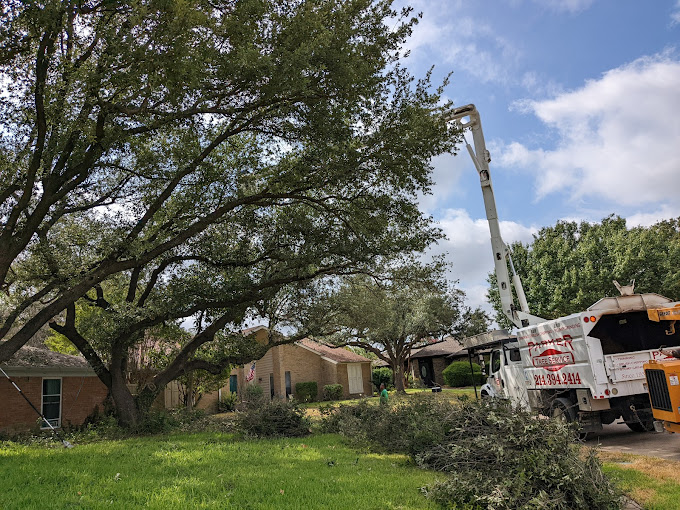
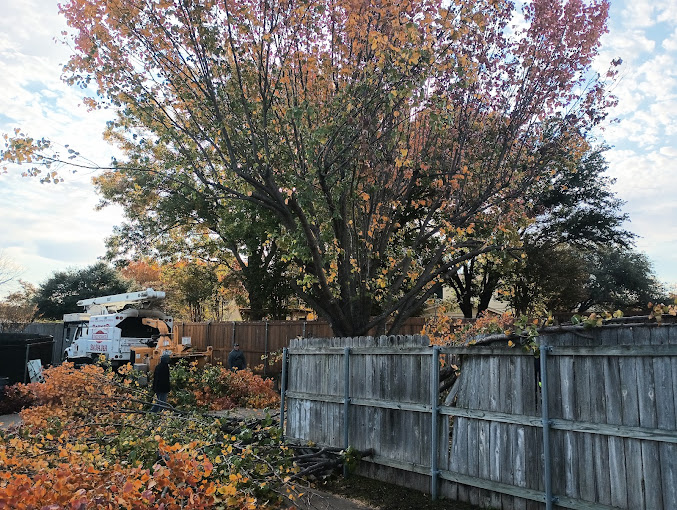
After a storm in Dallas, TX, a homeowner notices a large branch that is still attached but hanging over the driveway. The branch shifted after the wind, and it now rests above a parked vehicle and close to a fence line. The safest approach is to keep everyone back, protect the access path, and request emergency hazard removal. Once the branch is safely taken down, the crew evaluates the rest of the tree for additional stress points and discusses next steps like professional tree trimming or reduction so the remaining structure is less likely to fail again.
Follow-up options to consider
Once the immediate hazard is cleared, the next decisions often revolve around tree pruning services, disease or pest concerns, and cleanup. If you are dealing with visible structural issues, you may want tree removal service or targeted pruning and crown reduction depending on the condition. If the concern is related to health, ask about tree disease treatment and tree pest control, including wood borer treatment when there are signs of wood-boring activity.
Get a clear plan for emergency + next-step tree care
Parker Tree Service helps property owners in Dallas, TX and the DFW suburbs understand what to remove now and what to address next, including safe pruning, mitigation, and stump cleanup.
Request emergency tree removal helpFrequently Asked Questions
How do I know if my tree problem is truly hazardous?
Hazard risk is usually tied to signs of likely failure, such as a leaning trunk, visible cracks, a large limb that is hanging under tension, or roots that appear lifted or separated. If the tree or limb is over a driveway, walkway, roofline, or fence where people move daily, treat it as higher risk. When in doubt, contact a tree service for an on-site assessment so the hazard zone and next-step plan are clear.
What should I do right after a storm in Dallas, TX?
Start with safety. Keep people and pets away from the fall zone and avoid pushing or pulling at hanging limbs. If anything is near power lines, do not approach and let the utility handle electrical risk. Once it is safe to do so, protect access routes like driveways and gates, and document what you see (where the limb sits, where it landed, and any cracks or shifting). That information helps the crew plan controlled removal.
Will removing the hazard solve the underlying tree issue?
Not always. Hazard removal addresses the immediate risk, but it does not automatically fix structural weakness, decay, or pest activity that contributed to the failure. After the emergency work is done, ask for a follow-up evaluation of remaining branches and the trunk. Depending on what is found, the next steps may include professional tree trimming, crown reduction, or tree disease treatment and tree pest control.
What about the stump after emergency tree removal?
After tree removal, a stump can remain as an obstruction and a maintenance challenge. If you want the area cleared for landscaping or safer access, stump grinding service is often part of the cleanup. Stump grinding also helps reduce the presence of the remaining stump mass so the property looks more finished. If the tree removal was necessary due to a hazard, addressing the stump can be a practical follow-up step.
Do you handle tree pruning and health care after the emergency?
Yes. Many emergency situations reveal the need for additional tree maintenance services to reduce future risk. After the hazardous portion is removed, professional tree pruning service may be recommended to improve structure, thin a crown, or reduce stress on vulnerable limbs. If the issue is connected to tree health, the team can also discuss options such as tree surveys, tree health care, and deep root fertilization or soil conditioning to support healthier growth.
Company bio
Parker Tree Service provides tree services for Dallas, TX and nearby areas including Plano and the DFW suburbs. The team focuses on practical hazard risk removal, professional tree trimming, emergency tree removal services, and follow-up care that supports healthier tree structure. Their services also include stump grinding and removal, along with options related to tree health care such as deep root fertilization.
Parker Tree Service
Tree Services • Dallas, TX • Serving Plano and DFW suburbs