
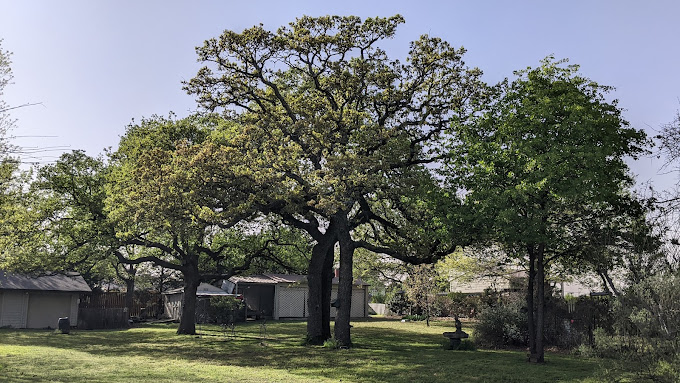
Emergency Tree Removal Team Responding Fast and Safely
In North Texas, storms roll in fast—and the damage they leave behind can be even faster. A mature oak can weigh several tons, and in a high-wind event it only takes a few seconds for that tree to end up on a roof, blocking a driveway, or leaning dangerously over a business entrance. Plano sees its share of severe weather, and local data shows that fallen trees and limbs are a leading cause of property damage during spring and summer storms across Collin County.
For business owners and property managers, that’s not just an inconvenience. A blocked parking lot, damaged storefront, or downed power line can shut down operations, create liability, and put people at risk. In these moments, you don’t need a quote “sometime next week”—you need an emergency tree service that responds now, and responds safely.
This guide explains how a professional emergency tree removal team works, what “safe” removal really means, how to reduce your risk before storms hit, and what Plano businesses can do today to protect their properties, tenants, and customers.
Key Insight: The speed of the response matters—but the safety, experience, and planning behind that response matter even more for protecting your people, property, and bottom line.
What “Emergency Tree Removal” Really Means for a Plano Business
When a tree fails on commercial property, the situation looks very different from a simple backyard cleanup. You’re often dealing with:
- Blocked customer access or delivery routes
- Damage to roofs, signage, fences, or vehicles
- Entrances and sidewalks compromised by hanging or split limbs
- Potentially live power lines entangled with branches
Emergency tree removal is not just cutting up a tree that’s already on the ground. It includes:
- Stabilizing hazardous limbs or trunks
- Performing a rapid, on-site tree risk assessment
- Coordinating with utilities if power lines are involved
- Removing debris in a way that keeps your business as operational as possible
A Plano shopping center recently called after a large hackberry split during a windstorm, dropping half the canopy across the main drive aisle. The property manager’s first instinct was to have their maintenance crew start cutting it up. Fortunately, they paused and called a professional tree removal service instead. Our team found the remaining half of the tree was cracked and leaning toward a tenant’s storefront. Without proper rigging, that second failure could have shattered glass and damaged inventory.
“An emergency tree situation is rarely just about the tree you see on the ground. It’s about what’s still up there waiting to fail.” — ISA Certified Arborist
For businesses in Plano, the stakes are high: one wrong cut can turn a manageable incident into a major loss. That’s why a true emergency tree removal team is trained to think like risk managers as much as saw operators.
Fast Response vs. Safe Response: How Professional Teams Balance Both
In an emergency, you want the first available crew—but “available” doesn’t always mean qualified. Plano has plenty of trucks with chainsaws, yet not all of them follow industry safety standards like ANSI Z133 and ISA best practices. The difference shows up in how they approach the scene.
A professional emergency tree removal team will:
- Conduct a quick but thorough site assessment
- Identify utilities, structures, and traffic patterns
- Plan access routes for equipment
- Decide whether to climb, use a bucket truck, or use a crane
- Establish a safety perimeter before cutting
For example, after a thunderstorm last year, a large live oak fell across a medical office parking lot near Preston Road. The property needed access restored before morning appointments. Our crew arrived within hours, set cones and tape to redirect vehicles, and used a bucket truck to dismantle the remaining hanging limbs before touching the trunk on the ground. This sequencing minimized risk to parked cars and allowed partial access to be reopened quickly.
Contrast that with a “cut it where it lies” approach that ignores:
- Compression and tension in the wood, which can cause saws to bind or logs to roll
- Hidden cracks in branches that can snap while someone is under them
- The need to preserve as much undamaged structure as possible for insurance documentation
Below is a simple comparison of how a rushed approach stacks up against a professional emergency response.
| Approach | Rushed “Cut & Go” Crew | Professional Emergency Team |
|---|---|---|
| Initial Site Assessment | Minimal or none | Structured safety and risk assessment |
| Coordination with Utilities | Rarely | Standard when lines are nearby or involved |
| Protection of Structures | Limited, reactive | Planned rigging, padding, and controlled lowering |
| Business Access Consideration | Secondary | Central to removal plan |
| Compliance with Safety Standards | Uncertain | Follows ANSI/ISA and OSHA guidelines |
| Documentation for Insurance | Basic photos, if any | Detailed photos and notes when requested |
For Plano businesses, “fast” should never come at the cost of safety or liability. The best teams deliver both by having the right people, equipment, and process ready before the storm clouds even form.
Preventing Emergencies: Strategic Pruning, Inspection, and Tree Health Care
The most cost-effective emergency is the one that never happens. Many tree failures we see in Plano after storms are preventable with proper maintenance and monitoring.
Regular, professional tree pruning and inspections help:
- Remove dead, diseased, or structurally weak limbs
- Reduce canopy weight through tree crown reduction and thinning
- Improve wind flow through the canopy
- Identify decay, cracks, or root issues early
A Plano office park off the George Bush Turnpike scheduled annual tree maintenance services after suffering repeated limb failures in their parking lot. During the first visit, we found multiple large limbs with poor attachment angles and hidden decay. Strategic professional tree trimming and structural pruning removed those high-risk branches and improved overall tree architecture. The next storm season, they had zero major limb drops—saving them thousands in clean-up and repairs.
Beyond pruning, proactive tree health care is critical in North Texas soils, which are often compacted and alkaline. Services like:
- Deep Root Fertilization
- Soil Conditioning and aeration
- Targeted Tree Disease Treatment and Tree Insect Treatment
can strengthen root systems and trunks, making trees more resilient in high winds.
“Healthy trees bend and recover in storms. Stressed or diseased trees are the ones that snap.” — ISA Certified Arborist
Plano properties are also increasingly dealing with pests like borers and webworms. Untreated infestations weaken trees from the inside out. Professional Tree Pest Control, Tree Borer Control, and Webworms Treatment help maintain structural integrity before the next wind event.
Specialized Equipment and Techniques That Make Emergency Work Safer
Emergency tree removal on commercial sites often calls for more than a chainsaw and a ladder. The complexity of Plano’s built environment—parking lots, signage, power lines, tight access between buildings—demands specialized equipment and advanced techniques.
Common tools and methods include:
- Bucket trucks for safe access to high or compromised limbs
- Cranes for large or precariously positioned trees
- Rigging systems to lower heavy sections without impact
- Loaders and grapple trucks for efficient debris removal
- Ground protection mats to prevent landscape and pavement damage
A good example: after a microburst hit a Plano business park, a large red oak uprooted and leaned into a two-story office building, resting partially on the roof and partially on a neighboring tree. Direct cutting from the ground would have risked the entire tree sliding off and crashing through windows. Our team used a crane to support the trunk while climbers installed rigging. Sections were then cut and lifted away in a controlled sequence, leaving the building with only minor gutter damage.
Compare that to a scenario where a crew without the right equipment tries to “walk” the tree off the roof with winches or trucks—a method that often causes more damage than the storm itself.
Here’s how traditional, minimal-equipment work compares to a modern, well-equipped approach:
| Factor | Minimal Equipment Crew | Modern, Equipped Team |
|---|---|---|
| Access to Tight Spaces | Limited | Bucket trucks, compact lifts, specialized gear |
| Control of Heavy Sections | Relies on guesswork and manpower | Engineered rigging and crane support |
| Impact on Property | Higher risk of secondary damage | Planned paths, mats, and controlled lowering |
| Job Duration | Longer, more labor-intensive | Faster, more precise operations |
| Worker Safety | Higher exposure to hazards | Reduced exposure through better positioning |
For Plano business owners, this means less downtime, less collateral damage, and a safer worksite. It’s the difference between a chaotic cleanup and a coordinated operation.
Beyond the Fall: Stump Removal, Site Restoration, and Long-Term Planning
Once the immediate hazard is gone and the property is safe, there’s still work to do. Leaving a jagged stump or root plate where a large tree once stood can create trip hazards, drainage issues, and aesthetic problems—especially on commercial sites.
Professional stump grinding service and affordable stump removal help you:
- Eliminate tripping risks in high-traffic areas
- Prepare the site for replanting or repairs
- Prevent regrowth from certain species
- Improve the appearance of your landscape
For a Plano retail center along Coit Road, a storm-damaged tree had to be removed from a highly visible corner by the main entrance. After the emergency removal, we returned with a Stump Grinding crew, ground the stump below grade, and restored the area with soil and mulch. The property manager later opted for tree planting of a more wind-resilient species, guided by our tree consultation and tree preservation services.
Post-emergency, it’s also a good time to:
- Conduct a broader tree inspection of the property
- Identify other trees with similar risk factors
- Plan tree mitigation or tree shaping for better wind performance
- Consider tree cabling and bracing for valuable but structurally weak trees
“Every emergency event is a chance to reassess your entire tree inventory and reduce future risk.” — Commercial Property Manager, Plano
For properties with multiple trees, especially HOAs, campuses, and business parks, formal tree surveys and tree risk assessment reports can support budgeting, insurance discussions, and long-term planning.
Working with Insurance, Municipal Rules, and Compliance in Plano
Storm damage and emergency tree situations often intersect with insurance claims and local regulations. Handling these pieces correctly can speed up reimbursement and prevent compliance headaches.
Many Plano-area policies cover storm damage tree service when trees damage insured structures. A professional tree company can assist by:
- Providing detailed invoices and descriptions of work
- Supplying before-and-after photos of damage and removal
- Documenting why removal was necessary (hazard, structural impact, etc.)
We’ve worked with numerous Plano businesses where prompt documentation helped move claims forward smoothly, from fallen tree removal on office roofs to dead tree removal that posed imminent risk to sidewalks.
On the regulatory side, Plano and surrounding municipalities have ordinances regarding:
- Protected tree species and sizes
- Requirements for tree mitigation when removing certain trees
- Permits related to large-scale lot clearing, brush clearing, or land clearing
A reputable arborist or certified arborist can advise when permits or mitigation plans are needed, particularly for larger commercial projects. This is crucial if an “emergency” removal involves a borderline situation where the tree is compromised but not yet failed.
For example, a Plano multifamily community needed hazardous tree removal for several large oaks leaning toward buildings after soil saturation. While some were clear emergencies, others required documentation and coordination with the city because of size and location. Our arborist services included written assessments that satisfied both the property’s risk concerns and municipal requirements.
What This Means for Businesses in Plano, TX
Plano’s mix of mature neighborhoods, rapidly developing business corridors, and unpredictable weather patterns makes tree risk a real operational concern. Whether you manage a single storefront or a large corporate campus, trees are part of your brand image, customer experience, and liability profile.
Here’s what that looks like in practice:
- Operational continuity: A downed tree blocking a restaurant entrance or office driveway can mean lost revenue for hours or days. Fast, professional tree removal near me is about keeping doors open and customers coming.
- Safety and liability: Injuries from falling limbs or trip hazards from poorly addressed stumps can expose businesses to claims. Proper stump removal and risk-based pruning reduce those exposures.
- Property value and aesthetics: Well-maintained trees enhance curb appeal and tenant satisfaction. Neglected or storm-damaged trees do the opposite. Regular tree care services and professional tree trimming are investments, not just expenses.
- Compliance and reputation: Working with an ISA Arborist Near Me shows tenants, clients, and regulators that you take safety and environmental stewardship seriously.
Plano’s growth means more paved surfaces, more compacted soils, and more pressure on the trees that remain. That combination makes proactive tree fertilization service, tree root care, and tree maintenance services even more critical.
Ultimately, partnering with a responsive, knowledgeable tree service near me gives you a single point of contact for emergencies, routine care, and long-term planning—so you’re not scrambling for help in the middle of the next storm.
Frequently Asked Questions
Q: How do I know if a tree emergency is serious enough to call a professional right away?
A: Any time a tree or large limb is leaning, cracked, or hanging where people or property could be hit, treat it as an emergency. Signs include visible trunk splits, roots lifting out of the soil, branches resting on structures, or limbs tangled in power or communication lines. Even if the tree hasn’t fully fallen, it may be unstable and could fail without warning. Call a professional tree service for a quick tree inspection and tree risk assessment—they can tell you whether immediate emergency tree service is needed or if it can be scheduled as non-urgent work.
Q: What should I do while I’m waiting for an emergency tree removal crew to arrive?
A: First, keep people away from the area. Block off sidewalks, entrances, or parking spaces near the damaged tree. Don’t try to cut or move anything yourself, especially if there are hanging limbs or if utilities are involved. Avoid standing under or near the tree to “get a better look.” If you suspect power lines are affected, contact your utility immediately. Gather your insurance policy information and take photos from a safe distance for documentation. When the tree removal service arrives, share what you’ve observed and any concerns about access or business operations.
Q: How much does emergency tree removal typically cost in Plano?
A: Costs vary based on tree size, location, complexity, and the equipment required. Removing a small fallen tree from an open area is very different from removing a large oak leaning over a building with a crane. Emergency work, especially after-hours, may carry higher rates due to urgency and staffing. That said, professional crews can often prevent secondary damage that would cost far more than the removal itself. If budget is a concern, ask about options and get a clear written estimate. Services like affordable stump removal, stump grinding near me, and phased work can help manage costs.
Q: Can my regular landscaping crew handle emergency tree work?
A: Most landscape maintenance crews are not equipped or trained for complex, hazardous tree removals. Mowing, mulching, and light trimming are very different from removing storm-damaged trees near buildings, vehicles, or power lines. For emergency situations, you want a company that specializes in tree removal, hazardous tree removal, and fallen tree removal, ideally with a certified arborist overseeing the work. They’ll have the right equipment, insurance, and safety protocols. Your landscaper may be able to help with cleanup after the tree is safely removed, but the high-risk cutting and rigging should be left to specialists.
Q: How can I reduce the chance of needing emergency tree removal in the future?
A: Preventive care is the key. Schedule regular tree pruning service and inspections, especially for large or high-traffic-area trees. Proper tree crown reduction and tree crown thinning help trees withstand high winds. Invest in tree fertilization service, deep root fertilization, and soil conditioning to strengthen roots and overall health. Address pests and diseases early with services such as wood borer treatment, wood borers treatment, and tree insect treatment. For valuable but structurally weak trees, consider tree cabling and bracing. A relationship with an ongoing residential tree service or commercial tree service provider means they’ll know your property and can spot problems early.
Q: Do I need a permit to remove a damaged tree from my commercial property in Plano?
A: It depends on the tree’s size, species, and location, as well as current city ordinances. Clear emergencies that threaten life or property are often exempt from prior permitting requirements, but documentation may still be needed. For borderline cases—such as compromised but still-standing trees—permits or tree mitigation plans may apply, especially on larger developments or for protected species. Working with an arborist near me who understands local rules helps you stay compliant. They can provide reports, photos, and recommendations that satisfy both city requirements and your risk management needs.
Q: Is stump grinding really necessary after an emergency removal?
A: While not always mandatory, stump grinding is highly recommended on commercial properties. A cut-off stump can be a trip hazard, interfere with parking or pedestrian flow, and attract pests. Over time, it can also sprout unwanted growth. Professional stump grinding and stump removal near me eliminate these issues and prepare the site for replanting, repairs, or redesign. On high-visibility sites, grinding also improves curb appeal and prevents the “storm damage” look from lingering. Many businesses bundle stump grinding service with emergency removal to restore the site quickly and completely.
Ready to Get Started?
Storms won’t wait for a convenient time, and neither do tree failures. The best moment to plan for the next emergency is before it happens. By establishing a relationship now with a trusted tree service near me, you’ll know exactly who to call when a limb cracks over your entryway or a tree blocks your parking lot.
If your Plano property has mature trees near buildings, walkways, or high-traffic areas, consider scheduling a proactive tree consultation and tree inspection. We can identify risks, recommend tree pruning services near me, and outline a plan that reduces the likelihood of costly emergencies. For properties already dealing with damage, our rapid-response team can provide safe, efficient storm damage tree service, from immediate hazard removal to follow-up stump grinding and site restoration.
Parker Tree Service has the equipment, training, and local experience to respond quickly and safely—while protecting your people, property, and operations. Don’t wait for the next storm to expose a hidden problem. Take a simple first step today and put a professional emergency tree partner in your corner.
About Parker Tree Service
Parker Tree Service is a locally rooted tree care company serving Plano, TX and surrounding North Texas communities. Our team includes ISA Certified Arborists and experienced crews specializing in tree removal, tree trimming, tree health care, and emergency response for both residential tree service and commercial tree service clients. With years of hands-on experience in North Texas weather and soil conditions, we provide practical, safety-focused solutions tailored to Plano properties. Learn more about our services at Parker Tree Service’s website.