
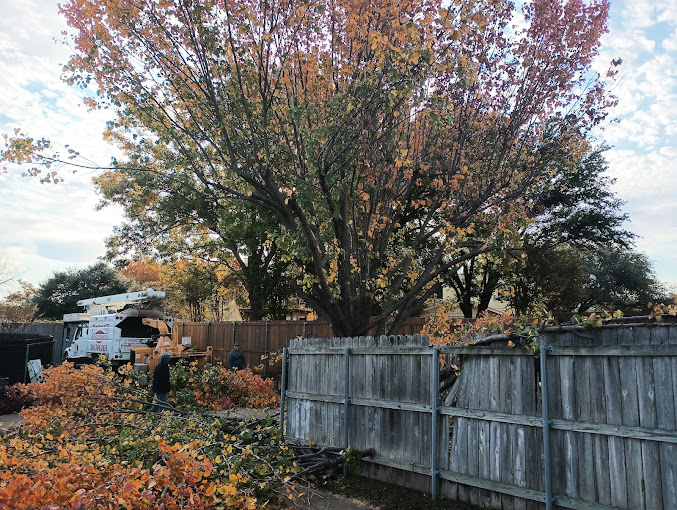
Revitalize Your Yard with Stump Grinding
On almost every Plano street, you can spot it: a yard with a beautiful tree canopy, and then… a jagged, gray stump sitting in the middle of the lawn. It only takes one old stump to make an otherwise well-kept property look unfinished. Beyond looks, those stumps can attract pests, create tripping hazards, and make mowing a headache.
Across North Texas, more homeowners are removing aging or storm-damaged trees, especially after the severe storms and ice events we’ve had in recent years. But many are left wondering what to do next with the stump. That’s where professional stump grinding can completely change how your yard looks and functions.
This guide walks you through how stump grinding works, why it’s so valuable for Plano properties, how it compares to other options, and what to expect if you hire a professional crew. You’ll also learn how stump removal ties into broader tree care—like pruning, fertilization, and disease prevention—to protect your landscape investment for years.
Key Insight: Removing a tree is only half the job—grinding the stump is what truly restores your yard’s safety, appearance, and usable space.
Why Old Stumps Are More Than Just an Eyesore
An old stump might seem harmless, especially if it’s been sitting in your yard for years. But in Plano’s climate and soil conditions, that leftover wood can quietly cause a variety of problems—both above and below ground.
Hidden risks in a “harmless” stump
Stumps break down slowly in our hot summers and occasional wet winters. As they decay, they can:
- Attract termites, carpenter ants, and other wood-boring insects
- Harbor fungal diseases that can spread to nearby trees and shrubs
- Send up constant sprouts that you have to keep cutting back
- Create trip hazards for kids, guests, and lawn crews
“Any dead wood left in the landscape is an open invitation for pests and decay organisms.” — ISA Certified Arborist
We’ve seen multiple Plano homeowners call for Emergency Tree Service after a diseased stump spread root rot into a nearby live oak or cedar elm. What started as “just a stump” turned into a hazardous, dying tree close to the house.
Real-world example from a Plano neighborhood
A family off Legacy Drive had a large pecan removed after storm damage but chose not to grind the stump. Within two years:
- The stump had sprouted a cluster of thin, weak shoots
- Mushrooms began appearing around the base
- Carpenter ants moved in, and shortly after, they found activity in their fence line
When they finally called us for a Stump Grinding Service, we discovered the decay had spread several feet into the main roots. Grinding removed the stump and much of the compromised wood, reducing the pest pressure around their home.
CALLOUT: A stump is not a neutral element in your yard—over time, it either decays, sprouts, or attracts pests. None of those outcomes are good for a healthy landscape.
How Professional Stump Grinding Works (And Why It’s Different from DIY)
Stump grinding sounds simple: a machine chews up the stump until it’s below ground level. But the way it’s done—and by whom—has a big impact on safety, results, and what you can do with that space afterward.
What actually happens during stump grinding
A professional crew will typically:
1. Inspect the site
They’ll locate utilities, irrigation lines, and nearby hardscapes (like patios, sidewalks, or driveways). In Plano’s newer subdivisions, sprinkler lines are often closer to the surface than homeowners expect.
2. Assess stump size and root flare
A 12-inch stump might have a root flare 24–36 inches across. Grinding has to cover more than just the visible wood.
3. Use a specialized grinder
The grinder has a rotating cutting wheel with carbide teeth that sweeps back and forth, chipping the stump and upper roots into mulch.
4. Grind to a specific depth
For replanting, we often grind 12–18 inches deep. For turf or landscaping beds, 6–8 inches may be sufficient.
5. Clean up and backfill
The resulting wood chips can be left in place as mulch or hauled away. Many Plano homeowners choose to have the hole partially backfilled so they can re-sod or plant.
“Professional stump grinding is as much about protecting what’s around the stump as removing the stump itself.” — Parker Tree Service Arborist
Why DIY stump removal often disappoints
Home improvement stores rent small grinders, and there are also chemical stump removers on the market. Both options sound appealing but often fall short, especially in dense clay soils like we have in Collin County.
Here’s a quick comparison:
| Approach | Pros | Cons (Especially in Plano) |
|---|---|---|
| Professional stump grinding | Fast, clean, deep, safe, precise | Higher upfront cost, scheduling needed |
| DIY rental grinder | Lower cost, flexible timing | Underpowered, time-consuming, higher risk of property damage |
| Chemical stump remover | Low physical effort | Very slow (months/years), can be inconsistent in clay soil |
| Leaving stump to rot naturally | No immediate cost | Attracts pests, sprouting, trip hazard, very long decay |
We were called to a home near Oak Point Park where a homeowner had tried to tackle a large red oak stump with a rental machine. The grinder couldn’t reach the main roots, and they accidentally nicked a sprinkler line. After two weekends of struggle, they still had half a stump and a leaking irrigation system—and then brought us in to finish the job.
Transforming Dead Space into Usable Yard: Design and Replanting Options
Once a stump is gone, you’re left with something valuable: options. That bare patch of ground can become the start of a new design feature, a safer play area, or the perfect spot for a new tree.
From obstacle to opportunity
Plano lots aren’t getting any bigger, and many neighborhoods have limited backyard space. Removing a stump opens up possibilities:
- Extending a patio or seating area
- Creating a flower or shrub bed
- Adding a small playset or fire pit
- Smoothing out the lawn for easier mowing
We worked with a homeowner near Preston and Spring Creek who had three old stumps scattered across the backyard. After grinding them, we regraded the soil, and they were able to install a small pergola and expand the lawn area. What used to be a “no-go” part of the yard became their favorite evening hangout.
Replanting a new tree after stump grinding
Many people ask if they can plant a new tree in the exact same spot. The answer is: sometimes, but not always right away.
Factors to consider:
- Residual roots: Large roots can still occupy space even after grinding.
- Soil quality: Wood chips mixed into the soil can temporarily tie up nitrogen.
- Species selection: Some species tolerate old planting sites better than others.
This is where a consultation with an ISA Arborist Near Me can help. They can recommend:
- Whether to shift the planting hole slightly off-center
- What soil amendments and Tree Fertilization Service make sense
- Which tree varieties perform best in Plano’s alkaline clay soils
“Think of stump grinding as phase one of a replanting plan. Good soil prep and species choice are what make the new tree thrive.” — Certified Arborist, Parker Tree Service
CALLOUT: Removing a stump is your chance to reset that part of your yard—don’t just fill the hole and forget it. Plan ahead for how you want that space to work for you.
Stump Grinding and Tree Health: Protecting the Rest of Your Landscape
Stump grinding isn’t just about what’s gone; it’s also about what’s still standing. Done thoughtfully, it can improve the overall health and safety of your remaining trees.
Stumps, pests, and disease pathways
In North Texas, certain pests and diseases are opportunistic. They target stressed or decaying wood first, then move into healthy trees.
Common concerns around old stumps:
- Wood borers and beetles that can spread to live oaks, elms, and pecans
- Fungal pathogens in decaying roots that move through soil moisture
- Webworms that take advantage of stressed trees already battling root issues
Plano’s dense neighborhoods mean that your trees are rarely isolated. A neglected stump in one yard can contribute to pest pressure across the fence. That’s why we often pair stump grinding with Tree Pruning Service and targeted Tree Insect Treatment for nearby trees.
A case of preventable spread
In a West Plano cul-de-sac, one homeowner removed a diseased elm but left the stump in place. Over the next few years:
- The stump decayed and hosted fungal growth
- Two neighboring properties began to see dieback in their elms
- Webworms and borers became recurring issues on the street
When our team was finally called to provide Tree Removal Service for a failing elm next door, inspection revealed root and soil issues consistent with spread from the original stump area.
By removing stumps promptly and following up with:
- Professional Tree Trimming to remove dead or weak branches
- Strategic Deep Root Fertilization for stressed trees
- Preventive Wood Borer Treatment and Webworms Treatment
you’re not just cleaning up your yard—you’re building resilience into your entire landscape.
Safety, Liability, and Property Value: The Hidden Benefits of Stump Removal
Beyond aesthetics and tree health, stump grinding has practical implications for safety and property value—issues that matter to any Plano homeowner or property manager.
Reducing trip hazards and liability
An exposed stump or its surface roots can easily catch a foot, mower wheel, or stroller. This is especially critical if:
- You have kids or elderly family members at home
- You rent out the property
- You host frequent guests or backyard gatherings
We’ve seen insurance adjusters flag protruding roots and stumps as potential liability concerns. On one rental home near Plano Senior High, the property owner chose to invest in Affordable Stump Removal after a near-miss fall incident. The relatively small cost helped minimize future risk and improved the yard’s appearance for tenants.
Boosting curb appeal and resale potential
In a competitive housing market like Plano’s, small details add up. A yard free of stumps and dead wood sends a message: this property is well cared for.
Real estate agents often recommend:
- Removing dead trees and grinding stumps
- Tidying up with Tree Pruning and Tree Shaping
- Addressing obvious pest or disease issues
One homeowner in east Plano preparing to sell had a large, rotting stump directly in view from the back windows. After stump grinding, re-sodding, and light Tree Crown Reduction on two overgrown oaks, their agent noted significantly better feedback from showings and an offer above asking within two weeks.
CALLOUT: Stump grinding is a relatively small investment that can pay off in fewer accidents, smoother lawn care, and stronger first impressions when it’s time to sell.
How Stump Grinding Fits into a Complete Tree Care Plan
Healthy trees don’t happen by accident. In Plano’s soil and climate, they need a combination of maintenance, protection, and sometimes, strategic removal. Stump grinding is one piece of a larger tree care puzzle.
From risk assessment to restoration
A thoughtful tree care plan often includes:
- Tree Risk Assessment & Inspection
Identifying hazardous or declining trees before they fail.
- Targeted Tree Pruning and Tree Crown Thinning
Reducing weight, improving structure, and minimizing storm damage risk.
- Tree Cabling and Bracing
Supporting valuable but vulnerable trees.
- Tree Removal & Dead Tree Removal
Taking out trees that are beyond saving or pose serious risks.
- Stump Grinding & Stump Removal
Eliminating what’s left to restore safety and aesthetics.
- Deep Root Fertilization & Soil Conditioning
Improving root health and soil structure, especially in compacted Plano clay.
- Tree Preservation Services & Tree Mitigation
Protecting trees during construction, additions, or major landscaping changes.
We recently worked on a remodel project near the Shops at Legacy where the homeowner needed Lot Clearing for an addition, but wanted to preserve three mature oaks. The plan involved:
- Removing two hazardous hackberries and grinding the stumps
- Installing tree protection zones and providing ongoing Tree Root Care
- Post-construction pruning and fertilization to help the oaks recover
Stump grinding was essential to creating buildable space without leaving future problems buried in the soil.
What This Means for Businesses in Plano, TX
For Plano businesses, multi-family communities, and commercial property managers, stump grinding plays a slightly different but equally important role.
Commercial landscapes around places like Legacy West, Granite Park, and the corporate centers along the Dallas North Tollway are heavily used and highly visible. A leftover stump in a parking lot island or near a building entrance doesn’t just look bad—it can:
- Create accessibility issues
- Interfere with mowing and landscape maintenance contracts
- Become a liability if a customer or employee trips
Many commercial clients we serve opt for a comprehensive Commercial Tree Service plan that includes:
- Regular Tree Maintenance Services and Professional Tree Trimming
- Proactive Tree Risk Assessment and Tree Inspection
- Timely Storm Damage Tree Service and Emergency Tree Removal
- Prompt stump grinding after any Fallen Tree Removal or Hazardous Tree Removal
On a large office campus off Plano Parkway, we partnered with the property manager to remove several aging Bradford pears and grind all stumps in one coordinated project. This allowed their landscape contractor to replant more appropriate species and improve sightlines for drivers, reducing both risk and long-term maintenance costs.
For HOAs and apartment communities, removing stumps also simplifies contracts with mowing crews and reduces the chance of equipment damage or worker injuries.
Bottom line for Plano businesses: Stump grinding is a small but crucial part of presenting a safe, polished, and professional exterior—one that reflects well on your brand and protects your bottom line.
Frequently Asked Questions
Q: How soon after tree removal should I schedule stump grinding?
A: In Plano’s climate, it’s best to schedule stump grinding as soon as possible after Tree Removal. Fresh stumps are easier to grind, and you reduce the window of time for pests and fungi to colonize the dead wood. Many of our clients book both services together so the stump is addressed immediately after the tree comes down. If a stump has already been sitting for months or years, we can still grind it effectively, but it may take a bit longer and the decay may have spread further into the root system.
Q: Can I plant a new tree exactly where the old stump was?
A: Sometimes, but not always right away. After stump grinding, there’s often a mix of soil and wood chips in the hole, and large roots may still occupy space below. For best results, we usually recommend shifting the new planting hole a foot or two away from the original center and improving the soil with compost and, if needed, Deep Root Fertilization. An ISA Arborist Near Me can help you choose a species and planting location that work with your specific yard conditions, especially in Plano’s clay soils.
Q: Is stump grinding safe near my foundation, patio, or sprinkler system?
A: Yes—when done by experienced professionals. Before grinding, we inspect for visible irrigation components and ask you about any known utility lines. Our team adjusts grinding depth and direction to avoid structures and sensitive areas. In many Plano neighborhoods, sprinkler lines are shallow and close to trees, so we take extra care around them. While there’s always some risk with underground systems, professional crews significantly reduce the chance of damage compared to DIY attempts. If necessary, we can coordinate with your irrigation provider to mark lines in advance.
Q: How much does stump grinding typically cost in Plano?
A: Cost depends on stump diameter, species, location, and access for equipment. A small, easily accessible stump may be relatively inexpensive, while a large hardwood stump in a tight backyard costs more. Plano properties with multiple stumps often qualify for a lower per-stump rate when we handle them in a single visit. During an on-site visit or photo-based estimate, we’ll provide clear pricing and options, including whether you want us to haul away chips or leave them as mulch. Many homeowners find that professional Affordable Stump Removal is more cost-effective than renting equipment and spending a weekend on the project.
Q: Will stump grinding stop the tree from sprouting back?
A: In most cases, yes. Proper stump grinding removes the main trunk and upper roots, which usually stops new growth. However, some species are more persistent and can send up sprouts from lateral roots further away from the stump. If that happens, those sprouts are typically weaker and easy to manage with mowing or spot treatments. When we know a tree species is especially prone to resprouting, we can discuss additional strategies to ensure complete control.
Q: Do I need to treat the area after grinding for pests or disease?
A: Not always, but it can be wise in certain situations. If the removed tree had obvious insect activity, decay, or a diagnosed disease, we may recommend follow-up Tree Disease Treatment, Tree Borer Control, or Tree Pest Control for nearby trees you want to protect. In Plano, issues like borers and webworms can move from stressed or decaying wood into otherwise healthy trees. A quick evaluation by a Certified Arborist will determine whether preventive treatments make sense for your landscape.
Q: How does stump grinding affect my soil and future landscaping plans?
A: In the short term, the stump area will contain a mix of soil and wood chips, which can temporarily tie up nitrogen as the wood decomposes. For lawns or planting beds, we typically recommend removing excess chips, backfilling with quality topsoil, and then considering Soil Conditioning or Tree Root Care if you’ll be replanting nearby. Over time, the remaining fine roots break down and can actually improve soil structure, especially in compacted Plano clay. Planning ahead with your landscaper or arborist ensures the area is ready for sod, beds, or a new tree.
Ready to Get Started?
Plano’s weather isn’t gentle on our trees—or our yards. Between spring storms, summer heat, and clay soil, you’re already asking a lot of your landscape. Leaving old stumps in place just adds one more source of stress, mess, and risk.
If you’ve recently had a tree removed, are dealing with a long-forgotten stump, or are planning a new landscape project, now is the ideal time to take care of it. The sooner you grind and remove stumps, the sooner you can reclaim that space for something better: a safer lawn, a new tree, or a cleaner look that boosts your curb appeal.
Parker Tree Service has been helping Plano homeowners and businesses with Tree Care Services, Tree Trimming, Tree Removal, and stump grinding for years. Our team combines modern equipment with Arborist Services and local expertise, so your stump isn’t just gone—it’s handled in a way that supports the long-term health and beauty of your entire property.
If you’re ready to revitalize your yard with professional stump grinding, we’re here to help with clear recommendations, honest pricing, and careful work.
About Parker Tree Service
Parker Tree Service is a locally focused tree care company serving Plano, TX and the surrounding communities. Our team includes experienced professionals and Certified Arborists dedicated to safe Residential Tree Service and Commercial Tree Service, from pruning and Tree Trimming Near Me to Emergency Tree Removal, stump grinding, and ongoing tree health care. We understand North Texas trees, soils, and weather—and we’re committed to protecting both your landscape and your property value.