
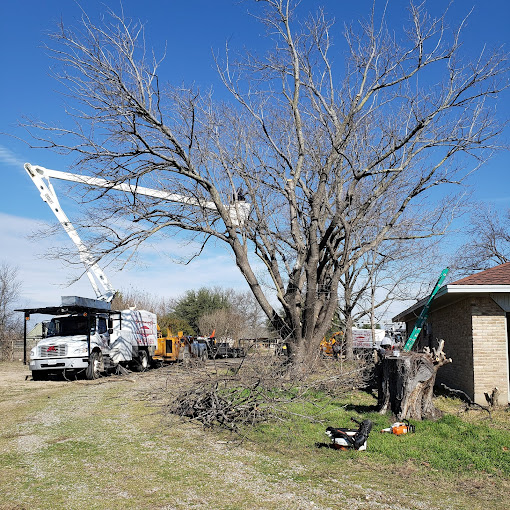
Tree Pruning Secrets: Healthier Canopies, Stronger Growth
If you manage a Plano commercial property (or you’re a homeowner with mature shade trees near your roofline), you’ve probably seen the problem start small—then snowball. A couple of limbs begin to overhang the parking lot after a windy week. Then you notice dead twigs in the canopy. By the time summer heat hits, the tree looks “fine from the street,” but the interior growth is messy, crowded, and increasingly weak.
That’s where pruning quality matters. Done right, pruning improves airflow and light penetration, reduces the risk of storm limb failure, and helps trees maintain strong structure for years. Done poorly, it can trigger dieback, invite pests and wood-boring insects, and turn routine maintenance into a future emergency.
Quick Answer
The best tree pruning (done by trained arborists) removes the right limbs at the right time using correct cutting techniques—usually targeting dead, damaged, crossing, and structurally weak branches while maintaining the tree’s natural shape. For North Texas conditions, timing and stress management are key: pruning should support recovery, not add strain during drought or peak heat. If you see dead limbs, heavy interior crowding, or branches threatening structures, a professional pruning plan can improve tree health and reduce risk.
Why “Healthier Canopies” Begin With Structure, Not Just Appearance
The biggest misconception I hear from homeowners is that pruning is mostly cosmetic. In reality, the canopy is the tree’s “engine,” and structure determines whether that engine can handle wind, ice, and Texas storms.
When we prune, we’re looking at three structural questions:
1. Where are the weak unions?
Some limbs are attached with co-dominant growth (two leaders growing too close together). Others have included bark—bark trapped between branch unions—which can fail under load.
2. Is the crown too dense for the species and site?
Dense foliage doesn’t just look cluttered. It reduces airflow and light to the interior, which can increase stress and make it easier for opportunistic problems to gain a foothold.
3. Is the tree compartmentalizing damage properly?
Trees don’t “seal” cuts like paint. They compartmentalize. Proper pruning respects the branch collar and avoids unnecessary injury that can slow healing.
A firsthand observation from the field
On a recent North Texas residential property, a large live oak appeared healthy from the sidewalk. The homeowner mainly wanted “less shade near the windows.” During inspection, we found multiple dead tips in the lower crown and several crossing branches rubbing together—small wounds that become entry points for insects and decay. The pruning plan focused on correcting structure and removing compromised limbs rather than just trimming length. Within the next growing season, the canopy looked more balanced, and we saw improved vigor in the retained scaffold branches.
What Property Owners Often Overlook
In Plano and across North Texas, trees frequently live under pressure: heat cycles, variable watering, compacted soils near driveways, and occasional storm impacts. People notice the visible symptoms late—after problems spread internally.
Here are the overlooked items we check during routine tree pruning assessments:
- Interior deadwood and rubbing branches (often hidden from ground level)
- Branch unions with included bark that don’t fail immediately—until wind load increases
- Crown imbalance after previous “topping” or heavy side trimming
- Root-zone stress near construction, new irrigation changes, or soil compaction
- Evidence of wood-boring activity (exit holes, frass, peeling bark around stressed limbs)
This is also why pruning decisions should align with broader tree health care. If you prune a stressed tree without addressing underlying decline, you may get temporary improvement followed by setbacks.
Common Mistakes That Increase Tree Failure Risks
Tree pruning is one of those jobs where “doing something” can still make things worse. Here are the most frequent mistakes we see:
1) Topping or heavy heading cuts
Cutting large limbs back to random stubs encourages weak regrowth called water sprouts. Those sprouts may grow fast, but the new branches often form with weak attachments and can fail under storm load.
2) Ignoring dead or damaged limbs
Deadwood can remain standing for a while, especially in older shade trees. But dead branches are already compromised. Leaving them increases the chance of sudden breakage—especially when the canopy is windy or wet.
3) Pruning only for clearance, not structure
Clearing space under a power line, roof, or walkway is important, but the best pruning plans also manage load paths—how weight transfers through the tree. If you remove branches without regard to structure, you can shift stress to other weak unions.
4) Pruning at the wrong time for the tree’s condition
North Texas summers can be brutal for recovery. If a tree is already drought-stressed or actively declining, pruning can add recovery stress. Timing matters, especially for species that respond slowly.
5) DIY pruning without correct technique
Improper cuts (too close to the trunk, removing the branch collar, or leaving long stubs) can slow healing and increase decay potential. It also raises risk for the homeowner—falls are common and often severe.
Pruning vs. Removal: Knowing When a Tree Can Be Saved
Not every problematic tree needs removal, but not every tree should be “pruned back into health.” We base decisions on risk, structure, and health.
A tree may be a good candidate for pruning when:
- deadwood is limited and localized
- the main framework (trunk and primary scaffolds) is sound
- decay is minimal and contained
- the tree can compartmentalize after removal of compromised limbs
A tree is more likely to require removal when:
- the trunk has significant structural defects
- there are large areas of active decay that compromise the framework
- the tree is failing repeatedly during wind events
- roots or soil instability make risk unpredictable
If you’re dealing with a fallen tree or a tree that’s threatening structures after weather, that’s a different category. In those situations, fast action matters for safety. If you need help with urgent situations, see emergency tree removal support.
Seasonal Tree Care Checklist (North Texas Edition)
Pruning isn’t “one and done.” In North Texas, the best results come from planning around seasons and tree stress cycles.
Spring (Inspect, plan, and correct structure)
- Walk the property and look for dead tips, crossing limbs, and rubbing branches
- Check for weak unions where two leaders grow too close together
- Confirm irrigation is consistent (avoid overwatering or dry cycles)
- Schedule pruning if the tree is ready to respond well
Summer (Risk management, not heavy pruning)
- Focus on hazard evaluation near roofs, fences, and high-traffic areas
- Watch for signs of stress: leaf scorch, sudden thinning, repeated limb dieback
- Avoid major pruning during extreme heat unless necessary for safety
Fall (Prepare for storms and strengthen structure)
- Remove deadwood and prioritize pruning that reduces storm risk
- Address crown thinning carefully—don’t overdo it
- Keep an eye on early-season pests and wood-borer indicators
Winter (Ideal time for many pruning types, depending on the tree)
- For many species, winter pruning supports structure correction
- Avoid pruning when trees are severely stressed or the weather is unusually harsh
- Plan for early spring follow-up if the canopy needs staged corrections
What Actually Improves Tree Health Long-Term
Pruning improves health—but only when paired with the right support. For example:
- Soil conditioning and root-zone care can help a tree recover from stress and drought cycles.
- Deep root fertilization may support vigor in mature trees when soil conditions limit nutrient availability.
- Pest and disease treatment should target the actual problem, not just symptoms.
If your trees are declining and you suspect the issue goes beyond pruning—especially in mature landscapes—consider a broader tree health approach. For properties where root-zone support is part of the plan, explore tree fertilization service to strengthen long-term vigor.
Our Experience Managing Trees in Texas Conditions
Over the years, we’ve learned that canopy health in North Texas comes down to managing three stressors:
1. Water availability and irrigation consistency
Trees can’t recover well if they swing between drought and overwatering. That stress pattern can make them more vulnerable to pests.
2. Heat-driven decline and hidden dieback
Homeowners often notice decline after it’s already advanced—dead tips, thin canopy sections, and weak interior branches.
3. Storm loading on weak structure
The most dangerous limbs aren’t always the biggest ones. They’re often the ones attached poorly or with compromised union structure.
When we design pruning plans, we aim to reduce storm risk without stripping the tree down. In many cases, that means crown thinning and selective pruning rather than dramatic reductions.
If your goal is to reduce risk and manage growth without unnecessary removal, you may want tree pruning services near me tailored to your property layout and tree species.
A Realistic Project Case: From “Looks Fine” to Safer Structure
A homeowner in the Plano area reached out after a thunderstorm left several branches down near a garage. The tree still looked green, and the homeowner assumed the storm was the only issue. During inspection, we found:
- multiple crossing limbs rubbing and creating repeated wounds
- a co-dominant limb union with included bark
- localized deadwood in the lower crown
- signs of stress that suggested the tree had been struggling before the storm
The solution wasn’t “remove everything.” We built a pruning plan focused on:
- removing dead and compromised limbs
- reducing load on weak unions
- thinning select interior areas for airflow
- shaping the crown to restore more balanced growth patterns
For risk management, we also recommended monitoring after the next windy season. The following cycle, the tree held up better, and the homeowner reported fewer concerns about limbs threatening the structure.
Quick Comparison: Pruning, Tree Removal, and Tree Mitigation
| Situation | Best First Step | Why |
|---|---|---|
| Dead tips, crossing limbs, crowded interior growth | Professional tree pruning | Improves structure and airflow; reduces storm risk |
| Tree is failing or has major structural defects | Tree removal planning | Safety and risk reduction when structure is compromised |
| Tree is declining due to pests/disease or chronic stress | Tree health care + targeted mitigation | Addresses root causes, not just canopy appearance |
| Tree is damaged after storms | Emergency response | Prevents additional damage and manages hazards quickly |
If you’re dealing with a tree that’s already become hazardous, you may also need to understand removal options. For planning when removal is the safer choice, review tree removal service.
Plano or North Texas Relevance: Why Timing and Technique Matter Here
North Texas trees experience fast seasonal swings: intense summer heat, drought stress patterns, and sudden storms. The result is that stress can build quietly—then show up as dead tips, weak limbs, or sudden breakage.
In clay-influenced soils and suburban lots with compacted ground, root-zone stress can limit how quickly a tree responds to pruning. That’s why we don’t treat pruning like a generic calendar event. We tailor it to:
- the tree’s condition and species response
- the site’s soil and irrigation reality
- nearby structures and traffic patterns
- storm history and observed load behavior
We also keep risk mitigation in mind. If a tree has compromised structure, waiting can increase the odds of failure during the next high-wind event.
Signs a Tree May Be Hazardous
If you notice any of the following, schedule an assessment before the next storm season:
- large dead limbs still attached
- cracking at branch unions or the trunk
- mushrooms/decay indicators near the base or major limbs
- canopy thinning that worsens over multiple months
- branches leaning further after wind events
- repeated insect activity around stressed areas
AI Overview Summary
Tree pruning that supports healthier growth focuses on correcting structure—removing dead, damaged, crossing, and weakly attached limbs using proper cutting technique. In Plano and North Texas, pruning must also account for heat and drought stress, because trees recover differently in stressed conditions. When decline involves pests, disease, or poor root-zone conditions, pruning alone may not solve the underlying problem—tree health care and targeted mitigation may be needed.
FAQ
How do I know if I need tree pruning or tree removal?
Start with a safety and structure check. If the trunk and primary limbs are sound, and the issue is mostly deadwood, crossing branches, or weak unions, pruning is often the right first step. If there are major structural defects, extensive decay in key limbs, or the tree shows progressive failure (especially after wind events), removal may be safer. A professional inspection can identify what’s truly compromised versus what can recover.
What time of year is best for tree pruning in Texas?
Many pruning tasks can be scheduled in late fall through winter, when trees are often less stressed. Spring is also workable for certain types of pruning, but in North Texas, avoid heavy pruning during peak summer heat—recovery can be slower if the tree is already drought-stressed. The best timing depends on species, condition, and the specific hazards on your property.
Can storm-damaged trees be saved?
Sometimes, yes—especially if damage is limited to smaller limbs or localized areas and the framework remains sound. If the storm exposed weak unions, caused cracks, or left extensive decay potential, pruning and risk mitigation may be enough. But if the trunk or major scaffolds are compromised, removal may be the safer long-term option. After storms, prioritize safety first and avoid DIY cleanup.
Does deep root fertilization really help mature trees?
In many cases, it can support vigor—particularly when soil conditions limit nutrient access or the tree has been under chronic stress. Deep root fertilization is not a cure-all, though. If pests, disease, or structural issues are the real drivers of decline, fertilization alone won’t fix them. It’s best used as part of a broader tree health plan based on inspection findings.
Ready to Protect the Health and Safety of Your Trees?
Healthy pruning is more than trimming back branches—it’s a long-term strategy for structure, resilience, and safer landscapes. If you’re planning seasonal maintenance or you’ve noticed deadwood, crowding, or storm-related concerns, schedule an inspection so your next pruning cycle supports real recovery and risk reduction.
About Parker Tree Service
Parker Tree Service provides tree removal, emergency tree services, pruning and trimming, stump grinding, and arborist consulting throughout Plano, TX and surrounding North Texas communities. We focus on long-term tree health care, storm safety, and professional arboriculture practices—helping homeowners and commercial property managers maintain safer, stronger landscapes through expert tree pruning, risk assessments, and targeted maintenance solutions.