
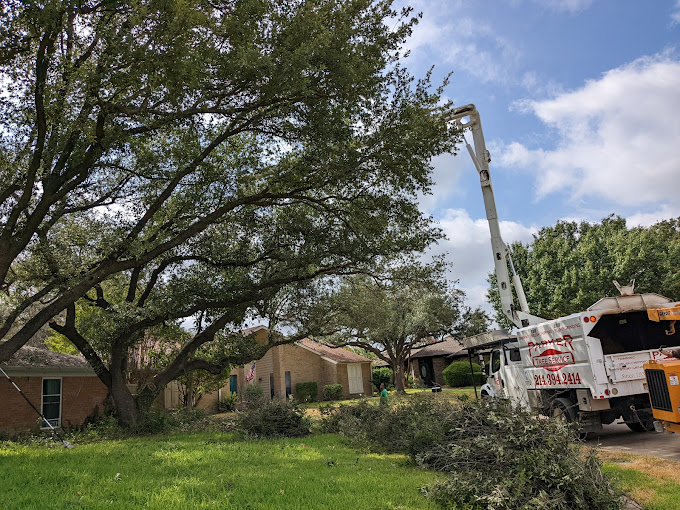
Tree Pruning That Restores Shape, Strength, Health
If your trees in Dallas, TX look “overgrown” or lopsided, or if branches are rubbing roofs and power lines, pruning is often the practical fix. This guide explains how professional tree pruning restores crown shape, improves structure, and supports healthier growth, so you know what to ask for from a local tree pruning service.
Last summer, a homeowner in Dallas noticed their oak’s crown getting wider every season. The branches started to hang lower over the driveway, and a few limbs were rubbing the side of the house during windy days.
They were worried that “just cutting it back” might create more problems later, especially if the tree was already stressed. The goal was simple: make the tree look better and feel safer without harming it.
This guide walks you through what a quality tree pruning plan focuses on, what to check before you schedule, and when pruning should be paired with other services like tree removal service, stump grinding service, or tree pest control.
Quick Answer
Tree pruning helps when it targets the right branches for the right reason: removing dead or hazardous limbs, thinning the crown for airflow, and shaping the tree without over-cutting. A good pruning plan also considers tree health, nearby structures, and whether pests or disease treatment is part of the issue. For Dallas homes, the practical recommendation is to have an arborist-style assessment first, then prune with a clear objective (like tree crown reduction or crown thinning). If you see major hazards or fallen limbs after storms, use a tree removal service or emergency tree removal services instead of trying to DIY.
What to Check First
Before you book tree pruning near me, take a quick look at what your tree is actually trying to tell you. The best pruning is guided by structure and condition, not just appearance.
1) Look for hazards
Check for deadwood, cracks, branches with bark damage, and limbs that lean toward the house or walkways.
2) Notice crown imbalance
If the tree is “heavy” on one side, the goal is often structural pruning and selective thinning, not a single haircut.
3) Watch for pest or disease signs
Unusual holes, webbing, dieback, or thinning leaves can point toward wood borer treatment or tree disease treatment needs.
Once you know what you are dealing with, you can choose the right service. For example, if the problem is purely clearance or storm damage, you may need more than pruning. If the trunk or stump is the issue, stump removal steps like stump grinding service may be the next phase.
Main Things Customers Should Understand
Tree pruning services are often described as “trimming,” but professional pruning is more specific. The difference is the intent: restoring shape, improving strength, and supporting long-term tree health.
Professional observation: In my day-to-day work around Dallas and the DFW suburbs, the trees that look the worst often have multiple causes at once. A branch may be overextended due to growth pattern, but the reason it’s failing could be deadwood from stress or openings that attract insects. That is why pruning works best when it is paired with a quick diagnosis of tree risk and health.
What “good” pruning usually accomplishes
- Shape restoration: Tree shaping and crown thinning can bring the canopy back toward a balanced, natural form.
- Strength improvement: Selective removal reduces weak or competing growth and supports a healthier framework.
- Health support: Thinning helps light and airflow reach inner branches, which can reduce stress and slow the spread of certain issues.
- Clearance management: Proper pruning reduces contact with roofs, gutters, and driveways without stripping the tree.
Pruning vs. other tree services
Sometimes pruning is the right first step. Other times, it is part of a sequence. Here is a practical decision view:
| What you’re seeing | Most common next step | Related service to consider |
|---|---|---|
| Dead limbs, cracked branches, or limbs leaning toward the home | Targeted pruning to remove hazardous portions and rebalance the crown | Pruning, trimming, and reduction |
| Tree damage after high winds or storms, including fallen limbs | Emergency-focused removal and mitigation for safety | Emergency tree removal services |
| A stump remains after tree removal, with roots spreading into the yard | Stump grinding and removal to restore usable space | Stump grinding and removal |
| Signs of decline linked to soil stress or ongoing root issues | Tree fertilization and soil conditioning support alongside pruning | Deep root fertilization |
When pruning should include tree health care
In real yards, pruning is rarely the only lever. If you notice webbing, unusual leaf drop, or dieback, tree pest control and wood borer control may be part of the plan. For homeowners dealing with insect pressure, pairing pruning with appropriate tree insect treatment or wood borers treatment can help you avoid “pruning the symptom” while the cause remains.
Why This Matters in Dallas, TX
Dallas weather cycles can be hard on trees. After hot stretches and windy periods, stress can show up as deadwood, weak branch unions, and canopy imbalance. That is why pruning in Dallas and the DFW suburbs often focuses on three things: removing fragile growth, improving airflow through crown thinning, and managing clearance around typical property features like garages, driveways, and older rooflines.
Another local reality is space. Many Dallas properties sit close to sidewalks, fences, and utility lines, so “more cutting” can be the wrong approach. The safer path is selective pruning with a clear goal, so the tree keeps its structure while you reduce risk.
Customer-friendly tip: If your tree’s canopy is leaning or uneven, ask whether the pruning plan includes tree crown thinning or tree crown reduction for structure, not just length.
Common Mistakes to Avoid
These mistakes are common when people search for “tree pruning services near me” and end up with a plan that is focused only on quick appearance.
- Cutting too much at once: Over-pruning can stress the tree and lead to new, weaker growth.
- Pruning without a structure plan: Removing random branches can worsen imbalance instead of restoring shape.
- Ignoring pest or disease signs: If you suspect wood borer treatment or webworms treatment, pruning alone may not solve the underlying issue.
- Waiting after storm damage: Fallen limbs and compromised branches can create ongoing risk.
- Forgetting the next step: If you remove a tree or large limbs, stump grinding service may be needed to fully clear the area.
If you are unsure whether your situation calls for pruning or a different service, you can start with the option that matches the risk level. For example, if you are dealing with a hazardous situation after storms, explore Parker Tree Service’s emergency tree removal services rather than delaying.
Customer Checklist
Use this short checklist when you call. It helps you get a clear plan for tree pruning near me that supports tree health care, not just cutting.
- Share what changed (leaning, clearance issues, deadwood, insect activity, or storm damage).
- Point out where branches touch the house, roof edges, fences, or walkways.
- Ask whether the pruning goal is tree shaping, tree crown thinning, or tree crown reduction.
- Request an explanation of what will be removed and why (deadwood, weak unions, clearance, or structure).
- If you see signs of insects or decline, ask whether tree disease treatment or tree pest control should be included.
- If a stump is involved, ask whether stump grinding and removal is part of the work sequence.
Ready for a pruning plan that protects your tree and your property?
Call (214) 394-2414 to discuss tree pruning services in Dallas, TX and the DFW suburbs, including Plano.
Contact Parker Tree ServiceA representative scenario (what it looks like on-site)
A homeowner in the Dallas area called about a large, lopsided canopy that was starting to brush the edge of the roof after repeated windy days. On inspection, the crew identified a mix of older deadwood and branches that had grown into an uneven framework. The pruning approach focused on selective removal, crown thinning to improve airflow, and shaping to restore a more balanced silhouette. After the pruning, the tree’s inner canopy opened up, and the clearance around the home improved without stripping the tree down.
In yards where stump removal is needed after related work, customers often follow up with stump grinding and removal to fully reclaim the space.
Frequently Asked Questions
How do I know if I need tree pruning or tree removal?
Pruning is typically the right starting point when the tree has manageable hazards, such as deadwood, overextended limbs, or crown imbalance. Tree removal is more likely when the tree’s structure is failing, the trunk or major limbs are compromised, or the risk level cannot be reduced safely through pruning. A practical step is to ask for a tree risk assessment or inspection-style evaluation so the plan matches the condition, not just the look.
What is the difference between tree trimming and professional tree pruning?
Tree trimming often refers to routine cutting for appearance or clearance. Professional tree pruning is more intentional, focusing on structure and health. That can include crown thinning, crown reduction, and selective removal of deadwood or weak growth. When you’re looking for tree pruning services near me, ask what the pruning objective is and which branches are being removed to restore shape and strength.
Can pruning help with tree pests or wood borers?
Pruning can help by removing affected or compromised portions and improving access for treatment, but it may not be the only step if the issue is active. If you’re seeing signs of insect activity, ask whether wood borer treatment, tree insect treatment, or webworms treatment should be part of the plan. Pairing pruning with tree pest control is often how homeowners avoid repeated problems.
Do you offer deep root fertilization or soil conditioning with pruning?
In some cases, pruning alone does not address the stress behind slow growth or decline. If your tree appears to need additional support, deep root fertilization and soil conditioning can be paired with maintenance pruning. If you are considering tree fertilization service, ask whether deep-root work is recommended after an inspection of the tree’s overall health.
What should I do after storm damage?
After high winds, fallen limbs can create ongoing risk even if the tree looks “mostly okay.” The safest approach is to have a qualified crew evaluate what is compromised. For storm-related issues, consider emergency tree removal services so the mitigation focuses on safety first and then restores the property.
Get the right pruning plan for Dallas, TX
If you want tree pruning near me that restores shape, supports tree health care, and reduces risk around your home, Parker Tree Service can help.
Call Parker Tree Service