
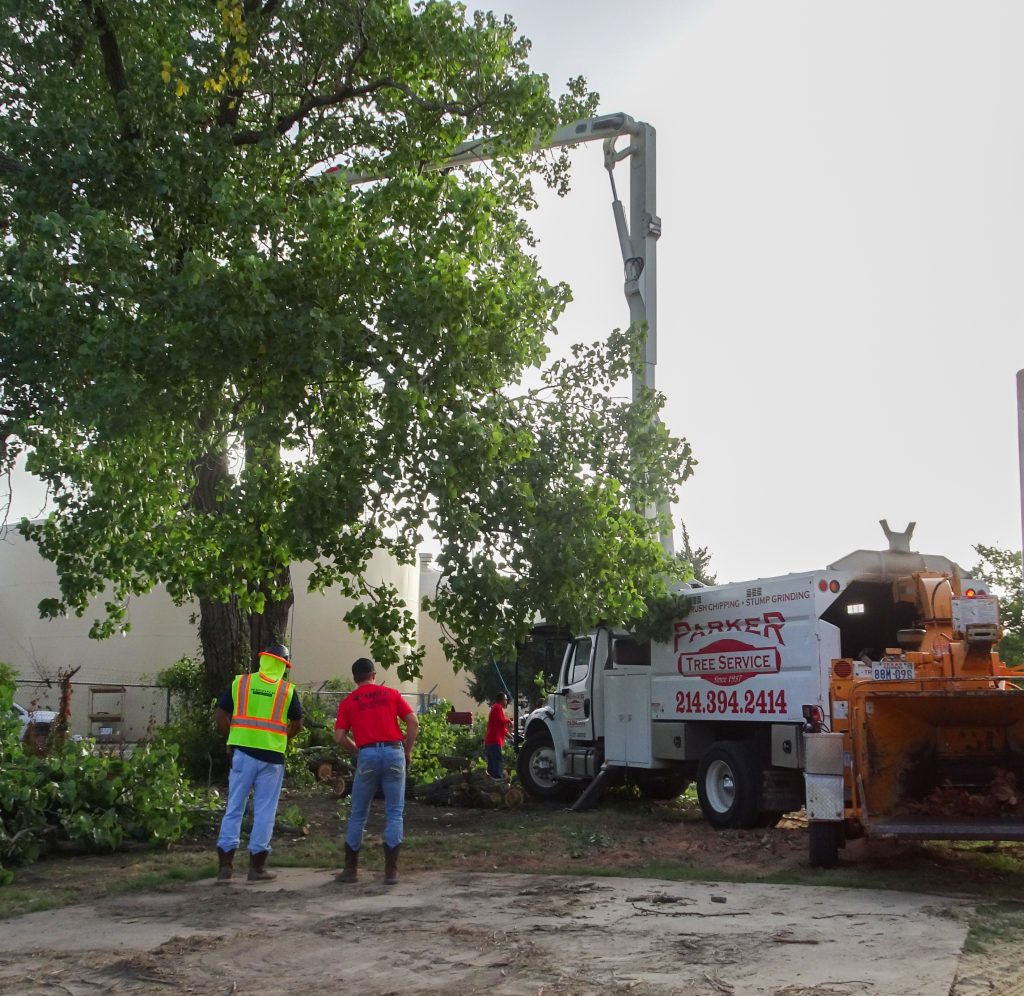
Emergency Tree Removal for Severe Weather Damage
Spring in North Texas can turn dangerous in minutes. One moment you’re looking out at a calm Plano neighborhood, and the next, 70 mph straight-line winds or a fast-moving thunderstorm are snapping limbs and uprooting mature oaks. The City of Plano has reported multiple storm events in recent years where downed trees blocked major roads, damaged homes, and knocked out power to entire blocks.
For business owners and property managers, those fallen trees aren’t just a mess—they’re a liability, a safety hazard, and a disruption to operations. Waiting a day or two for help isn’t always an option when a cracked trunk is leaning toward your storefront or a massive limb is resting on your roof.
This guide walks you through what to do after severe weather hits, how professional emergency tree removal works, and how to reduce your risk before the next storm rolls through Plano. You’ll also learn how a local ISA Certified Arborist evaluates storm damage, when a tree can be saved, and when it needs to come down fast.
Key Insight: Fast, professional emergency tree service protects people first, then property, and then your long-term landscape investment—especially in a severe-weather market like Plano, TX.
Understanding Storm-Damaged Trees in Plano’s Climate
North Texas trees take a beating. Between intense heat, clay soils, and sudden severe storms, even healthy trees can fail under the right conditions. That’s why storm damage in Plano looks different than in milder climates.
Why Plano Trees Fail in Severe Weather
Several local factors increase the risk of tree failure during storms:
- Expansive clay soils that shrink and swell, weakening root stability
- Shallow root systems from compacted urban soils and limited planting space
- Previous improper Tree Pruning that left weak branch unions
- Hidden decay, pests, or disease that compromise internal strength
“Most storm failures we see in Plano started as a small, unnoticed defect years earlier.” — ISA Certified Arborist, Parker Tree Service
A large pecan with internal decay might look fine from the street, but under high winds it can shear at the trunk. A live oak with a heavy, unbalanced canopy may twist and drop a massive limb across a parking lot.
Visible Signs of Storm-Compromised Trees
After a storm, it’s critical to recognize when a tree is unsafe:
- Cracks in the trunk or major limbs
- The tree leaning more than it did before the storm
- Uplifted soil or exposed roots on one side
- Hanging or “widowmaker” branches snagged high in the canopy
- Bark ripped away, exposing large areas of wood
Understanding what you’re looking at helps you prioritize which trees need immediate attention and which can wait for a scheduled inspection.
Safety First: What to Do Immediately After Storm Damage
The moments and hours after severe weather are when most secondary accidents happen—not during the storm itself. Downed limbs, unstable trunks, and hidden hazards can turn a cleanup attempt into an emergency room visit.
Step 1: Secure the Area
Before you think about cleanup:
- Keep people, pets, and vehicles away from damaged trees
- Look for downed or sagging power lines—assume they’re live
- Check for limbs resting on roofs, carports, fences, or play structures
- Block off walkways or entrances beneath hanging branches
If you manage a commercial property in Plano, consider temporary cones, tape, or barriers around the danger zone. This not only protects people, it also documents that you took reasonable steps to control a known hazard.
Step 2: Avoid DIY on Hazardous Trees
Chainsaws and ladders are a dangerous combination, especially when the wood is under tension and the ground is wet and unstable.
“Homeowners are seriously injured every year trying to cut storm-damaged trees with consumer-grade chainsaws.” — Tree Care Industry Association (TCIA)
Avoid attempting to:
- Cut large, cracked, or hanging limbs overhead
- Remove trees leaning on structures
- Work near power lines or service drops
- Grind stumps from recently uprooted large trees without a professional Stump Grinding Service
Step 3: Call a Local Emergency Tree Removal Specialist
When you call a Plano-based emergency crew like Parker Tree Service, be prepared to share:
- Whether anyone is injured or trapped (call 911 first in that case)
- Whether the tree is on a structure, vehicle, or blocking an access point
- If utilities are affected (power, gas, or water lines)
- Photos or video, if possible, to help triage your situation
Once the danger is contained, the focus shifts from immediate safety to protecting your property and preserving trees that can be saved.
How Professional Emergency Tree Removal Actually Works
From the outside, emergency tree work can look like organized chaos—chainsaws buzzing, cranes moving, workers roped into trees. In reality, it’s a highly choreographed process built around safety, efficiency, and damage control.
Step-by-Step: A Typical Emergency Removal in Plano
1. On-Site Assessment
An ISA Certified Arborist or experienced crew leader evaluates the tree, its stability, access points, and nearby hazards (fences, pools, AC units, neighboring buildings).
2. Risk Mitigation Plan
They decide whether to use a bucket truck, crane, or climbing techniques. For trees that are split or leaning heavily, they may install temporary rigging to control how sections come down.
3. Sectional Removal
The tree is removed in carefully controlled pieces, often starting with the top and outer limbs. Ropes and pulleys lower heavy wood safely away from roofs, windows, and landscaping.
4. Ground Operations
Ground crew members chip branches, cut logs to manageable lengths, and clear debris. On smaller residential properties, brush may be hauled away the same day.
5. Stump Handling
Depending on urgency and access, the stump may be left temporarily or removed using Stump Grinding once the site is safe.
Real-World Plano Example
After a spring thunderstorm, a large red oak in a West Plano subdivision snapped at the base and fell across a driveway, trapping two vehicles and blocking street access. The tree also rested lightly on the corner of the garage roof.
Parker Tree Service:
- Coordinated with the homeowner and neighbors to secure the street
- Used a crane to lift and swing major trunk sections away from the roof
- Lowered branches by rope to avoid damaging the vehicles
- Had the driveway fully cleared and safe within a few hours
The garage roof needed only minor shingle repair—far less than the damage that would have occurred with an uncontrolled fall.
Remove or Restore? How Arborists Decide After a Storm
Not every storm-damaged tree needs to be removed. In many cases, an experienced arborist can stabilize, prune, and rehabilitate a tree so it remains an asset, not a liability.
Key Factors in the Decision
ISA Certified Arborists look at:
- Extent of structural damage – Deep cracks, split trunks, or broken main leaders
- Percentage of canopy lost – Losing more than 50% of the crown often makes recovery unlikely
- Species and age – Some species, like live oaks, handle damage better than brittle species
- Location and targets – What will be at risk if the tree fails in the future?
For a mature live oak shading a Plano office parking lot, losing a few large limbs might be manageable with corrective Professional Tree Trimming, cabling, and follow-up care. A similarly damaged tree overhanging a daycare playground may warrant removal due to higher risk tolerance.
Restoration Pruning and Support
If a tree is deemed savable, an arborist may recommend:
- Crown cleaning to remove broken, hanging, and dead branches
- Crown reduction to reduce height and spread in a controlled, healthy way
- Tree cabling and bracing to support weak forks or split leaders
- Follow-up Deep Root Fertilization to help the tree recover and rebuild roots
“Trees are long-term investments. If we can safely save a mature tree with smart pruning and structural support, that’s often the best outcome for both safety and property value.” — Parker Tree Service Arborist
Example: Saving a Storm-Damaged Tree in Plano
A commercial property off Preston Road had a signature live oak at its main entrance. A windstorm snapped one of the major limbs, leaving the canopy lopsided and the manager worried it would need to be removed.
Instead, an arborist:
- Removed the damaged limb with precise cuts
- Performed targeted Tree Pruning Service to balance the crown
- Installed a cable system between two main stems
- Recommended soil conditioning and root care to support recovery
Two years later, the tree is healthy, structurally sound, and still the focal point of the property’s landscaping.
Prevention: Strengthening Your Trees Before the Next Storm
Emergency tree removal is reactive. Smart property owners in Plano pair that with proactive tree care to reduce the chances of catastrophic failures in the first place.
Regular Inspections and Risk Assessments
Annual or biannual inspections by an ISA Certified Arborist can reveal:
- Weak branch unions and co-dominant stems
- Early decay pockets or fungal issues
- Root damage from construction or irrigation problems
- Pest issues like borers or webworms
These assessments often lead to small, cost-effective interventions that prevent major storm damage later.
Strategic Pruning and Canopy Management
Proper structural pruning—especially on young and mid-aged trees—builds strength:
- Removing crossing or rubbing branches
- Reducing heavy end-weight on long limbs
- Establishing a single, dominant leader where appropriate
- Performing controlled Tree Crown Reduction instead of topping
Local businesses often schedule routine Tree Maintenance Services every 2–3 years to keep canopies storm-ready.
Soil, Root, and Health Care
Healthy roots anchor trees and help them withstand high winds. For Plano’s challenging soils, that may include:
- Aeration and Soil Conditioning to improve drainage and oxygen
- Tree Fertilization Service to correct nutrient deficiencies
- Monitoring and Tree Disease Treatment for issues that weaken wood
- Targeted Tree Pest Control for borers, webworms, and other insects
Below is a comparison of reactive-only care vs. proactive storm-prep care for Plano properties:
| Approach | Upfront Cost (Plano Typical) | Long-Term Risk | Typical Outcomes |
|---|---|---|---|
| Emergency-only tree work | $0 until storm hits | High | Repeated crises, higher property damage |
| Scheduled pruning every 2–3 years | Moderate, predictable | Medium–Low | Fewer failures, healthier structure |
| Full proactive program (pruning + fertilization + inspections) | Higher initially | Low | Stronger trees, fewer removals, better curb appeal |
Costs, Timelines, and What to Expect in an Emergency
In the chaos after a storm, it’s easy to feel at the mercy of the situation. Knowing what to expect from a reputable Plano tree company helps you stay in control.
Factors That Affect Emergency Removal Cost
Emergency work is more complex than routine Tree Removal, and pricing reflects:
- Time of response (after-hours, weekends, or holidays)
- Tree size and species
- Location (backyard vs. street access, slope, fences)
- Proximity to structures and utilities
- Need for specialized equipment (cranes, bucket trucks)
Expect emergency removals to cost more than scheduled work, but also to prevent much more expensive structural repairs.
Typical Timelines in Plano
After a major storm, reputable companies prioritize:
1. Life safety (trees on homes, blocking exits, near downed lines)
2. Access and operations (blocked driveways, commercial entrances, parking lots)
3. Secondary risks (cracked but standing trees, large hanging limbs)
For many properties, a crew can:
- Arrive same-day or within 24 hours for urgent hazards
- Stabilize and remove immediate threats first
- Schedule follow-up work (stump grinding, additional pruning) within days to weeks
Below is a simplified comparison:
| Service Type | Response Time (Typical) | Cost Range | Priority Level |
|---|---|---|---|
| Emergency tree removal (life safety) | Same day / 24 hours | Highest | Critical |
| Storm clean-up (non-urgent) | 1–7 days | Moderate | Important |
| Routine pruning and maintenance | 1–4 weeks | Lower per visit | Preventive |
What This Means for Businesses in Plano, TX
For Plano businesses, multi-family communities, and commercial centers, trees are more than aesthetics—they’re part of the customer experience and your brand. Shade trees in parking lots, inviting entryways, and well-kept landscapes all influence how people feel when they arrive.
Severe weather threatens that investment. A single fallen tree can:
- Block store entrances and driveways
- Damage signage, awnings, and outdoor seating areas
- Injure visitors or employees (and create liability exposure)
- Interrupt operations if fire lanes or access points are obstructed
Proactive planning with a local partner like Parker Tree Service changes your storm response from “scramble and hope” to a calm, coordinated process. Having a relationship with a trusted arborist means:
- Faster response times when you call
- A team that already understands your property layout and priorities
- Trees that are regularly pruned and structurally sound
- A clear plan for what to do after severe weather
For property managers overseeing multiple sites across Plano, this consistency is particularly valuable. It ensures that all locations meet the same safety and appearance standards, and that your trees are inspected by a Certified Arborist who understands local conditions—from our clay soils to common pests like borers and webworms.
The bottom line: In a storm-prone area like North Texas, emergency tree removal isn’t a matter of “if” but “when.” The businesses that fare best are those that combine rapid emergency response with thoughtful, long-term tree care.
Frequently Asked Questions
Q: How do I know if my storm-damaged tree is an emergency or can wait?
A: Treat any tree that threatens people, buildings, or essential access as an emergency. Signs include trunks that are cracked or split, trees newly leaning toward a structure, large hanging branches over entrances or parking areas, and trees tangled in or near power lines. If customers or residents must walk under or near damaged trees to enter your Plano property, you should call for an Emergency Tree Removal assessment. Less urgent issues—like smaller broken limbs away from structures—can often be scheduled as part of routine Tree Care Services within the following days or weeks.
Q: Will my insurance cover emergency tree removal after a storm?
A: Many commercial and homeowner policies in Plano do offer coverage when a tree falls on a covered structure (like your building or a fence) or blocks a driveway or accessible entrance. Coverage terms and limits vary, so it’s best to review your policy and contact your agent as soon as possible after the event. A professional tree company can provide detailed invoices and documentation, including photos, descriptions of the damage, and a breakdown of services (such as Stump Removal or debris hauling) to support your claim. Keep in mind that purely cosmetic cleanup, or trees that fall without hitting anything, may not always be covered.
Q: Can a damaged tree be saved, or does it always need to be removed?
A: Not all storm-damaged trees require removal. An ISA Certified Arborist can evaluate whether your tree can be safely restored with corrective Tree Pruning, cabling and bracing, and follow-up care such as Deep Root Fertilization. Factors include the tree’s species, age, the percentage of canopy lost, and the extent of structural damage. For example, a live oak that loses one major limb may be a good candidate for restoration, while a split trunk or severe root damage often means the tree is no longer safe. In Plano, where mature shade trees add significant value, saving a tree when possible is often worth the effort.
Q: What should I look for when choosing an emergency tree service in Plano?
A: Focus on qualifications, safety, and local experience. Look for companies with ISA Certified Arborists on staff and a strong reputation in Plano and surrounding communities. They should follow ANSI safety standards, carry proper insurance, and have the right equipment for complex jobs, including cranes and bucket trucks when needed. Ask about their experience with hazardous and Dead Tree Removal, as well as services like Affordable Stump Removal and cleanup. Steer clear of “door-knocker” crews that appear right after a storm without credentials, references, or proof of insurance.
Q: How can I reduce the chances of storm damage to my trees in the future?
A: Prevention starts with regular inspections and structural pruning. Scheduling routine Tree Pruning Services Near Me every 2–3 years helps remove weak branches, reduce heavy end-weight, and develop strong branch structure. Pair that with soil and root care—such as aeration, Tree Root Care, and Tree Fertilization Service—to keep trees healthy and better able to withstand high winds. In Plano’s climate, monitoring for pests and diseases is also critical; timely Tree Insect Treatment and Wood Borer Treatment can prevent internal decay that leads to failure.
Q: Is stump grinding necessary after emergency removal, or can I leave the stump?
A: Leaving a stump is technically an option, but it often creates problems over time. Stumps can attract pests, interfere with mowing and landscaping, and become tripping hazards—especially in commercial or multi-family settings. In Plano, where curb appeal and safety are important for tenants and customers, most property owners opt for Stump Grinding Near Me soon after removal. Grinding the stump below grade allows you to replant, resod, or redesign the area cleanly. It’s also more efficient and less disruptive when done by the same crew that handled the emergency tree removal.
Q: How does emergency tree work differ from regular tree trimming services?
A: Emergency work is about immediate risk reduction under challenging conditions—unstable trees, damaged structures, limited access, and sometimes ongoing bad weather. It often requires specialized rigging, cranes, and advanced climbing skills. Routine Tree Trimming Services Near Me, on the other hand, are planned, controlled operations designed to improve long-term structure, health, and appearance. Emergency rates are typically higher due to urgency, staffing, and risk levels. Building a relationship with a local arborist for regular maintenance can reduce how often you’ll need high-intensity emergency services.
Ready to Get Started?
Severe weather won’t wait for your schedule, and damaged trees don’t improve on their own. If you’re seeing cracked trunks, hanging limbs, or fallen trees on your Plano property, the safest move is to bring in a trusted professional right away. Fast action protects people, limits property damage, and gives you the best chance of saving valuable trees that can be restored rather than removed.
Parker Tree Service has been helping North Texas homeowners, businesses, and property managers navigate storm damage for years. From urgent Emergency Tree Removal and hazardous limb removal to follow-up Tree Pruning, Stump Removal Near Me, and long-term tree health care, our ISA Certified Arborists are equipped to handle every stage of the process.
If you’re facing an active hazard, call now. If your trees made it through this storm but you’re not sure about the next one, schedule a professional tree risk assessment and preventative care plan. Either way, the best time to act is before minor damage becomes a major emergency.
About Parker Tree Service
Parker Tree Service is a locally owned and operated tree care company serving Plano, TX and surrounding North Texas communities. With ISA Certified Arborists, modern equipment, and a safety-first culture, we provide comprehensive Tree Service Near Me including emergency tree removal, pruning, stump grinding, and deep root fertilization. For decades, property owners have trusted our team to protect their homes, businesses, and landscapes with honest recommendations and skilled workmanship. Learn more about our services and history at our website.