
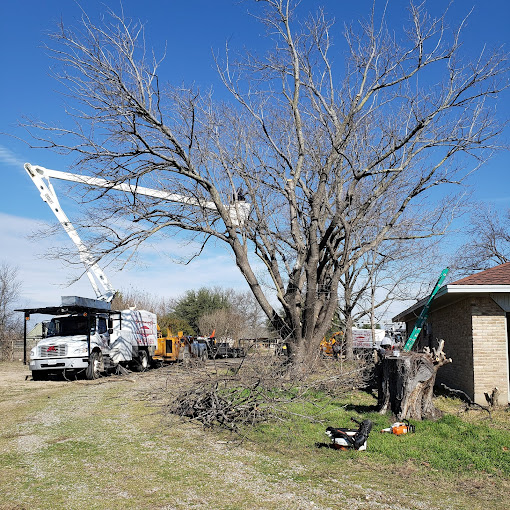
Precision Tree Pruning for Healthier, Fuller Growth
A mature oak hanging low over a Plano driveway. A Bradford pear splitting down the middle after a spring storm. A crepe myrtle that never seems to bloom the way it used to. In neighborhoods across Plano, scenes like these are common—and in many cases, they trace back to one thing: how (and whether) the tree has been pruned.
Research from the USDA Forest Service shows that proper structural pruning in the first 15 years of a tree’s life can reduce storm-related failures by more than 50%. At the same time, poorly timed or aggressive cuts can weaken a tree, invite pests, and shorten its lifespan—especially in our hot, storm-prone North Texas climate.
For businesses and property owners in Plano, precision pruning isn’t just about appearance. It’s about safety, property value, and long-term tree health. In this guide, you’ll learn how strategic pruning supports fuller growth, what modern arborists focus on, how it differs from “topping” or hacking back limbs, and when to call in a professional tree pruning service to protect your landscape investment.
Key Insight: Precision pruning shapes how a tree grows for decades—done right, it creates stronger structure, fuller canopies, fewer hazards, and lower long‑term maintenance costs.
Why Precision Pruning Matters More in North Texas
North Texas trees live in a tough environment: heavy clay soils, long stretches of heat and drought, and sudden storms with high winds and ice. That combination makes structural integrity and canopy balance critical.
In Plano, we see several recurring issues that trace back to improper or neglected pruning:
- Weak branch unions in fast-growing species like Bradford pear and Chinese pistache
- Overextended limbs over roofs, parking lots, and driveways
- Dense, unthinned canopies that catch wind like a sail
- Low-hanging branches interfering with signage, lighting, or walkways
“Most tree failures during storms are predictable—and preventable—with regular inspection and structural pruning.” — ISA Certified Arborist
A local example:
A Plano business park off Preston Road had a row of red oaks with limbs stretching over the parking lot. After a spring storm, a large branch failed, damaging two vehicles. When we inspected the trees, we found long, unpruned limbs with internal decay and poor branch attachments. With a combination of structural thinning and selective reduction, we redistributed weight and significantly reduced the risk of future failures.
Precision pruning in Plano is not just about shaping a pretty tree. It’s a risk management tool, a health intervention, and a way to reduce the likelihood you’ll need an Emergency Tree Removal after severe weather.
How Precision Pruning Promotes Healthier, Fuller Growth
Healthy, full canopies don’t happen by accident. They’re built over years with thoughtful cuts that respect how trees grow and heal. Precision pruning focuses on:
- Removing dead, diseased, or rubbing limbs
- Encouraging a strong central leader and well-spaced scaffold branches
- Thinning dense areas to improve light and air flow
- Reducing length of overextended limbs, not just chopping ends
Every cut sends a message to the tree about where to push new growth. Random cutting can cause weak sprouts and decay; strategic pruning redirects energy to the limbs you want to keep.
A Plano homeowner near Legacy West called us about a live oak that “never filled out” on one side. Previous crews had repeatedly sheared the outer canopy, leaving dense tips and shaded interior wood. We performed a corrective Tree Pruning focusing on:
- Removing crossing branches and interior deadwood
- Subordinating competing leaders (shortening, not removing)
- Thinning crowded areas to allow sunlight into the canopy
Within two growing seasons, the tree had a noticeably fuller, more balanced canopy—with fewer weak sprouts and better clearance over the yard.
“A good pruning job should be nearly invisible from a distance. You notice the tree looks healthier and more open, not that it’s been ‘cut.’” — Senior Arborist, Parker Tree Service
Thoughtful pruning often goes hand-in-hand with other care. On stressed or high-value trees, we’ll sometimes pair pruning with Deep Root Fertilization to improve root health and support vigorous, balanced new growth.
Topping vs. Precision Pruning: A Critical Difference
One of the most damaging practices we still see in Plano is “topping”—indiscriminately cutting back large branches to stubs to reduce height. This might seem like a quick way to control size, but it creates long-term problems.
Why topping harms trees
- Produces weak, fast-growing sprouts near the cut
- Opens large wounds that don’t compartmentalize well
- Increases risk of decay, sunscald, and structural failure
- Often leads to a need for repeated, aggressive cutting
In contrast, modern pruning standards (ANSI A300) focus on crown reduction and thinning, not topping. That means shortening individual limbs back to strong lateral branches, maintaining the tree’s natural form.
Here’s how they compare:
| Practice | Topping (Outdated) | Precision Reduction (Modern) |
|---|---|---|
| Goal | Reduce size quickly | Reduce risk, maintain structure and health |
| Cut placement | Random stubs, often mid-branch | Back to strong lateral branches or branch collars |
| Regrowth | Weak, fast, upright sprouts | Controlled, balanced growth |
| Long-term cost in Plano | Frequent re-cutting, higher failure risk | Less frequent pruning, fewer failures and emergencies |
| Impact on appearance | Unnatural, “hat-racked” | Natural form preserved, fuller canopy over time |
We recently consulted on a commercial property near US-75 where ornamental pears had been topped repeatedly to keep them off the building. The result: dense, tangled regrowth and frequent limb breakage. The property manager was facing recurring Tree Removal costs.
Our arborists recommended removing the most compromised trees and replacing them with more appropriate species. For the rest, we started a multi-year corrective pruning plan to restore better form and reduce hazard.
Timing Your Pruning in Plano’s Climate
In North Texas, timing can make or break the success of pruning. Heat, drought, and insect pressure all influence when trees can best tolerate work.
General timing guidelines
- Winter (dormant season): Ideal for structural work on oaks, elms, ash, and most shade trees. Easier to see branch structure and reduce disease risk.
- Late winter to early spring: Good window for many flowering trees, once major freeze risk has passed.
- Mid-summer: Light pruning only; avoid heavy cuts in extreme heat.
- Avoid peak oak wilt season: For oaks, pruning is generally limited from late fall through mid-winter to reduce disease risk.
A Plano homeowner in a neighborhood near Oak Point Park called us in midsummer concerned about a large red oak over their driveway. Another company had recommended aggressive pruning immediately. We advised a two-step plan:
1. Perform minimal risk-reduction cuts right away for safety.
2. Schedule structural pruning during the dormant season to minimize stress and disease exposure.
By adjusting timing, we protected the tree’s health while addressing the immediate concern.
“Proper timing reduces stress and helps trees recover faster from pruning, especially in our hot, drought-prone summers.” — ISA Certified Arborist
Cost and scheduling considerations in Plano
| Season | Pros | Cons | Typical Demand in Plano |
|---|---|---|---|
| Winter | Best for structure, fewer disease concerns | Weather delays possible | Moderate |
| Early Spring | Good for many species, mild weather | Some insect activity starting | High (pre-storm prep) |
| Late Spring | Great for fine-tuning shape, clearance | More active growth, pests present | High |
| Summer | Light pruning only, emergency work | Heat stress, limited structural work | Very High (storms & breakage) |
| Fall | Good for inspection and planning | Timing for specific species is critical | Moderate |
Precision Pruning, Safety, and Risk Management
For many Plano properties, the biggest concern isn’t aesthetics—it’s safety and liability. Overextended limbs over parking lots, playgrounds, or pedestrian areas can become serious hazards, especially during storm season.
A local church campus near Coit Road contacted us after a large limb fell near their playground. Fortunately, no one was hurt, but the incident highlighted several underlying issues:
- Dense, unthinned canopies that caught wind
- Co-dominant stems with included bark (weak unions)
- Large dead branches hidden in the canopy
We performed a full Tree Risk Assessment and developed a multi-year risk mitigation plan that included:
- Structural pruning to reduce end weight on key limbs
- Removal of dead and diseased wood
- Selective Tree Removal Service for a few high-risk, compromised trees
- Scheduled inspections after major storms
“Storm damage is rarely random. Trees usually tell you they’re stressed or structurally unsound long before a limb comes down.” — Lead Climber, Parker Tree Service
Precision pruning plays a central role in risk management by:
- Reducing leverage on long, overextended branches
- Improving branch attachment by subordinating competing leaders
- Removing defects before they become failures
- Creating better clearance from structures, wires, and walkways
For high-value or historically significant trees, we may combine pruning with tree cabling and bracing to support weak unions or heavy limbs that shouldn’t be removed.
Integrating Pruning with Overall Tree Health Care
Pruning is powerful, but it’s just one piece of a broader tree health plan. In Plano’s compacted clay soils, trees frequently face root stress, nutrient deficiencies, and pest pressure. Precision pruning works best when it’s integrated with:
- Soil conditioning and root care to improve water and nutrient uptake
- Targeted fertilization for stressed or high-value trees
- Tree pest control for borers, webworms, and scale
- Disease monitoring for species-specific issues (oak wilt, fungal cankers, etc.)
A good example: A Plano office complex near the Dallas North Tollway had a row of declining red oaks. Previous crews had pruned them heavily, but the trees continued to thin out. When we evaluated them, we found:
- Compacted soil from years of foot traffic and construction
- Limited root volume due to nearby pavement
- Signs of wood borers and chronic drought stress
Our plan combined:
- Conservative Tree Pruning Service to remove deadwood and reduce stress
- Deep Root Fertilization and soil conditioning to boost root health
- Targeted Tree Insect Treatment and Tree Borer Control
Within two seasons, canopy density improved, and new growth looked noticeably more vigorous.
“You can’t prune a tree back to health if the roots are struggling. Above-ground care has to match below-ground reality.” — Consulting Arborist
When Pruning Isn’t Enough: Removal, Stumps, and Replanting
Even with the best care, some trees reach a point where removal is the safest or most responsible option. Extensive decay, major structural defects, or severe pest damage can make continued pruning risky and costly.
In a Plano neighborhood near Spring Creek Parkway, we were called to assess a large pecan with a history of dropped limbs. Our inspection found:
- Extensive internal decay at the base
- Fungal conks indicating advanced rot
- Significant lean toward a home and driveway
In this case, no amount of pruning or cabling could restore adequate safety. We recommended and performed a controlled Tree Removal Near Me, followed by Stump Grinding to eliminate trip hazards and root sprouting.
Managing the full life cycle
Thoughtful tree care includes planning for:
- Safe removal of dead, dying, or hazardous trees
- Efficient stump removal for replanting or new construction
- Species selection for replacement trees better suited to Plano’s climate and space
- Early structural pruning on new plantings to set them up for long-term success
| Stage | Key Actions | Benefits in Plano Context |
|---|---|---|
| Mature tree decline | Risk assessment, targeted pruning | Extends safe life where possible |
| End-of-life decision | Hazard evaluation, removal planning | Protects property and people |
| Post-removal | Affordable Stump Removal, root management | Clears space, prevents regrowth |
| Replanting | Species selection, early training cuts | Better adaptation to heat and storms |
What This Means for Businesses in Plano, TX
For Plano businesses, HOAs, and commercial properties, trees are more than background greenery. They influence curb appeal, tenant satisfaction, energy costs, and liability exposure. Precision pruning is a practical way to protect that investment.
On commercial sites, we often see:
- Overgrown parking lot trees interfering with signage and lighting
- Low branches impacting delivery trucks or emergency vehicle access
- Dense canopies dropping limbs on cars or pedestrian walkways
- Aging trees near buildings where failures could cause major damage
A regional office complex along the Dallas North Tollway partnered with us for a multi-year tree management plan. By prioritizing structural pruning, risk reduction, and phased replacement of declining specimens, they:
- Reduced storm-related damage and emergency calls
- Improved visibility of building signage
- Enhanced the overall appearance of the property for tenants and visitors
“An organized pruning and inspection plan is far less expensive—and less disruptive—than dealing with repeated emergencies and liability claims.” — Property Manager, Plano Office Park
Because Plano continues to grow and redevelop, thoughtful tree care also plays a role in tree preservation and mitigation during construction and site changes. Early involvement from an arborist can help you:
- Identify trees worth preserving
- Plan construction access to protect roots
- Meet city tree mitigation requirements
- Budget for phased pruning, removal, and replanting
For businesses, HOAs, and institutions, precision pruning isn’t a once-and-done task. It’s part of a broader, strategic approach to tree maintenance services that keeps your property safe, attractive, and compliant—year after year.
Frequently Asked Questions
Q: How often should my trees be professionally pruned in Plano?
A: Most mature shade trees in Plano benefit from professional pruning every 3–5 years, depending on species, age, and site conditions. Fast-growing trees or those in high-traffic areas may need more frequent attention. Young trees often need structural pruning every 2–3 years to establish strong branch architecture. Properties with significant public use—schools, churches, retail centers—should consider regular Tree Inspection to catch issues early. An ISA Certified Arborist can create a tailored plan based on your tree inventory, risk profile, and budget.
Q: Can I handle tree pruning myself, or do I really need a professional?
A: Homeowners can safely handle small, low-branch pruning with proper tools and guidance. However, anything involving ladders, power lines, chainsaws, or large branches over structures should be left to a professional Tree Service Near Me. Incorrect cuts can weaken your trees, invite decay, or create future hazards. More importantly, tree work is one of the most dangerous green-industry tasks. Professional crews use specialized equipment, rigging techniques, and training to manage risk. For valuable or large trees in Plano, a professional tree pruning service is almost always the safest and most cost-effective option long term.
Q: What’s the difference between “trimming” and precision pruning?
A: Many people use “trimming” to describe any cutting, but in arboriculture, pruning refers to targeted, purposeful cuts guided by standards like ANSI A300. Precision pruning focuses on tree health, structure, and long-term stability. “Trimming” often implies cosmetic shaping or shearing that may ignore branch structure and tree biology. A reputable Professional Tree Trimming company should be able to explain which branches they’re removing and why, how it benefits the tree, and how it aligns with modern best practices.
Q: How do I know if a tree needs pruning or full removal?
A: That decision depends on factors such as overall health, degree of structural defects, location, and your tolerance for risk. Trees with minor deadwood, crossing branches, or moderate imbalance often respond well to targeted pruning. However, trees with extensive decay, major root damage, or severe lean toward targets may require Hazardous Tree Removal. In Plano, we also consider storm exposure and soil conditions. A thorough assessment by an ISA Certified Arborist will look at the whole picture and provide options, including whether cabling, bracing, or phased pruning might extend a tree’s safe life.
Q: Does pruning help with pests like webworms and borers?
A: Pruning alone won’t eliminate pests, but it plays an important role in an integrated management plan. Removing heavily infested branches can reduce populations of webworms and improve the effectiveness of targeted Tree Pest Control. For wood borers, pruning out dead or severely damaged limbs reduces breeding sites and helps your arborist monitor activity. However, timing is critical to avoid attracting more insects with fresh wounds. In Plano, we often pair pruning with specific Wood Borers Treatment or systemic insecticides, plus cultural practices like proper watering and fertilization to improve the tree’s natural defenses.
Q: Will pruning make my trees more or less likely to fail in storms?
A: Correctly done, pruning reduces storm failure risk by removing weak branches, improving structure, and reducing leverage on long limbs. Poorly done pruning—such as topping, lion-tailing (removing too much interior foliage), or creating large, improper cuts—can significantly increase risk. That’s why it’s important to work with a qualified ISA Arborist Near Me who understands how wind loads, species characteristics, and Plano’s storm patterns interact. A well-planned pruning program, combined with regular inspections, is one of the best ways to lower the chance of emergency tree service after severe weather.
Q: What does a professional pruning visit typically include?
A: A quality visit from a professional Tree Pruning Service usually starts with a walk-through and discussion of your goals: clearance, appearance, risk reduction, or health. The arborist will identify dead, diseased, or structurally unsound branches; determine appropriate crown thinning or reduction; and explain the work to be done. Crews then perform the pruning using proper cuts and safety techniques, manage debris, and may recommend additional services like Stump Grinding Service or fertilization if needed. At Parker Tree Service, we also note any issues that may affect future care, such as soil compaction, pests, or disease concerns.
Ready to Get Started?
North Texas weather isn’t gentle on trees, and waiting until branches start falling is an expensive way to manage your landscape. Precision pruning now can mean fewer emergencies, healthier canopies, and a safer property when the next storm rolls through Plano.
If you’ve noticed dead branches, low-hanging limbs over driveways or walkways, or just aren’t sure how healthy your trees really are, this is the ideal time to schedule a professional assessment. Our ISA Certified Arborists can walk your property, prioritize the work, and create a practical plan that fits your budget—whether you need selective pruning, risk reduction, or coordinated services like Tree Removal Service and Stump Grinding Near Me.
Parker Tree Service has deep experience with Plano’s soils, climate, and tree species. We combine industry best practices with local knowledge to protect your trees and your property for the long term.
About Parker Tree Service
Parker Tree Service is a locally focused tree care company serving Plano, TX and surrounding North Texas communities. Our team includes ISA Certified Arborists and experienced tree care professionals offering comprehensive services—from precision pruning and tree health care to Emergency Tree Removal, stump grinding, and deep root fertilization. We’re committed to safety, education, and long-term tree preservation, helping homeowners, HOAs, and businesses maintain safe, beautiful, and resilient landscapes.