
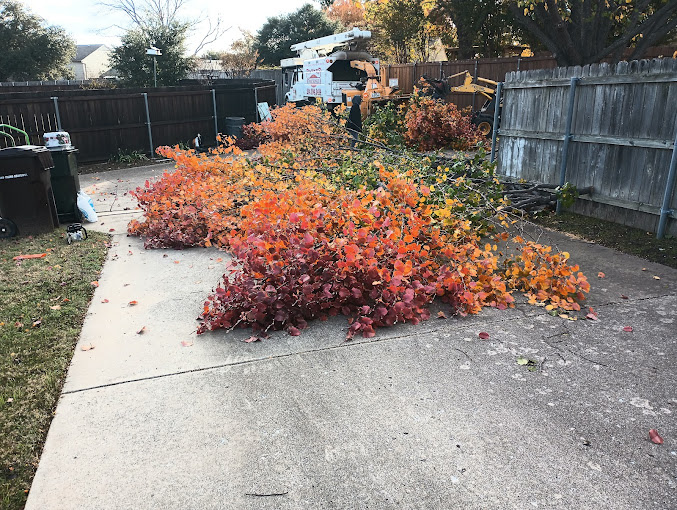
Tree Removal: Risks and Considerations
On a windy spring afternoon in Plano, a mature oak that had shaded a small office complex for decades suddenly split down the middle. Half the canopy crashed across parked cars, the other half sagged dangerously over the building’s entrance. No one was hurt, but tenants lost vehicles, the business shut down for two days, and the property owner faced a major insurance claim—all because a decayed trunk went unnoticed and an at‑risk tree wasn’t removed in time.
Scenarios like this are more common in North Texas than many property owners realize. Between clay soils that swell and shrink, increasingly intense storms, and rapid commercial development, trees in Plano are under constant stress. Understanding when a tree has become a liability—and how to remove it safely—can protect people, property, and your long‑term landscape investment.
This guide walks you through the real risks of tree removal, warning signs to watch for, how professionals manage hazards, cost and liability considerations, and how to plan for safer, healthier trees going forward.
Key Insight: Tree removal isn’t just “cutting down a tree.” It’s a high‑risk operation that demands expert assessment, specialized equipment, and a plan that protects your people, your property, and your future landscape.
Why Tree Removal Is Riskier Than It Looks
To the untrained eye, removing a tree can seem straightforward: cut, drop, haul away. In reality, it’s one of the most dangerous routine jobs in the green industry. The combination of heights, chainsaws, heavy limbs, unpredictable forces, and nearby structures makes it inherently risky.
Nationally, tree work has a fatality rate many times higher than the average for all industries. Add in North Texas wind gusts, slick clay soils after a storm, and dense commercial areas, and that risk goes up.
Hidden dangers you can’t see from the ground
A tree may look solid but still be structurally unsound. Common Plano issues include:
- Internal decay masked by healthy‑looking bark
- Root rot from poor drainage or irrigation leaks
- Old storm damage that weakened major limbs
- Past topping or improper Tree Pruning that left weak regrowth
“By the time many property owners notice something is wrong, the tree has already lost a lot of structural integrity.” — ISA Certified Arborist
During one job off Preston Road, a large pecan seemed sturdy enough for a standard removal. Our crew’s ISA arborist tested the trunk with a sounding hammer and found a hollow cavity extending more than 10 feet up the stem. A standard notch and back cut would have caused the trunk to twist and fall toward a neighboring property. Instead, we used a sectional crane removal—cutting and lifting pieces away safely.
As we move forward, it helps to understand how to decide whether a tree really needs to come down—or if there’s a safer alternative.
Evaluating Risk: When Does a Tree Really Need to Be Removed?
Not every problem tree has to be removed. Sometimes corrective pruning, cabling, or improved Tree Health Care can reduce risk and extend a tree’s useful life. The key is a structured, professional risk assessment.
What professionals look for
ISA Certified Arborists use a combination of visual inspection and, when needed, diagnostic tools to evaluate:
- Targets: What will be hit if the tree or a large part fails? (buildings, parking, play areas, power lines)
- Defects: Cracks, cavities, root damage, dead tops, weak branch unions
- Likelihood of failure: Under normal conditions and during storms
- Consequences: Injury potential, property damage, business interruption
For a Plano medical office near Coit Road, a mature elm had a noticeable lean over the patient parking lot. The owner was ready to order immediate removal. Our assessment found:
- Significant root damage on the parking‑lot side
- High occupancy in the “target zone” during business hours
- Soil heaving indicating ongoing movement
Because the risk of failure was high and the consequences severe, removal was the responsible choice. In other cases—such as a slightly leaning tree over a low‑use lawn area—strategic Tree Pruning Service and monitoring might be enough.
“Tree risk assessment is about balancing risk tolerance with tree benefits, not just cutting down everything that looks imperfect.” — ISA Arborist
When removal becomes non‑negotiable
You should strongly consider removal when you see:
- Large dead branches over high‑traffic areas
- A trunk that’s more than 30–40% hollow at breast height
- Major root damage from construction, trenching, or decay
- Active separation or splitting in the main stem
- Severe lean that recently worsened, especially after storms
At this point, the conversation shifts from “Can we save it?” to “How do we remove it safely?”
DIY vs. Professional Removal: A Risk and Cost Comparison
In a cost‑conscious environment, it’s tempting to consider handling a problem tree yourself or hiring the cheapest option you can find. The short‑term savings can be very expensive in the long run—especially for commercial and multi‑tenant properties in Plano.
Real‑world example: The “cheap” removal that got expensive
A local business owner on 15th Street hired an unlicensed crew advertising “affordable tree work” out of the back of a pickup. The crew:
- Lacked insurance and proper safety gear
- Used ladders instead of climbing systems
- Misjudged the hinge wood on a large hackberry
The result: a major limb punched through a tenant’s office window, damaging interior finishes and computer equipment. The uninsured crew disappeared, leaving the property owner and their insurer to absorb the costs—not just for damage, but also for disruption to operations.
Comparing approaches
| Factor | DIY / Uninsured Labor | Professional Tree Removal Service (ISA‑based) |
|---|---|---|
| Upfront cost | Lowest | Higher, but transparent |
| Safety equipment | Minimal to none | Full PPE, ropes, rigging, aerial lifts, cranes |
| Insurance & liability | Often none; risk shifts to property owner | General liability + workers’ comp |
| Risk assessment | Visual guesswork | Formal Tree Risk Assessment by arborist |
| Damage to property | High probability | Low, with mitigation plans in place |
| Cleanup & stump handling | Often incomplete or extra | Full cleanup + Stump Grinding Service options |
| Compliance with city rules | Uncertain | Knowledge of Plano codes and utility requirements |
For commercial properties, HOAs, and public‑facing sites, the liability exposure alone is reason enough to use a qualified tree service, not a side gig.
The Specialized Process of Safe Tree Removal
Once you decide a tree must come down, the “how” matters just as much as the “whether.” Professional companies rely on a step‑by‑step process designed to control risk at every stage.
Planning and site preparation
Before a single cut, a professional crew will:
- Review the tree’s structure and nearby targets
- Identify power lines, utilities, and underground services
- Establish drop zones and rigging points
- Plan equipment access routes and protection for turf and hardscapes
On a recent project near Legacy West, a declining red oak was wedged between a parking lot, a glass office façade, and underground irrigation. Our team coordinated with property management to:
- Temporarily rope off parking spaces
- Use mats to protect decorative pavers
- Stage an aerial lift in a way that kept pedestrian routes open
Techniques for controlled removal
Depending on the site and tree condition, crews may use:
- Sectional dismantling: Climbing or using lifts to remove branches and trunk sections in pieces, lowering them by rope
- Crane‑assisted removal: Ideal for severely compromised trees or tight urban spaces
- Directional felling: Reserved for open areas where the entire tree can be dropped safely
Each cut is planned to manage the tree’s natural forces. Rigging systems allow large limbs to be lowered slowly and precisely, protecting nearby structures, fences, and landscaping.
“Good removals are quiet, controlled, and frankly a little boring to watch—that’s the sign everything is going according to plan.” — Senior Climber, Parker Tree Service
Cleanup and stump options
After the tree is down, debris is chipped and removed, and the site is raked clean. You then have choices:
- Leave the stump cut low (cheapest, but can be a tripping hazard)
- Schedule Stump Grinding to below grade
- Arrange for full Stump Removal if future construction is planned
For one Plano retail center preparing for a parking lot expansion, full stump and root removal allowed engineering and paving to proceed without surprises later.
Beyond the Chainsaw: Legal, Insurance, and Liability Concerns
Tree removal on commercial or shared properties isn’t just a maintenance decision; it’s a risk management and legal issue.
Who is responsible if something goes wrong?
In Texas, property owners can be held liable if a hazardous tree they “knew or should have known” was dangerous causes injury or damage. That’s especially true if:
- The tree shows obvious decline or structural defects
- Tenants or neighbors have reported concerns
- A professional has already recommended action
By the same token, if you hire an uninsured or underinsured crew and they damage a neighbor’s property—or a worker is injured on site—you can end up in the middle of claims and lawsuits.
On a multifamily property in Plano, a long‑dead hackberry dropped a large limb onto a tenant’s vehicle. The insurer asked for maintenance records and any Tree Risk Assessment documentation. Because the property manager had documented prior arborist inspections and had a removal scheduled, it helped demonstrate due diligence and limited liability exposure.
City and utility considerations
In the Plano area, you may need to coordinate with:
- City officials for protected trees or trees in right‑of‑way
- HOAs and architectural committees in planned communities
- Utility companies for work near overhead lines or easements
Professional companies understand local ordinances and utility safety requirements and can help you navigate them, reducing delays and compliance headaches.
Planning Ahead: From Hazardous Trees to a Safer, Healthier Landscape
Removing a tree—especially a mature one—is never just about subtraction. It’s a chance to reset your landscape strategy for safety, curb appeal, and long‑term value.
Preventing the next removal
Many removals in Plano can be delayed or avoided with proactive care:
- Regular Professional Tree Trimming to reduce weight on overextended limbs
- Structural Tree Shaping and crown thinning in younger trees
- Deep Root Fertilization and Soil Conditioning to support roots in Plano’s clay soils
- Targeted Tree Insect Treatment and disease management, including Tree Pest Control for webworms and borers
For a corporate campus along the Dallas North Tollway, a multi‑year plan combined selective removals of high‑risk trees with cabling, crown reduction, and fertilization. The result: fewer emergency calls, a safer site, and preserved shade in key outdoor areas.
Choosing replacements wisely
When a tree comes down, consider:
- Right‑sized species for the space (to avoid future conflicts with buildings or pavement)
- Native or adapted varieties that tolerate North Texas heat and soil
- Root structure and potential impacts on foundations and utilities
An ISA arborist can recommend species and placement to reduce the need for future Tree Removal, while still providing shade, screening, and aesthetics.
“Good tree planning today is the best insurance policy against major removals and emergency work tomorrow.” — Landscape Manager, Commercial Client
The final piece of the puzzle is knowing how to respond when things don’t go according to plan—especially after a storm.
Emergency Tree Removal: Responding Safely After Storms
Plano’s sudden thunderstorms, straight‑line winds, and occasional ice events can turn healthy trees into hazards overnight. After a big storm, it’s common to see broken limbs dangling over sidewalks, uprooted trees leaning on structures, and blocked driveways or loading areas.
Why emergency work is different
Emergency Emergency Tree Removal or Emergency Tree Service often involves:
- Unstable trees under tension and compression
- Limited access due to debris or flooding
- Downed power lines and damaged structures
- Work at night or in poor weather conditions
These scenarios are far more dangerous than planned removals. Improvised DIY cutting of storm‑damaged trees is one of the leading causes of post‑storm injuries.
Local example: Overnight response
After a severe storm, a Plano restaurant near Park Blvd had a large live oak uproot and fall across its main entrance canopy. The tree:
- Rested partially on the building and partially on a damaged sign
- Blocked emergency access to the property
- Threatened to shift further with continued rain and wind
Our crew responded as an emergency call, coordinated with the owner and their insurer, and used a combination of crane and rigging to lift and section the tree away from the building without causing additional structural damage. The restaurant reopened the next day.
What This Means for Businesses in Plano, TX
For businesses, HOAs, and property managers in Plano, tree removal decisions sit at the intersection of safety, liability, budget, and brand image.
- Safety & liability: A single failed tree can cause injuries, lawsuits, and insurance complications. Documented inspections and timely removal of hazardous trees show you’ve acted responsibly.
- Business continuity: Blocked entrances, damaged parking lots, and closed offices mean lost revenue and unhappy tenants. Thoughtful planning and having a trusted tree partner on call reduce downtime after storms.
- Curb appeal & tenant satisfaction: Healthy, well‑managed trees are a major amenity. They provide shade for parking, enhance outdoor spaces, and support higher occupancy and rents. Neglected, dying trees send the opposite signal.
- Budget predictability: Emergency removals are always more expensive than planned work. Regular Tree Maintenance Services and risk assessments help you budget for necessary removals on your terms, not the weather’s.
Plano’s rapid growth and dense commercial corridors—from Legacy West to downtown Plano—mean trees and structures are always in close proximity. That increases both the value of well‑managed trees and the stakes if something goes wrong.
Working with a qualified, locally experienced tree service gives you a clear plan: which trees to preserve, which to monitor, and which to remove before they become emergencies.
Frequently Asked Questions
Q: How do I know if a tree on my Plano property is truly hazardous and needs removal?
A: Look for red flags like large dead branches, mushrooms or decay at the base, new or worsening lean, cracks in the trunk, or heaving soil around the roots. However, not all issues are visible from the ground. An ISA Certified Arborist can perform a formal Tree Risk Assessment, evaluating the likelihood of failure and potential targets such as buildings, parking areas, or play spaces. In Plano, where storms and clay soils add extra stress, it’s wise to have high‑value or high‑traffic areas inspected every few years or after major weather events.
Q: Is it safe or legal for my maintenance staff to remove smaller trees themselves?
A: It depends on the size, location, and risk factors. Removing a small ornamental tree away from structures might be within the capability of a trained maintenance team. However, once you introduce ladders, chainsaws aloft, nearby buildings, vehicles, or power lines, the risk increases dramatically. From a liability standpoint, businesses in Plano are safer using a professional Tree Removal Service for anything beyond basic shrub and small tree work, especially in public‑facing or shared spaces.
Q: What’s the difference between standard tree removal and emergency tree removal?
A: Standard removal is planned in advance, often after an inspection, with time to schedule equipment and crew. Emergency Tree Removal usually follows storms or sudden failures and involves unstable trees, blocked access, or immediate safety threats. It often requires specialized techniques, night or weekend work, and coordination with utilities or first responders. Because of the added risk and urgency, emergency work can cost more, which is another reason proactive care and timely removals are good business practice in Plano.
Q: After a tree is removed, do I really need to grind the stump?
A: Stump grinding is technically optional, but strongly recommended in many commercial and HOA settings. Left in place, stumps can be tripping hazards, attract pests, and interfere with mowing or future landscaping. In high‑visibility or high‑traffic areas, Affordable Stump Removal provides a smoother, safer surface and allows you to replant or re‑sod. In Plano’s clay soils, grinding below grade and backfilling with quality soil also improves conditions for replacement trees or landscape beds.
Q: Can regular pruning and fertilization really reduce the need for tree removal?
A: Yes. Strategic Tree Pruning Near Me—especially structural pruning in younger trees—helps develop strong branch attachments and reduces the risk of breakage. Crown reduction and thinning can decrease wind sail and weight on heavy limbs. Meanwhile, proper Tree Fertilization Service and soil care support root health, which is critical in Plano’s expansive clays. While no tree is “fail‑proof,” proactive care significantly lowers the likelihood of premature decline and emergency removals.
Q: How does tree removal affect my property value and tenant appeal?
A: Removing a hazardous or unsightly tree typically improves perceived safety and curb appeal, especially if it’s dead, diseased, or causing visible damage. However, removing healthy, prominent shade trees without a replanting plan can reduce aesthetic value and increase heat in parking and outdoor areas. The best approach is selective removal guided by an arborist, combined with thoughtful replanting and ongoing Tree Maintenance Services. In competitive Plano submarkets, well‑managed trees are an asset that supports leasing, customer experience, and brand image.
Q: What should I ask a tree company before hiring them for removal?
A: For any Tree Service Near Me, ask:
- Are you insured with general liability and workers’ comp?
- Do you have ISA Certified Arborists on staff?
- How will you protect buildings, pavement, and landscaping?
- What equipment will you use on my site?
- Is stump grinding included or separate?
- Can you provide references from other Plano commercial or HOA clients?
Clear, detailed answers are a good sign you’re working with a professional, not just a crew with chainsaws.
Ready to Get Started?
Trees add tremendous value to your property, but when they become liabilities, waiting rarely makes things better. In Plano’s storm‑prone climate, a compromised tree today can be tomorrow’s emergency call—and an even bigger expense. Addressing concerns now gives you time to plan, compare options, and schedule work when it’s least disruptive to your business or community.
Parker Tree Service provides comprehensive Tree Removal Near Me, risk assessment, and emergency response, backed by ISA‑certified expertise and full insurance coverage. Whether you’re managing a single office building, a retail center, or a large HOA, we can help you prioritize which trees to remove, which to preserve, and how to keep your landscape safe and attractive for the long term.
Schedule a consultation, walk your property with an arborist, and get a clear, written plan. Your tenants, customers, and future self will be glad you did.
About Parker Tree Service
Parker Tree Service is a locally trusted tree care company serving Plano, TX and the surrounding North Texas communities. With decades of experience, ISA Certified Arborists, and fully insured crews, we specialize in Tree Care Services for residential, commercial, and HOA properties—from precision pruning and deep root fertilization to hazardous tree removal and emergency storm response. Our focus is simple: protect your property, enhance your landscape, and provide honest, professional guidance every step of the way.