
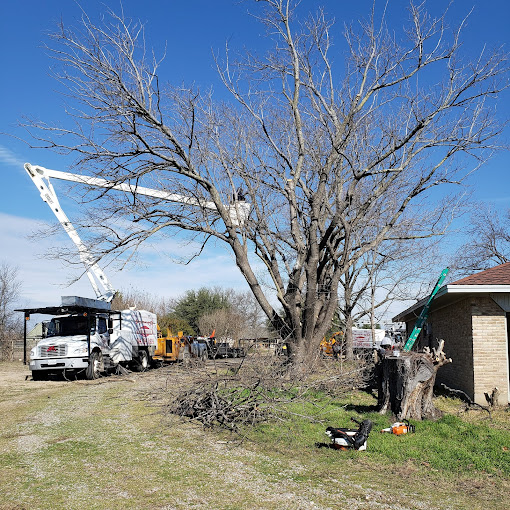
Tree Removal and Its Impact on Environment
A mature live oak in Plano can store hundreds of pounds of carbon, cool surrounding pavement by several degrees, and support thousands of insects, birds, and microorganisms. Yet every week across Collin County, trees come down for new construction, storm damage, or safety concerns. Some of that removal is necessary. Some of it isn’t. And every cut has an environmental ripple effect.
For businesses and property owners in Plano, TX, understanding those impacts isn’t just an academic exercise. It affects your stormwater fees, property value, energy bills, and even your ability to secure permits for future development. The City of Plano’s tree preservation and mitigation requirements are getting stricter, not looser, and corporate sustainability reporting is becoming the norm.
This article walks through how tree removal affects the environment—positively and negatively—and how you can manage trees on your commercial or residential property responsibly. You’ll see real examples from around Plano, learn where removal is truly the best option, and how thoughtful planning, pruning, and replacement planting can actually improve both safety and environmental performance over time.
Key Insight: Smart tree removal isn’t about cutting or keeping at all costs—it’s about making informed, site-specific decisions that balance safety, development, and long-term ecological health.
Seeing the Whole Picture: How Tree Removal Changes Your Property’s Ecosystem
Every tree on your Plano property is more than a trunk and a canopy; it’s a living system interacting with soil, water, wildlife, and your buildings. Removing one tree can change light levels, wind patterns, drainage, and habitat in ways that last for decades.
A healthy post oak shading a parking lot off Preston Road, for example, may:
- Reduce surrounding surface temperatures by 10–15°F
- Capture thousands of gallons of stormwater annually
- Filter pollutants from US-75 traffic
- Provide habitat for birds that help control insects
Cut that tree down, and all those services disappear overnight.
“Trees are infrastructure. If you removed a storm drain or a power line, you’d expect a measurable impact. Trees are no different.” — ISA Certified Arborist
On the flip side, not every tree is a net environmental benefit. A severely decayed pecan leaning over a building may be a safety hazard, dropping limbs or failing in a storm. A dense cluster of poor-quality, competing trees can be more prone to storm damage and pest outbreaks than a thoughtfully managed stand.
Thoughtful Tree Removal can:
- Reduce risk of property damage and personal injury
- Open space for healthier, better-suited species
- Improve airflow and reduce disease pressure in crowded stands
- Allow for more strategic, water-wise landscaping
When you think about removal through this ecological lens, the question shifts from “Should we take this tree down?” to “What happens to this site—environmentally and practically—if we do?”
Carbon, Air Quality, and Heat: The Invisible Environmental Costs
Trees are often called “carbon sinks” for a reason. They absorb CO₂ and store it in wood, roots, and soil. When you cut a tree down, you don’t just lose its future carbon storage—you also eventually release much of what it has already stored, especially if the wood is chipped or left to decompose quickly.
For a commercial property in Plano with a dozen large shade trees:
- Those trees can collectively store several tons of carbon
- They can significantly reduce cooling costs by shading west-facing glass and asphalt
- They help combat the urban heat island effect that’s especially pronounced near major corridors like the Dallas North Tollway and US-75
Removing multiple mature trees without a replanting strategy can:
- Increase cooling loads on your building
- Raise pavement temperatures, which accelerates wear
- Reduce air quality benefits (less particulate and ozone filtration)
At the same time, some removals can improve environmental performance. For example:
- Taking out a diseased, heavily infested tree and following up with targeted Tree Pest Control can stop pests from spreading to healthier trees.
- Removing invasive or poorly adapted species and replacing them with native oaks, elms, or cedar elms can boost long-term resilience and reduce water use.
CALLOUT: Thoughtful replacement is key. A single mature tree is not environmentally “replaced” by a single sapling. Plan for multiple new trees, diverse species, and good growing conditions.
A Plano office park we worked with near the President George Bush Turnpike faced this exact challenge. Several large hackberries were in decline and dropping limbs over parking. Through a staged removal and replanting plan, we:
- Removed 5 hazardous trees over two years
- Planted 12 native and adapted species in better locations
- Implemented Tree Fertilization Service and soil conditioning for remaining trees
Result: cooler parking areas, improved curb appeal, and a healthier, more diverse tree canopy that will outperform the original trees environmentally within a decade.
Soil, Water, and Roots: What Happens Below Ground After Removal
The environmental story of tree removal doesn’t end at the stump. In many ways, that’s where the next chapter begins.
Tree roots:
- Stabilize soil and reduce erosion
- Improve infiltration of rainwater
- Feed soil microbes through organic matter
- Interact with surrounding plants and turf
When you remove a tree, especially on a slope or near drainage features, you can unintentionally:
- Increase runoff and localized flooding
- Compact soil with heavy equipment
- Leave behind nutrient-poor “dead zones” where turf struggles
On Plano clay soils, this is especially noticeable. The heavy, shrink-swell clays common in our area already challenge root growth and drainage. Pulling out large roots without a plan can leave you with:
- Settling issues around sidewalks or foundations
- Standing water after storms
- Turf that never quite fills in
That’s why pairing removal with smart aftercare matters. Services like:
- Stump Grinding to safely remove surface roots and stumps
- Soil conditioning and Deep Root Fertilization for remaining trees
- Strategic replanting with species suited to Plano’s soil and climate
…can help restore environmental function faster.
Traditional vs. Modern Post-Removal Approaches
| Approach | Traditional “Cut and Go” | Modern, Environmentally Minded Strategy |
|---|---|---|
| Stump handling | Left to rot or roughly cut low | Professional Stump Grinding Service to below grade |
| Soil care | None | Soil aeration, compost, and targeted fertilization |
| Drainage consideration | Rarely assessed | Evaluated and adjusted if runoff patterns change |
| Replanting | Optional, often delayed | Planned before removal, installed within 1–2 seasons |
| Impact on remaining trees | Often ignored | Root zone protection and follow-up health checks |
We saw this firsthand at a Plano HOA bordering a creek. Several cottonwoods were removed due to storm damage. Without a plan, the bare soil began eroding towards the creek. A year later, we were called in to:
- Grind remaining stumps
- Improve soil structure with organic amendments
- Install a mix of native trees and deep-rooted shrubs
- Set up a long-term Tree Root Care program
Within two seasons, erosion stabilized, and the new plantings created a more diverse and resilient riparian buffer than the original monoculture.
Wildlife, Biodiversity, and the Hidden Habitat in Your Trees
To many property managers, a tree is shade and aesthetics. To wildlife, it’s an apartment complex, grocery store, and safe corridor all in one.
In Plano’s commercial districts and neighborhoods, trees:
- Provide nesting sites for birds and squirrels
- Offer nectar and pollen for pollinators
- Shelter beneficial predators that help with natural Tree Insect Treatment
- Connect fragmented habitats across roads and development
Removing a mature pecan or oak, especially during nesting season, can disrupt these systems. That doesn’t mean you can never remove trees during certain months, but it does mean timing and method matter.
“Every large tree is its own ecosystem. If you remove it, consider what habitat you’re taking away—and what you’re putting back.” — Local Wildlife Volunteer, Collin County
A Plano retail center along Spring Creek Parkway faced ongoing issues with webworms, aphids, and sooty mold in their parking lot trees. Their initial plan was to remove multiple infested trees. After a site assessment, we recommended:
- Targeted Webworms Treatment and pruning instead of mass removal
- Selective thinning to increase light and airflow
- Installing a more diverse mix of species with staggered bloom times
- Monitoring for wood borers and providing proactive Wood Borer Treatment
The result was fewer chemical treatments, healthier trees, and more consistent habitat for beneficial insects and birds. Only two severely compromised trees required removal and replacement.
By thinking in terms of biodiversity, you can phase removals, prioritize diseased or hazardous trees, and replant with a mix of native and adapted species that support wildlife while staying compatible with commercial use.
Safety, Storms, and Emergency Removal: When the Environment Needs You to Act Fast
North Texas storms don’t give much warning. Straight-line winds, hail, and saturated soils can turn a healthy-looking tree into a hazard overnight. In those moments, environmental considerations meet a hard reality: safety comes first.
Storm-related Emergency Tree Removal can:
- Prevent further damage to buildings, vehicles, and utilities
- Reduce the risk of injury from hanging or split limbs
- Clear access for emergency services and repairs
But even in an emergency, how removal is handled affects the environment:
- Heavy equipment can compact soil and damage root zones of nearby trees
- Improper cuts can leave stubs or tears that invite decay and pests
- Rushed decisions can lead to removing more trees than necessary
A Plano manufacturing facility near Legacy Drive experienced a severe storm that split a large red oak over a loading dock. They called for Emergency Tree Service, expecting the entire tree to be removed. An ISA Certified Arborist assessed the damage and determined:
- One major leader was unsalvageable and had to be removed
- The remaining structure could be stabilized with proper pruning and cabling
- Adjacent trees had minor damage that could be addressed with corrective pruning
By focusing on precise Professional Tree Trimming instead of wholesale removal:
- The facility preserved valuable shade over its dock area
- Reduced future storm risk with improved structure
- Maintained the environmental benefits of a large, established tree
Cost and Impact: Emergency vs. Planned Removal in Plano
| Factor | Emergency Removal | Planned, Non-Emergency Removal |
|---|---|---|
| Average cost in Plano | Higher (overtime, urgent crew) | Lower, more scheduling flexibility |
| Environmental damage risk | Higher (time pressure, access) | Lower (can protect soil and nearby trees) |
| Ability to re-use/recycle wood | Limited | Easier to plan for milling or reuse |
| Opportunity for replanting plan | Minimal | High |
Whenever possible, regular inspections and Tree Maintenance Services help you avoid emergency scenarios altogether. But when storms do hit, working with a team that understands both risk and environmental impact can make the difference between losing a tree and losing an entire canopy.
Planning, Permits, and Tree Mitigation: Doing It Right in Plano
In Plano, tree removal—especially for commercial projects and new development—isn’t just a matter of calling a crew and getting a quote. City codes, tree preservation ordinances, and mitigation requirements all shape what you can remove and what you must replace.
For businesses and developers, this means:
- You may need Tree Surveys and Tree Risk Assessment before permits are issued
- Significant trees often require mitigation, which can include:
- Planting new trees
- Paying into a tree fund
- Preserving additional canopy elsewhere on the site
- Tree Preservation Plans are often required for larger projects
An experienced arborist can help you:
- Identify which trees are significant under Plano’s codes
- Determine where removal is justifiable (disease, poor structure, unavoidable conflicts)
- Propose a mitigation plan that balances cost, environmental goals, and city requirements
We recently supported a commercial remodel near downtown Plano where the owner initially planned to clear most of the existing trees for expanded parking. After a detailed Tree Consultation, we:
- Identified three high-risk, diseased trees that clearly warranted removal
- Recommended preserving five structurally sound shade trees and improving their health through Tree Health Care
- Developed a replanting and mitigation plan that satisfied city staff and reduced long-term shade loss
CALLOUT: Early planning saves money. Bringing an arborist into your project during design—not after demolition—can reduce mitigation costs and permit delays.
Beyond compliance, thoughtful Tree Preservation Services and mitigation planning can:
- Enhance your property’s sustainability profile
- Improve tenant and customer satisfaction
- Support local climate and stormwater goals
For Plano businesses competing for tenants and customers who value green, shaded, walkable environments, your approach to tree removal and replacement is part of your brand.
What This Means for Businesses in Plano, TX
For businesses, HOAs, and property owners in Plano, tree removal is no longer just a line item in a maintenance budget. It intersects with:
- Risk management and insurance
- Energy costs and stormwater fees
- Corporate sustainability commitments
- Local regulations and community expectations
Handled poorly, removal can lead to:
- Hotter, less comfortable outdoor spaces
- Increased runoff and erosion issues
- Higher long-term maintenance and mitigation costs
- Negative perception from tenants, neighbors, and city officials
Handled well, it becomes part of a broader tree strategy that:
- Proactively addresses hazardous or diseased trees
- Uses Tree Pruning and structural support to extend the life of valuable trees
- Pairs necessary removals with smart replanting, soil care, and Tree Fertilization Service
- Aligns with Plano’s growth, heat, and water realities
In a city that continues to grow and redevelop, the properties that stand out are those that blend safety, functionality, and a thoughtful, shaded landscape. Your trees—and how you manage removal—play a central role in that.
Frequently Asked Questions
Q: How do I know if a tree on my Plano property truly needs to be removed?
A: Start with a professional Tree Risk Assessment from an ISA Certified Arborist. They’ll evaluate structural defects, root issues, decay, pests, and how the tree interacts with buildings and utilities. In many cases, targeted Tree Pruning Service or cabling can reduce risk without full removal. In Plano, factors like repeated storm damage, major trunk cracks, severe root decay, or persistent decline despite proper care often tip the balance toward removal. An arborist should also consider city regulations, species, and environmental value before recommending that a tree come down.
Q: What are the environmental benefits of grinding a stump instead of leaving it?
A: Stump Grinding does more than improve appearance. Leftover stumps can attract pests like termites or wood borers and create trip hazards. In Plano’s clay soils, decaying stumps can also leave uneven depressions that collect water. Grinding allows you to reclaim the space for new trees, shrubs, or turf more quickly, helping restore environmental function. It also minimizes disturbance to surrounding roots compared to pulling a stump out with heavy equipment, which can damage nearby trees and compact soil.
Q: Can diseased trees be saved, or do they always need removal?
A: Many diseases and pest issues can be managed with early intervention. Services such as Tree Disease Treatment, Tree Borer Control, and improved cultural care (watering, mulching, fertilization) often stabilize trees before removal is necessary. In Plano, we frequently see oaks, elms, and pecans recover from certain fungal or insect problems when treated promptly. However, if a disease has caused extensive structural damage, root failure, or poses a high risk of spreading (e.g., some vascular wilts), removal may be the most responsible option for both safety and the health of nearby trees.
Q: How should I plan for tree removal on a commercial site to stay compliant in Plano?
A: For larger properties or projects, start with a comprehensive tree inventory and Tree Surveys. An arborist familiar with Plano’s ordinances can flag protected trees, document conditions, and help you prioritize which trees should be preserved, treated, or removed. Before submitting plans, develop a Tree Preservation and Mitigation strategy that outlines removals, protective measures during construction, and replacement planting. This approach not only keeps you compliant but also streamlines permitting and reduces surprises during inspections.
Q: Will removing trees increase my energy bills or stormwater issues?
A: It can. Large shade trees reduce building cooling loads and intercept significant rainfall. Removing them—especially on west and south exposures—often leads to hotter interiors and higher energy use. You may also see more runoff and ponding, particularly on compacted Plano clay. To offset this, coordinate removals with strategic replanting and soil improvements. Choose species and placement that restore shade where it matters most, and consider Soil Conditioning and mulching to improve infiltration and moisture retention.
Q: What’s the difference between regular pruning and environmentally responsible pruning?
A: Responsible Professional Tree Trimming respects both tree biology and the broader site. It focuses on structural integrity, appropriate clearance, and long-term health rather than drastic “topping” or over-thinning. Environmentally mindful pruning also considers timing (avoiding peak nesting or pest seasons where possible), preserving habitat features like some deadwood where safe, and reducing stress on the tree. For Plano properties, that might mean phased pruning over several seasons and integrating pest and Tree Pest Control strategies into your maintenance plan.
Q: How quickly should I replant after removing a tree?
A: Ideally, plan your replanting before removal happens. In many Plano projects, we recommend installing new trees within one planting season (fall or early spring) of taking the old tree down. That shortens the “gap” in shade, habitat, and stormwater benefits. It also allows you to take advantage of improved soil conditions right after Stump Removal and site preparation. A good rule of thumb: for every large tree removed, plan to plant at least two or more well-chosen, properly sited trees to restore long-term environmental value.
Ready to Get Started?
Tree removal decisions carry long-term consequences—for safety, budgets, and the environment. In a fast-growing city like Plano, making those decisions with clear information and a thoughtful plan is more important than ever.
If you’re looking at a hazardous tree, planning a renovation, or simply unsure whether a declining tree can be saved, this is the right time to get expert eyes on your property. Waiting often means higher risk, more extensive damage, and fewer options. Acting now lets you:
- Address immediate safety concerns
- Build a long-term plan for pruning, removal, and replanting
- Protect and enhance the environmental value of your landscape
Parker Tree Service has helped Plano homeowners, HOAs, and businesses balance safety, development, and environmental stewardship for years. From detailed assessments to Tree Removal Near Me, stump grinding, and replanting, our ISA Certified Arborists are ready to help you create a healthier, safer, and more sustainable tree canopy.
About Parker Tree Service
Parker Tree Service is a locally focused tree care company serving Plano, TX and the surrounding communities. Our team includes ISA Certified Arborists and experienced crews specializing in risk assessment, Tree Care Services, and environmentally responsible Tree Service Near Me for both residential and commercial properties. From routine maintenance to complex removals and emergency storm response, we’re committed to preserving and enhancing Plano’s urban forest with practical, science-based solutions. Learn more about our services at our homepage.