
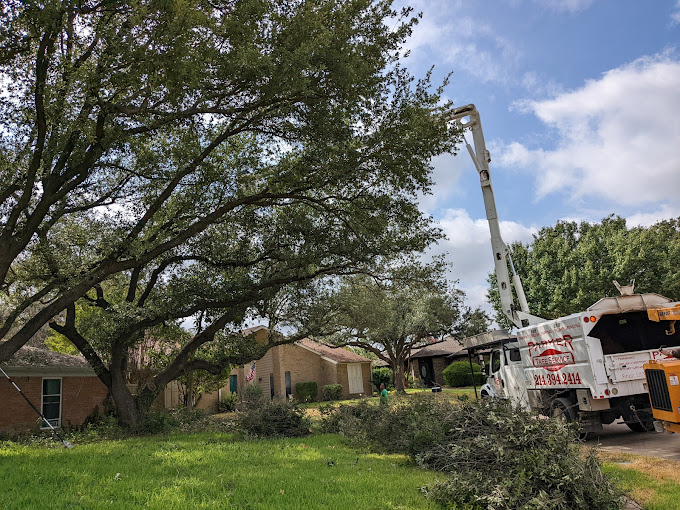
The Importance of Timely Stump Grinding
A surprising number of commercial and residential properties across Plano still have old tree stumps tucked along fence lines, near parking lots, or right in the middle of lawns. After a tree is removed—especially following a storm—many owners assume the hardest part is over and leave the stump “for later.” In reality, that leftover stump can quietly create safety hazards, attract pests, and undermine your landscape investment.
Across North Texas, property claims related to landscape trip-and-fall injuries and root damage run into the millions every year. At the same time, pest issues like wood borers and webworms continue to rise in Collin County, often starting in stressed, dead, or decaying wood.
This article explains why addressing stumps isn’t just a cosmetic choice; it’s a key part of responsible tree and property management in Plano. You’ll learn how timely stump grinding protects your investment, supports tree health, reduces risk, and keeps your property attractive and safe for employees, tenants, customers, and families.
Key Insight: Leaving stumps in place costs more in the long run—through safety risks, pest issues, and lost landscape value—than having them professionally ground out at the right time.
Why Old Stumps Are More Than Just an Eyesore
If you drive through older neighborhoods or commercial areas in Plano, you’ll spot plenty of weathered stumps in front yards and along commercial frontage. At first glance, they seem harmless—maybe even rustic. But once a stump is left in the ground, it begins a slow process of decay that can create multiple problems.
As the wood breaks down, it becomes a magnet for insects like termites, carpenter ants, and wood borers. Those pests don’t always stay put; they can move to nearby healthy trees, wooden fences, or even structures. That’s why many professional Tree Pest Control programs in North Texas include recommendations for removing dead wood and stumps as part of a prevention plan.
On commercial properties—like office parks off the Dallas North Tollway or retail centers along Spring Creek Parkway—stumps can also be a trip hazard. Uneven ground, hidden roots, or low-cut stumps in turf areas increase liability for property owners.
“Any remaining stump is a living reminder of a hazard that used to be there—and can still cause problems if ignored.” — ISA Certified Arborist
Consider a Plano HOA that had a large oak removed after storm damage. The tree was cut down quickly, but the stump stayed. Over two years, the roots pushed up a nearby sidewalk panel. A resident tripped, was injured, and the HOA ended up paying for both medical costs and concrete repair—far more than professional stump grinding would have cost.
Safety, Liability, and ADA Concerns on Commercial Properties
For Plano businesses and commercial property managers, safety and compliance are constant priorities. Stumps and surface roots can quietly undermine those efforts.
Hidden Trip Hazards
Mowed-over stumps and roots in turf areas are especially deceptive. Grass grows around them, and employees, tenants, or customers don’t notice the elevation change until they catch a toe or roll an ankle. In parking islands, playgrounds, and common areas, this is a real concern.
- Apartment complexes near Legacy Drive
- Office parks around Preston Road
- Retail centers with high foot traffic
All of these settings face higher liability exposure if someone trips on an unaddressed stump or elevated root.
ADA Accessibility Issues
For properties subject to ADA standards—medical buildings, retail centers, schools—uneven ground around old root systems can create accessibility issues. Pathways that were once smooth can develop dips and humps as roots decay or continue to grow.
A Plano medical office complex recently had to regrade and resurface a walkway where an old stump had been left in place. As the stump decayed, the soil settled, leaving a noticeable depression right in the middle of a required accessible route. The fix required concrete work, soil replacement, and new landscaping—again, far exceeding the cost of timely stump grinding.
“Risk management isn’t just about big, obvious hazards. It’s about eliminating small, predictable problems before they cause a claim.” — Commercial Property Risk Consultant
Why Timing Matters for Safety
Grinding stumps promptly after Emergency Tree Removal gives you:
- Clear, level ground for replanting or turf
- Reduced risk of trip-and-fall accidents
- Less chance of future sidewalk or pavement lifting
- Better control over how the area is restored
How Stumps Invite Pests and Disease Into Your Landscape
North Texas trees already battle a tough environment: heavy clay soils, heat, periodic drought, and urban stress. Adding decaying stumps into the mix gives insects and diseases an easy foothold.
A Breeding Ground for Insects
Old stumps are ideal for:
- Termites
- Carpenter ants
- Wood-boring beetles
- Fungal growth
Once established, these pests can move into healthy oaks, elms, and ornamental trees on your property. That’s when you start needing Tree Disease Treatment, Tree Borer Control, or other Tree Insect Treatment options.
In Plano neighborhoods near wooded creeks or greenbelts, we often see webworms and borers spread faster where there are multiple decaying stumps and dead limbs left in place. The dead wood acts like a “launch pad” for infestations.
Fungal and Root Disease Spread
As stumps decompose, they can also harbor fungi that affect nearby trees. In compacted Plano soils, poorly drained areas around old stumps stay wetter, increasing the risk of root rot and other issues.
A local church campus off Coit Road learned this the hard way. They lost a large red oak to storm damage and left the stump alone. Over a few years, fungal growth appeared around the stump and eventually spread to two nearby trees. By the time they called for a Tree Consultation, one of those trees also had to be removed.
“Dead wood is one of the easiest things to control in a landscape, yet it’s one of the most common sources of preventable pest problems.” — ISA Certified Arborist
Integrating Stump Grinding With Plant Health Care
Timely stump grinding is a simple, proactive part of broader Tree Health Care:
- Removes pest and disease harborage
- Allows for soil improvement and Soil Conditioning
- Opens space for new, properly sited trees or shrubs
- Supports the success of nearby trees by reducing competition
Comparing Your Options: Leaving, Grinding, or Removing Stumps
Property owners in Plano often ask whether they really need to grind stumps or if they can just leave them alone. Others wonder about full stump removal (digging everything out) versus grinding. Each approach has trade-offs.
Traditional vs. Modern Approaches
Here’s a simple comparison tailored to typical Plano properties:
| Approach | Upfront Cost (Plano Area) | Time & Disruption | Long-Term Risk | Best For |
|---|---|---|---|---|
| Leave Stump in Place | $0 | None initially | High (pests, trip hazards, roots) | Very low-traffic, remote areas only |
| DIY Chemical / Manual Decay | Low | Months–years; labor-intensive | Moderate–High | Small, out-of-the-way stumps |
| Professional Stump Grinding | Moderate | Fast (often under an hour) | Low | Most residential & commercial properties |
| Full Stump & Root Removal | Higher | Heavy equipment, more damage | Very Low | Construction sites, major regrading |
For most Plano homes and businesses, a professional Stump Grinding Service is the best balance of cost, speed, and minimal disruption.
Real-World Example
A small retail strip along Independence Parkway had several large stumps left from trees removed years earlier. The owner considered full excavation but worried about disrupting parking and underground utilities. After a Tree Risk Assessment, they opted for stump grinding instead.
- Work was scheduled early in the morning before opening
- Each stump took less than an hour
- The surface was restored with mulch and later replanted
- No damage to pavement or utilities occurred
“Stump grinding gives you 90% of the benefit of full removal with a fraction of the disruption and cost.” — Senior Arborist, Parker Tree Service
How Timely Stump Grinding Protects Your Landscape Investment
Trees are one of the most valuable features on any Plano property. They provide shade, reduce cooling costs, and boost curb appeal—especially in hot summers. When a tree has to be removed, how you handle the stump can either protect or diminish that investment.
Supporting Nearby Trees and Turf
Old stumps and roots compete with surrounding plants for water and nutrients as they break down. In our heavy clay soils, that can lead to:
- Thin, weak turf around the stump area
- Struggling shrubs or young trees planted too close
- Persistent dry spots because roots still occupy the soil
By grinding the stump and improving the soil, you give surrounding plants a better environment. Combining grinding with Tree Root Care or Soil Conditioning can significantly improve plant performance in that area.
Replanting the Right Way
Many Plano homeowners want to replant quickly after a removal. That’s understandable—no one likes a bare spot. But planting a new tree right on top of an old stump or root system can set that new tree up for failure.
A family near Carpenter Park removed a declining ash tree and immediately planted a new red oak in the same spot—without grinding the stump. The new tree struggled for years: poor root development, minimal growth, and ongoing stress. When they finally called for Tree Pruning Services Near Me, the arborist recommended moving the tree and grinding the old stump. The difference in growth after replanting in properly prepared soil was dramatic.
“Healthy trees start with healthy soil. Removing old woody material and conditioning the site is just as important as choosing the right species.” — ISA Certified Arborist
Enhancing Property Value
Plano’s competitive real estate market rewards well-maintained landscapes. Properties with clean, safe, and thoughtfully planted trees consistently show better:
- Curb appeal
- Appraisal values
- Lease rates and tenant satisfaction (for commercial sites)
An unaddressed stump or patchy turf where a tree once stood sends the opposite message—that maintenance is deferred and details are overlooked.
Integrating Stump Grinding Into a Long-Term Tree Care Plan
Timely stump grinding isn’t a one-off decision; it’s part of a thoughtful, long-term approach to caring for your property’s trees and landscape.
Start With a Professional Assessment
An ISA Certified Arborist can help you prioritize:
- Which trees may need removal in the next 3–5 years
- Where stumps currently exist and how they affect use of the space
- Opportunities for new plantings or improved shade
- Risks related to pests, disease, or structural issues
For Plano businesses, this often takes the form of Tree Surveys or Tree Inspection services. Residential clients may opt for periodic Tree Consultation visits.
Coordinate With Other Services
The most efficient plans bundle multiple services:
- Tree Removal for dead or hazardous trees
- Immediate stump grinding for those removals
- Tree Pruning or Tree Shaping for remaining trees
- Deep Root Fertilization or soil work in high-value areas
A Plano office campus off George Bush Turnpike implemented a three-year plan that included phased removals of declining trees, immediate stump grinding, and strategic replanting. The result: a safer, more attractive property with better shade coverage and reduced emergency calls for fallen limbs.
“Good tree care is planned, not reactive. Stump grinding is simply one step in a larger strategy to keep your property safe, beautiful, and functional.” — Senior Arborist, Parker Tree Service
Budgeting and Scheduling
Most properties benefit from:
- Annual or biannual tree inspections
- A rolling list of trees to monitor, prune, or remove
- A dedicated line item for stump grinding and restoration
What This Means for Businesses in Plano, TX
Plano’s mix of aging trees, rapid development, and intense weather swings makes proactive tree management more important than ever. For local businesses, HOAs, and institutions, timely stump grinding is a small step with outsized impact.
On commercial corridors like Preston, Coit, and Parker Road, customers notice the difference between a property with clean, well-maintained trees and one with dead stumps and patchy turf. That first impression influences how they perceive your business long before they walk through the door.
From an operational standpoint, addressing stumps promptly helps Plano property managers:
- Reduce slip-and-fall liability and insurance exposure
- Keep walkways, parking lots, and play areas safe and attractive
- Minimize pest issues that could lead to more extensive Tree Disease Treatment or removal down the road
- Protect investments in irrigation, turf, and landscaping
For campuses near Legacy West, industrial areas in East Plano, or neighborhood centers throughout the city, it’s about more than appearance. It’s about creating a reliable, predictable, and safe environment for employees, tenants, and visitors.
And because Plano’s tree canopy is an important part of its identity and property values, integrating stump grinding with thoughtful replanting and ongoing Tree Maintenance Services helps ensure your property remains attractive and functional for years to come.
Frequently Asked Questions
Q: How soon after tree removal should I schedule stump grinding?
A: In Plano’s climate, it’s best to schedule stump grinding as soon as possible after Tree Removal—ideally within a few weeks. Fresh stumps are easier to grind, roots are more predictable, and you reduce the window for pests and decay to set in. For Emergency Tree Removal jobs after storms, many property owners focus on clearing debris and forget the stump. Adding stump grinding to the same work order often saves money because equipment and crews are already on site. It also lets you move forward with repairs, replanting, or turf restoration without delay.
Q: Is stump grinding safe around sidewalks, utilities, or irrigation lines?
A: When performed by an experienced crew, stump grinding is generally very safe around hardscape and underground utilities. Before starting, a reputable Stump Grinding provider will ask about irrigation layouts, call in utility locates when needed, and set grinding depths accordingly. In many Plano neighborhoods and commercial sites, we routinely grind stumps within a few feet of sidewalks, driveways, and parking curbs without damage. Full excavation, by contrast, often requires heavier equipment and can be more disruptive. A site visit and Tree Inspection are the best way to determine the safest approach for your property.
Q: Can I replant a new tree where the stump was ground?
A: Yes, but timing and preparation matter. After grinding, there will be a mix of soil and wood chips in the hole. For best results, remove a good portion of that material, backfill with quality topsoil, and allow some time for the area to settle—especially in Plano’s clay soils. If you want to plant a large tree in the exact same spot, your arborist may recommend shifting the location slightly to avoid dense remaining roots. Combining stump grinding with Tree Root Care or soil conditioning can greatly improve the success of the new planting, particularly in high-visibility areas like front entries or streetscapes.
Q: Is stump grinding really necessary, or can I just leave the stump?
A: You can leave a stump, but it comes with trade-offs. Over time, the stump will decay, attract insects, and can become a trip hazard as the ground shifts. In Plano’s busy residential neighborhoods and commercial areas, those risks usually outweigh the short-term savings. Properties with public access, children, or frequent foot traffic benefit most from prompt grinding. For remote corners of large lots or low-use areas, leaving a stump may be acceptable, but it should be a conscious choice made after a Tree Risk Assessment, not just something that’s forgotten after Tree Removal Near Me.
Q: How much does stump grinding typically cost in Plano?
A: Costs depend on stump size, species, location, and access. Small, easily accessible stumps are relatively affordable, while large, old stumps near structures or on slopes cost more. Compared to full root excavation, stump grinding is usually the more cost-effective option. Many property owners in Plano bundle several stumps in a single visit to reduce per-stump pricing. When you contact a local Stump Removal provider, share photos and measurements if possible; that allows for a more accurate estimate and helps you plan your budget.
Q: Will stump grinding damage my lawn or landscape?
A: A careful crew will minimize disturbance to surrounding turf and beds. The grinder focuses on the stump and immediate root flare, and operators use shields to contain most of the debris. Some surface disturbance is unavoidable, but it’s typically limited to the work area. After grinding, the resulting mulch can be left in place, redistributed, or partially removed and replaced with topsoil for replanting or sod. Many Plano homeowners schedule grinding before a planned landscape refresh so any minor disruption is easily addressed as part of the overall project.
Q: How does stump grinding fit into a broader tree care plan?
A: Stump grinding is one piece of a comprehensive approach that includes pruning, removals, pest management, and soil care. After a Tree Pruning Service or Dead Tree Removal, grinding the stump clears the way for new plantings, turf, or hardscape. It also supports the success of nearby trees, especially when combined with Tree Fertilization Service or other Tree Care Services. For Plano businesses and HOAs, integrating stump grinding into multi-year landscape plans helps control costs, reduce emergencies, and keep properties looking consistently well maintained.
Ready to Get Started?
Old stumps rarely get better with time. In Plano’s active neighborhoods and busy commercial centers, they quietly increase risk, invite pests, and limit what you can do with your landscape. Addressing them now means you control the timing, the budget, and the outcome—rather than reacting after a trip incident, pest outbreak, or costly repair.
If you’ve recently had a tree removed, dealt with storm damage, or simply have stumps you’ve been ignoring for years, this is the ideal time to act. A professional assessment can identify which stumps pose the highest priority and how stump grinding can be coordinated with pruning, removals, or soil improvement to get the most value from a single visit.
Parker Tree Service has the equipment, experience, and ISA Certified Arborists to handle everything from a single backyard stump to multiple large stumps on commercial properties throughout Plano. Reach out to schedule an on-site evaluation and get a clear, practical plan for reclaiming those problem spots on your property.
About Parker Tree Service
Parker Tree Service is a locally focused tree care company serving Plano, TX and surrounding North Texas communities. Our team includes ISA Certified Arborists with decades of combined experience in Tree Removal Service, Tree Pruning, plant health care, and Affordable Stump Removal for both residential and commercial properties. We’re committed to safety, honest recommendations, and long-term tree preservation whenever possible. To learn more about our full range of services, visit our homepage.