
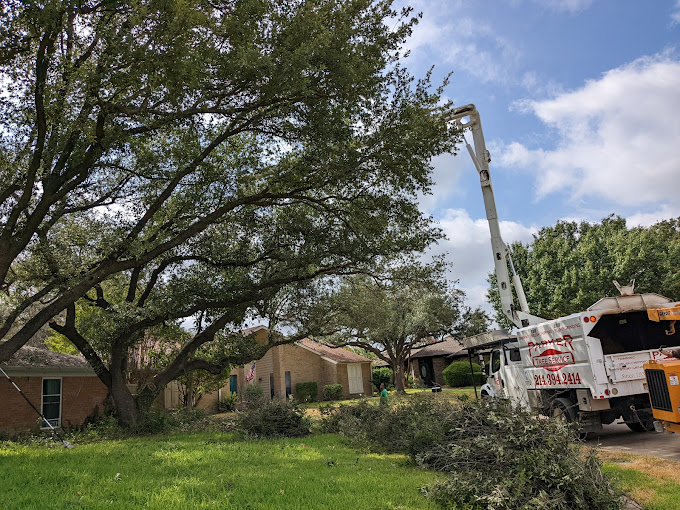
Stump Grinding to Reclaim Your Yard Space
That old tree stump in the middle of your yard probably doesn’t seem like an emergency—until you trip over it in the dark, your mower blade slams into it, or you notice mushrooms and insects starting to take over. Across North Texas, thousands of stumps are left behind after storm damage, construction, or partial tree removal, quietly eating up valuable outdoor space.
In a fast-growing city like Plano, TX—where lot sizes are shrinking and outdoor living is a major selling point—every square foot of usable yard matters. A single stump can block a future patio, playset, or garden bed, and it can quietly invite decay, pests, and disease into an otherwise healthy landscape.
This guide explains how professional stump grinding restores that lost space, protects your property, and improves safety and curb appeal. You’ll learn how stump grinding works, how it compares to full stump removal, what it costs in the Plano area, and how to decide what’s right for your property—plus what to expect when you partner with Parker Tree Service.
Key Insight: Professional stump grinding doesn’t just “get rid of a stump”—it reclaims valuable yard space, reduces safety risks, and protects tree and soil health across your entire landscape.
Why Old Stumps Are More Than Just an Eyesore
A stump might look harmless, but it changes how your yard ages, drains, and grows. In Plano’s clay-heavy soils and storm-prone climate, those effects show up faster than many homeowners expect.
Hidden risks of leaving stumps in place
Unremoved stumps can create several long-term problems:
- Trip hazards and mower damage – Low stumps and hidden roots are easy to miss in tall grass or dusk lighting.
- Pest and disease harbors – Rotting wood attracts termites, carpenter ants, wood borers, and fungi that can spread to nearby trees and structures.
- Regrowth problems – Many stumps sprout new shoots, creating unattractive clumps that are hard to control.
- Drainage and lawn issues – As the stump slowly decays, it leaves voids that cause low spots and uneven turf.
“Dead wood doesn’t stay neutral; it either becomes habitat for beneficial organisms—or a launchpad for pests and disease.” — ISA Certified Arborist
We often see this play out after Tree Removal following a storm. A Plano homeowner had a large oak removed after a lightning strike but left the stump to “deal with later.” Within two years, the stump was covered in fungal growth, and wood-boring insects had spread to a nearby live oak that then needed extensive Tree Pruning and treatment.
Beyond the biology, there’s also the financial angle. Homes in Plano with clean, usable outdoor spaces consistently show stronger buyer interest. A yard dotted with stumps signals deferred maintenance and can become a negotiation point against you.
How Stump Grinding Works (And Why It’s Ideal for Plano Yards)
Stump grinding is a mechanical process that uses a powerful rotating cutting wheel to chip the stump and major surface roots into small wood mulch, usually 6–12 inches below grade (or deeper when needed). It’s efficient, precise, and far less disruptive than excavation.
What actually happens during stump grinding
A typical service visit includes:
- Site inspection and utility check
- Positioning a stump grinder (walk-behind or self-propelled, depending on access)
- Gradual passes over the stump, grinding it down layer by layer
- Grinding key surface roots to prevent visible regrowth
- Backfilling the hole with ground mulch and soil
For Plano’s dense neighborhoods and narrow side yards, we often use compact grinders that can fit through standard gates without damaging turf or hardscapes.
Real-world example:
A homeowner off Preston Rd had a 24-inch pecan stump jammed between a fence and a retaining wall. Full excavation would have required dismantling part of the wall. Our crew used a compact grinder, protected the wall with plywood shields, and completed the job in under two hours, leaving the area level and ready for sod.
Stump grinding is also the logical next step after Emergency Tree Removal. Storm-damaged trees that fail often leave jagged, unstable stumps. Grinding them promptly makes cleanup safer and restores order to an otherwise chaotic scene.
Stump Grinding vs. Full Stump Removal: Which Is Right for You?
Property owners often ask whether they should grind the stump or remove it entirely (including the root system). The answer depends on your goals, budget, and site conditions.
Comparing approaches
Here’s how the two options typically stack up for Plano homeowners:
| Factor | Stump Grinding | Full Stump Removal |
|---|---|---|
| Typical Cost (Plano, per stump) | Lower | Higher |
| Yard Disturbance | Minimal surface disruption | Significant digging and soil removal |
| Time on Site | 1–3 hours in most cases | 3+ hours, often full-day projects |
| Best For | Lawns, beds, near hardscapes/fences | New construction, foundations, utilities |
| Access Needs | Works in tight or gated areas | Requires larger equipment/clearance |
| Debris | Mulch can be reused or hauled away | Large root balls and soil to dispose of |
For existing homes and established landscapes in Plano, stump grinding is almost always the more practical choice. Full removal is better suited to:
- New builds and major renovations
- Situations where roots interfere with foundations or utilities
- Certain commercial or Lot Clearing projects
We recently worked with a homeowner near Oak Point Park who wanted to install a flagstone patio where a large elm once stood. Grinding the stump to 12–14 inches below grade gave the contractor enough clearance for base material, without heavy excavation equipment tearing up the rest of the yard.
“Modern stump grinding gives you 90–95% of the benefit of full removal with a fraction of the disruption and cost.” — Parker Tree Service Arborist
Reclaiming Usable Space: Design Possibilities After Stump Grinding
Once the stump is gone, that patch of ground stops being a problem and becomes an opportunity. In a city like Plano, where outdoor living areas are extensions of the home, reclaiming even a small section of yard can change how your property functions.
What you can do with newly cleared space
After stump grinding and basic soil prep, you can:
- Extend lawn or play space for kids and pets
- Install a small seating area, fire pit, or grill station
- Add a raised bed garden or ornamental planting bed
- Create a safer, smoother mowing and walking surface
- Plant a new tree in a better, more strategic location
Case study:
A family in central Plano had two large stump “islands” in their back lawn from trees removed before they purchased the home. The kids avoided those spots, and mowing was a headache. We provided a combined service plan: stump grinding, Deep Root Fertilization for the remaining trees, and selective Professional Tree Trimming. The result: a safer, open play lawn and healthier canopy coverage that actually improved shade over their new sitting area.
Over time, that transformation doesn’t just improve daily life—it also supports property value. Buyers are increasingly looking for move-in-ready outdoor spaces, not projects.
Protecting Tree and Soil Health Around the Old Stump
Stump grinding is often the start of a broader tree health strategy, especially in mature Plano neighborhoods where trees are decades old and soil has been heavily compacted.
Beyond aesthetics: health and prevention
Grinding out a decaying stump can:
- Reduce habitat for wood-boring insects that threaten nearby trees
- Limit spread of fungal diseases through root connections
- Allow for soil improvement and root-zone care where a tree once stressed the soil
We frequently pair stump grinding with:
- Tree Health Care and Pest Control – Targeted Tree Fertilization Service, soil conditioning, and Tree Root Care to support remaining trees
- Preventive pruning – Structural Tree Pruning to reduce storm risk and improve airflow
- Monitoring for pests and disease – Especially wood borers and webworms, which are common in North Texas
“Healthy trees start with healthy soil. Removing decaying stumps opens the door to real soil improvement, not just surface fixes.” — ISA Certified Arborist
Plano example:
A homeowner near Legacy West had a declining red oak removed, but left the stump. Within a year, nearby oaks showed signs of stress and borer activity. Our team ground the stump, treated the soil, applied targeted tree insect and wood borer treatments, and followed up with two years of deep root fertilization. Those remaining trees stabilized and are now thriving.
What to Expect from a Professional Stump Grinding Service
Knowing what the process looks like helps you plan, budget, and choose the right provider. A reputable Plano tree company will focus on safety, precision, and minimal disruption.
A typical project timeline
1. Consultation and estimate
- Visual inspection of the stump(s) and nearby structures
- Discussion of future plans for the area (lawn, patio, replanting)
- Assessment of access, utilities, and potential obstacles
2. Scheduling and preparation
- Marking of utilities where needed
- Guidance on clearing the area (toys, furniture, vehicles)
3. Grinding day
- Equipment setup and protective barriers near windows, fences, or beds
- Systematic grinding of stump and major roots
- Cleanup of chips, leveling, and optional haul-away of excess mulch
4. Post-service recommendations
- Guidance on settlement (the area may sink slightly as material decomposes)
- Suggestions for soil amendments, replanting, or turf repair
Local case:
A Plano resident with multiple smaller stumps from a past DIY project called us after struggling with rented equipment. Our crew completed five stumps in an afternoon, cleaned up thoroughly, and left clear instructions for reseeding. The homeowner later told us, “I wish I’d skipped the rental and called you first—my weekend would’ve gone a lot better.”
Cost, Value, and Long-Term Payoff in Plano
Stump grinding is one of the more cost-effective tree services relative to the value it delivers in safety, aesthetics, and usable space.
Typical cost factors in Plano
Pricing usually depends on:
- Stump diameter and species (hardwoods vs. softwoods)
- Number of stumps
- Access (slopes, fences, tight gates)
- Desired grinding depth
- Cleanup and haul-away options
Here’s a general comparison of short-term cost vs. long-term benefit:
| Aspect | Short-Term View | Long-Term View |
|---|---|---|
| Upfront Cost | Modest home improvement expense | Small compared to landscape value |
| Safety | Removes a current hazard | Prevents injuries and property damage |
| Tree & Soil Health | Eliminates one decaying element | Reduces pest/disease risk to whole yard |
| Property Value | Improves appearance | Supports stronger resale and buyer appeal |
| Maintenance | Easier mowing and trimming immediately | Less equipment wear, fewer repairs |
A Plano homeowner with two large stumps near their driveway recently told us that, after grinding, their kids could finally ride bikes safely and they no longer worried about visitors tripping at night. That peace of mind, plus the cleaner look from the street, made the investment feel small.
What This Means for Businesses in Plano, TX
It’s not just homeowners who benefit from reclaiming outdoor space. Commercial properties in Plano—from office parks to retail centers and HOAs—see a direct impact when they address old stumps.
- Curb appeal and brand image
First impressions matter. A clean, well-maintained landscape without rotting stumps signals professionalism and care. For offices along major corridors like the Dallas North Tollway or US-75, that visual message is part of your brand.
- Liability reduction
Stumps in parking lot islands, pathways, or common areas are clear trip hazards. Removing them reduces the risk of accidents and potential claims, especially in high-traffic environments.
- Space optimization
Businesses and HOAs can repurpose former stump areas into seating zones, updated plantings, or signage—maximizing the value of every square foot of property.
- Integrated tree care planning
Many commercial clients pair stump grinding with ongoing Tree Maintenance Services, risk assessments, and strategic removals to keep their landscapes safe and attractive year-round.
For Plano’s competitive business environment, where tenants and customers have plenty of choices, a well-kept property can be a quiet advantage. Proactive stump removal and grinding is a small but important piece of that larger picture.
Frequently Asked Questions
Q: How soon after tree removal should I schedule stump grinding?
A: In the Plano area, it’s best to schedule stump grinding as soon as possible after Tree Removal or Emergency Tree Service. Fresh stumps are easier to grind, and addressing them quickly prevents regrowth, fungal colonization, and insect activity. Waiting months or years allows decay and pests to establish, which can affect nearby trees and even structures. From a practical standpoint, taking care of both removal and grinding in the same general timeframe minimizes yard disruption and lets you move forward with lawn repair, replanting, or hardscape projects sooner.
Q: Will stump grinding damage my lawn, irrigation, or nearby hardscapes?
A: A professional stump grinding service is designed to minimize collateral impact. In Plano’s smaller yards, we often use compact equipment that can pass through standard gates and maneuver around patios and irrigation heads. Before grinding, our crew inspects for sprinkler lines, landscape lighting, and other features. We also use shields to protect windows, fences, and beds from flying debris. While there may be some temporary disturbance to the immediate area around the stump, careful technique and cleanup keep the rest of your lawn and hardscapes intact.
Q: Can I plant a new tree where the stump was ground out?
A: You can replant in the general area, but ideally not in the exact footprint of the old stump. The soil there is often full of wood chips and decaying material that can tie up nitrogen and slow root establishment. We typically recommend shifting the new tree 3–5 feet away from the original location. After grinding, we can help amend the soil and recommend species based on sun, space, and Plano’s soil conditions. Proper Tree Planting and follow-up care, such as deep root fertilization, will give your new tree a much better start.
Q: Is it possible for a stump to grow back after grinding?
A: Thorough stump grinding significantly reduces the chance of regrowth, but some species are more persistent than others. If major surface roots are not addressed, you may see occasional shoots along those roots. A well-executed job targets the stump and key roots to minimize this. If limited regrowth does occur, it’s usually manageable with pruning or targeted treatment. Compared to leaving the stump intact, properly performed grinding dramatically cuts down on ongoing sprout problems.
Q: How much does stump grinding typically cost in Plano?
A: Costs vary based on stump size, species, access, and how many stumps are being handled at once. Smaller stumps in easy-to-reach areas are on the lower end, while large, dense hardwood stumps or those in tight corners can cost more. Multiple stumps on the same property often qualify for a better per-stump rate. During an on-site visit, we provide clear, written pricing so you know exactly what’s included—grinding depth, cleanup, and any haul-away. Compared to the long-term hassles and risks of leaving stumps, most Plano homeowners find the investment very reasonable.
Q: Do I need to be home during the stump grinding process?
A: As long as we have clear access to the work area and have reviewed the scope with you beforehand, you don’t necessarily need to be home. Many Plano clients prefer to be present for the initial consultation and then go about their day during the actual grinding. We coordinate timing, confirm access details (gates, pets, parking), and handle the rest. Afterward, we can provide photos and notes, along with recommendations for soil prep, replanting, or follow-up Tree Pruning Services Near Me if needed.
Q: Is stump grinding safe around kids, pets, and nearby trees?
A: When performed by trained professionals with proper safety protocols, stump grinding is a controlled and safe process. We set up work zones, use protective barriers, and keep bystanders at a safe distance while equipment is running. Pets should be indoors or secured away from the area during the job. Nearby trees are not harmed; in fact, removing a decaying stump often benefits surrounding trees by reducing disease and pest pressure. If you’re concerned about specific trees or roots, we can evaluate them as part of a broader tree health and risk assessment.
Ready to Get Started?
Old stumps don’t get better with time. In Plano’s climate, they decay, attract pests, and slowly undermine the look and safety of your yard or commercial property. Addressing them now means you can reclaim valuable space before the next storm season, before new landscape projects kick off, and before minor issues turn into bigger, costlier problems.