
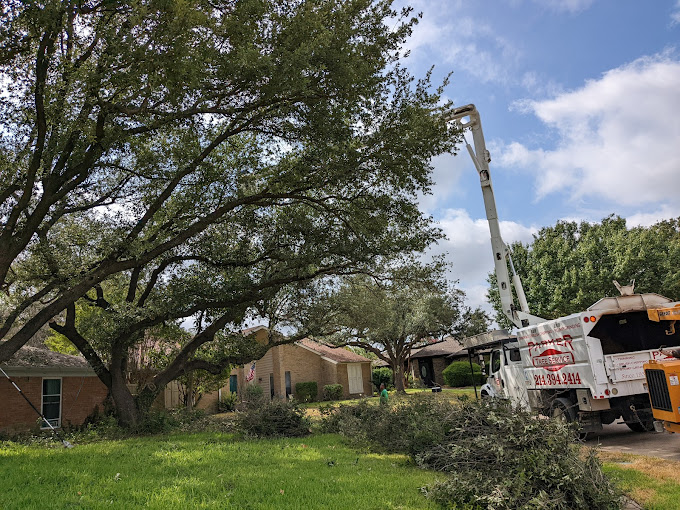
Why You Need Regular Tree Pruning
On a windy spring afternoon in Plano, you’ve probably seen it: a large limb snaps off an otherwise healthy-looking tree, blocking a driveway or crashing onto a fence. Many of those “surprise” failures aren’t accidents at all—they’re the result of years of neglected pruning.
Across North Texas, storms are getting stronger and more frequent, and our clay soils and heat stress trees year-round. For businesses and homeowners in Plano, that means trees need more than the occasional cleanup; they need a thoughtful, regular pruning plan. The International Society of Arboriculture (ISA) notes that properly pruned trees are not only safer, they live longer and look better.
In this guide, you’ll learn why regular tree pruning matters so much in our local climate, how it protects your property and budget, what proper pruning actually looks like, and how to tell when it’s time to bring in a professional. You’ll also see real examples from around Plano and get answers to common questions about timing, cost, safety, and long-term tree health.
Key Insight: Regular, professional tree pruning is one of the most cost-effective ways to protect your property, reduce storm damage, and keep your trees healthy and beautiful in Plano’s challenging climate.
Healthy Trees Don’t Happen by Accident
Healthy, well-shaped trees are almost never “low maintenance” in North Texas—they’re the result of consistent, informed care. Our hot summers, periodic drought, and heavy storm seasons put trees under constant stress. Without regular pruning, that stress shows up as weak limbs, dead branches, and disease.
In Plano, we see this especially with live oaks, red oaks, pecans, and cedar elms. These species can grow quickly, and if they’re not managed, they develop:
- Crossing or rubbing branches that create wounds
- Heavy, top-weighted canopies prone to breaking
- Dense interior growth that holds wind like a sail
A few years ago, a Plano homeowner called Parker Tree Service after a major limb from a mature pecan tree fell across their backyard during a storm. The tree had never been professionally pruned. Our ISA Certified Arborist found large deadwood, multiple weak branch unions, and excessive canopy weight over the fence line. After removing the broken limb, we performed corrective pruning and established a 3–5 year pruning cycle. Since then, through several major storms, that tree has held up beautifully.
“Most tree failures we see after storms are preventable with regular structural pruning.” — ISA Certified Arborist, Parker Tree Service
Regular Tree Pruning shapes how a tree grows over time. It builds a strong structure early, maintains clearance from roofs and power lines, and reduces the chance of sudden, expensive failures later.
Safety, Liability, and Storm Season in Plano
One of the most overlooked reasons for regular pruning is liability. A large tree limb over a parking lot, sidewalk, or neighboring property isn’t just a nuisance—it’s a legal risk if it fails and injures someone or damages property.
Plano’s mix of residential neighborhoods, commercial centers, and business parks means trees are often close to:
- Vehicles and parking lots
- Pedestrian walkways and play areas
- Buildings, signs, and lighting
During our spring and fall storm seasons, high winds and saturated soils make weak or poorly pruned trees especially vulnerable. That’s where proactive pruning and, when necessary, professional Tree Removal come in.
A local business off Preston Road learned this the hard way. A large, overextended limb from an aging oak snapped during a thunderstorm and landed on several parked cars. Fortunately, no one was hurt, but the business faced repair costs, insurance claims, and lost goodwill with customers. When we inspected the tree, we found multiple dead limbs and decay that had been visible for years.
Now, that property has a scheduled pruning program. We thin canopies, remove deadwood, and perform selective reduction on limbs over parking areas. The result: better safety, more light, and significantly reduced storm risk.
Regular pruning also reduces the need for Emergency Tree Removal, which is always more disruptive and costly than planned maintenance.
“Preventive pruning typically costs a fraction of what a single emergency tree service visit can run after a major storm.” — Parker Tree Service Arborist
Pruning for Health: Disease, Pests, and Longevity
Pruning isn’t just about looks and safety; it’s one of the best tools for long-term tree health. In Plano, where trees face heat stress, compacted soils, and periodic drought, regular pruning helps them stay resilient.
Thoughtful pruning:
- Removes dead, diseased, or infested branches before problems spread
- Improves air circulation and sunlight penetration within the canopy
- Reduces moisture buildup that can encourage fungi and decay
- Allows arborists to spot early signs of issues like borers or webworms
We often combine pruning with targeted Tree Health Care services. For example, a Plano homeowner with several stressed red oaks called us after noticing thinning canopies and small exit holes in the bark. Our team diagnosed a borer issue and drought stress. We removed infested branches, improved structure with professional tree trimming, and followed up with deep root fertilization and tree borer control.
Within a season, new growth improved dramatically, and we avoided losing mature, high-value trees.
“Regular pruning gives us a chance to catch small health issues before they become big, irreversible problems.” — Parker Tree Service Arborist
Here’s how pruning fits into a broader tree health strategy:
- Structural pruning: strengthens the tree’s framework
- Sanitation pruning: removes diseased or infested wood
- Canopy thinning: improves airflow and light, reducing pest pressure
- Root and soil care: paired with pruning, supports recovery and growth
Curb Appeal, Shade, and Property Value
Trees are one of the most visible and valuable features on any property in Plano. For homes, they frame the house, provide shade, and create a welcoming feel. For businesses, they signal care, stability, and professionalism to customers and tenants.
But overgrown, poorly shaped, or neglected trees can have the opposite effect:
- Branches blocking signage or storefronts
- Dark, dense canopies that make spaces feel unsafe
- Low limbs scraping vehicles or obstructing walkways
- Misshapen trees that distract from architecture
Professional Tree Trimming and tree shaping can transform a property without major construction or landscaping changes. We see this often with commercial clients along Spring Creek Parkway and in residential subdivisions across Plano.
One retail center we service had beautiful live oaks that had never been structurally pruned. The trees were so dense they hid storefronts and signs, and lower limbs forced delivery trucks to avoid certain areas. Our team performed crown thinning, selective crown reduction, and raised canopies for clearance. The result was striking:
- Storefronts became clearly visible from the street
- Parking lots felt brighter and safer at night
- Customers commented on how “clean and open” the space felt
CALLOUT: Thoughtful pruning doesn’t mean “topping” or hacking trees back. It means preserving natural form while improving structure, clearance, and light.
Appearance vs. Health: Striking the Right Balance
| Aspect | Poor DIY Cutting | Professional Pruning |
|---|---|---|
| Look after 1 year | Awkward, stubby regrowth | Natural, balanced canopy |
| Impact on tree health | High stress, decay risk | Supports long-term vigor and structure |
| Shade & comfort | Inconsistent, often too harsh | Managed for comfort and energy savings |
| Property value | May decrease perceived quality | Enhances curb appeal and marketability |
| Future maintenance cost | Higher (repairs, removals) | Lower (planned cycles, fewer emergencies) |
Regular Pruning vs. “Fix It When It Breaks”
Many property owners only think about their trees when something goes wrong—a fallen limb, a blocked driveway, or a sudden hazard. That reactive approach is almost always more expensive and more stressful than a planned maintenance program.
Here’s how a proactive pruning plan compares with a “wait until it fails” mindset for a typical Plano property:
Cost & Risk Comparison for Plano Properties
| Factor | Reactive Approach | Regular Pruning Plan |
|---|---|---|
| Upfront cost | Low | Moderate, predictable |
| Emergency call-outs | Frequent, high-cost | Rare, usually avoidable |
| Risk of property damage | High (unplanned failures) | Significantly reduced |
| Insurance claims | More likely | Less likely |
| Tree removal likelihood | Higher (after neglect or damage) | Lower (trees live longer, stay safer) |
| Business disruption | Unplanned closures, blocked access | Scheduled, minimal impact |
We worked with a commercial property owner in Plano who initially called us for a fallen tree blocking a main entrance. That emergency required immediate Emergency Tree Service, traffic control, and later, Stump Grinding and replacement planting. After reviewing the incident, the owner asked us to perform a tree risk assessment across the property.
We identified several other trees with structural issues and overdue pruning needs. The owner chose to move to a scheduled pruning program every 2–3 years. In the years since, they’ve had no major storm-related tree failures and far fewer unexpected maintenance costs.
“Trees don’t go from safe to dangerous overnight. Regular inspections and pruning catch problems long before they become emergencies.” — Parker Tree Service Arborist
What Proper Pruning Looks Like (and What to Avoid)
Not all pruning is created equal. Poor practices can permanently damage trees and create hazards. In Plano, we still see a lot of “topping” and aggressive cutting by unqualified crews, especially after storms when demand spikes.
Good vs. Bad Pruning Practices
Good practices include:
- Making clean cuts just outside the branch collar (no flush cuts or long stubs)
- Preserving the tree’s natural form and dominant leader
- Removing no more than 20–25% of the live canopy in a single visit
- Targeting dead, diseased, damaged, or crossing branches first
- Following ISA and ANSI A300 pruning standards
Bad practices include:
- Topping (cutting main branches back to random stubs)
- Lion-tailing (removing too much interior growth, leaving foliage only at tips)
- Over-thinning, which can sunburn bark and weaken the tree
- Using climbing spikes on trees that aren’t being removed
A Plano homeowner once hired a low-cost crew to “trim everything back” before listing their home. The crew topped several mature oaks, leaving large, exposed cuts and random stubs. Within a year, the trees had produced weak, rapid regrowth and were more hazardous than before. Ultimately, two of the trees required complete Tree Removal Service, plus stump removal and replanting.
An ISA Certified Arborist Near Me understands local species, growth habits, and proper techniques. They can recommend:
- Tree crown reduction vs. crown thinning
- When tree cabling and bracing might be appropriate
- How to integrate pruning with soil conditioning and deep root fertilization
What This Means for Businesses in Plano, TX
For businesses and commercial property owners in Plano, trees are more than landscaping—they’re assets that affect safety, brand image, and operating costs.
Regular pruning supports:
- Customer and employee safety
By reducing the risk of falling limbs in parking lots, along walkways, and near outdoor seating areas.
- Uninterrupted operations
Planned pruning avoids surprise closures from blocked entrances, downed power lines, or emergency cleanups.
- Brand perception
Well-maintained trees signal professionalism and care. Overgrown or neglected trees can make even a modern building feel dated or poorly managed.
- Energy efficiency
Properly shaped shade trees reduce cooling costs in our hot Plano summers while avoiding damage to roofs, gutters, and HVAC units.
Many Plano businesses operate near busy corridors like US-75, Preston Road, or the Dallas North Tollway, where appearance and accessibility matter. A thoughtful tree maintenance plan—including regular pruning, periodic tree inspections, and, when necessary, hazardous tree removal—helps keep your property competitive and welcoming.
For property managers handling multiple locations, a consistent pruning schedule across sites can also simplify budgeting and reduce surprise expenses. Instead of scrambling after each storm, you know your trees have been evaluated, weak limbs removed, and canopy structure improved.
Regular pruning also supports compliance with city ordinances regarding visibility at intersections, clearance over sidewalks, and access for emergency vehicles—critical for both retail centers and office parks in Plano.
Frequently Asked Questions
Q: How often should my trees be pruned in Plano’s climate?
A: Most mature trees in Plano benefit from professional Tree Pruning Services Near Me every 2–5 years, depending on species, age, and location. Fast-growing trees or those near structures and parking areas may need more frequent attention. Young trees often need structural pruning every 1–3 years to set them up for long-term stability. Storm damage, construction impact, or visible issues like dead limbs or low-hanging branches are signs you shouldn’t wait for the “next cycle.” An ISA arborist can recommend a customized schedule based on a tree inspection and your property’s specific needs.
Q: What time of year is best for pruning trees in Plano?
A: The ideal timing depends on the species and the goal. Many shade trees do well with pruning during the cooler months, when they’re less stressed and leaf-off makes structural issues easier to see. However, safety-related work—like removing dead or hazardous limbs—shouldn’t wait. Certain species, such as oaks, have specific timing guidelines to reduce disease risk. A local Tree Pruning Service familiar with North Texas conditions will schedule work to balance safety, health, and practicality, and can coordinate projects outside your peak business hours if you’re a commercial client.
Q: How do I know if a tree needs pruning or complete removal?
A: Not every problem tree needs to come down. Often, strategic pruning and cabling can correct structural issues or reduce risk. However, if a tree has extensive decay, major root damage, a severe lean, or has lost a significant portion of its canopy, Tree Removal Near Me may be the safest option. Our arborists typically start with a tree risk assessment, evaluating trunk integrity, root health, and canopy structure. When removal is necessary, we can also provide Affordable Stump Removal and stump grinding, then advise on replacement planting to restore shade and curb appeal.
Q: Is it safe to prune trees myself, or should I always hire a professional?
A: Light pruning from the ground—such as removing small, low branches with hand tools—can be safe for many property owners. However, anything involving ladders, power tools, or branches over structures, driveways, or power lines should be left to professionals. Tree work is one of the most dangerous trades in the U.S., and improper cuts can create hazards or open the door to disease and pests. A professional Tree Service Near Me has the training, equipment, and insurance to work safely at height, protect your property, and preserve tree health.
Q: Will pruning hurt my trees or make them grow faster and bushier?
A: Proper pruning, done by an experienced arborist, supports tree health rather than harming it. It’s true that trees respond to pruning with new growth, but the goal is to direct that growth into a stronger, safer structure. Poor practices like topping can stimulate weak, rapid regrowth and leave large wounds that invite decay. In contrast, selective pruning removes problem branches, balances the canopy, and improves light and airflow. When combined with services like deep root fertilization and soil conditioning, pruning can actually extend a tree’s lifespan and resilience in Plano’s tough climate.
Q: How does regular pruning help with pests like borers and webworms?
A: Many insect problems are easier to manage when trees are pruned regularly. Removing dead or declining wood reduces habitat for wood borers. Thinning dense canopies makes it harder for webworms and other pests to establish large, hidden colonies. During pruning, arborists can spot early signs of infestation and recommend targeted Tree Pest Control or Wood Borer Treatment before damage becomes severe. In Plano, combining regular pruning with good tree root care and deep root fertilization helps trees stay vigorous enough to resist and recover from insect pressure.
Q: What happens to the branches and debris after pruning?
A: A professional tree care company will chip, haul away, or recycle pruning debris as part of the service. At Parker Tree Service, we remove all brush and wood unless you request otherwise. For larger removals or storm damage tree service, we can also provide Stump Grinding Service to eliminate trip hazards and prepare the area for replanting or landscaping. Our crews clean up work areas thoroughly, so your property looks neat and usable as soon as the job is complete.
Ready to Get Started?
North Texas weather won’t wait for your trees to catch up. Each storm season exposes weak limbs, hidden decay, and years of deferred maintenance. Regular pruning turns that uncertainty into a manageable, predictable part of caring for your property.
If you’re seeing dead branches, overgrown canopies, or limbs hanging over roofs, driveways, or parking areas, it’s time for a professional evaluation. Parker Tree Service can inspect your trees, recommend a tailored pruning and maintenance plan, and handle everything from routine trimming to hazardous tree removal and stump grinding.
We’ve worked with homeowners, HOAs, and businesses across Plano for years, and our ISA Certified Arborists understand the unique challenges of our local soils, climate, and tree species. Scheduling an assessment now—before the next major storm—can help you avoid costly emergencies and protect the value and safety of your property.
Take the next step toward healthier, safer, and more beautiful trees with a trusted local partner.
About Parker Tree Service
Parker Tree Service is a locally focused tree care company serving Plano, TX and surrounding communities. Our team includes ISA Certified Arborists and experienced crews who specialize in pruning, tree removal, stump grinding, deep root fertilization, and comprehensive tree health care for both residential and commercial properties. With years of experience in North Texas conditions, we follow industry best practices and safety standards to protect your trees, your property, and your peace of mind. Learn more about our services at Parker Tree Service.