
Tree Service Maintenance Frequency for Healthy Growth
Dallas homeowners and property managers often ask how often to prune, inspect, and treat trees so they stay healthier, look better, and reduce risk around homes, driveways, and utility lines.
After a hot Dallas summer, you might notice that your trees look “okay” from the street but feel different up close: leaves thin out, branches rub together, and some limbs seem slower to leaf out in the spring. Then a storm rolls through DFW and you’re left wondering whether the damage is a one-time event or the result of maintenance you skipped.
Maintenance frequency is less about rigid schedules and more about reading your trees and responding at the right times. This guide helps you understand what to check, when pruning and inspections usually make sense, and how to spot early signs of tree disease treatment needs, insect activity, or hazardous growth.
- Quick answer
- What to check first
- Main things customers should understand
- Why this matters in Dallas, TX
- Common mistakes to avoid
- Customer checklist
- Frequently asked questions

Quick Answer
For healthy growth, most trees benefit from an annual inspection, with pruning scheduled based on what you find (often every 1 to 3 years for general shaping, and sooner for problem branches). In Dallas, storm seasons and seasonal stress make it smart to re-check after high-wind weather and to address early signs of tree disease treatment, tree insect treatment, or wood borer control before issues spread. A practical next step is to start with a careful inspection of the canopy, trunk, and root zone, then plan pruning and any targeted care around the results.
What to Check First
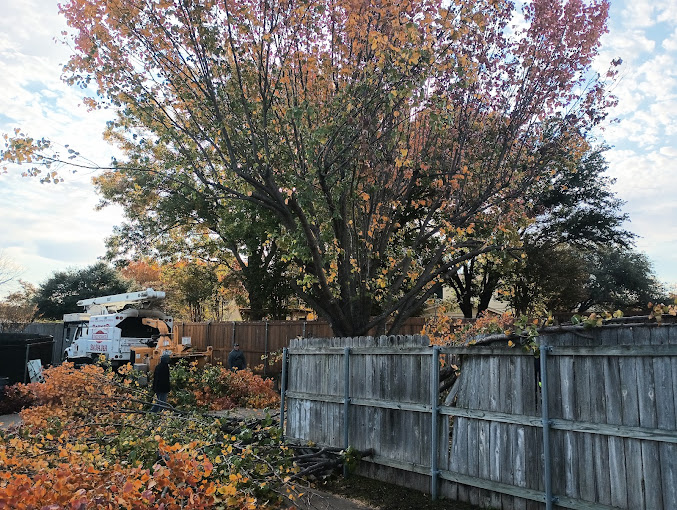
Before you decide on tree trimming services near me or tree removal service, start with a homeowner-style walkthrough. Look for structural issues (crossing branches, dead limbs, cracks), canopy density problems (overgrown crowding or thinning), and signs at the bark and base (wounds, peeling, abnormal growth, or soil disturbance around the trunk). If you see consistent dieback or recurring insect activity, maintenance should include more than pruning.
Canopy and structure
Check for rubbing branches, weak limb attachments, and areas where the crown is dense and shaded.
Trunk and bark
Look for cracks, wounds, fungal growth, or small openings that could indicate wood borers treatment needs.
Root zone and soil
Watch for mower damage, soil compaction, and changes in ground level near the tree base.
Main Things Customers Should Understand
Think of tree maintenance as a cycle: inspect, prioritize, treat, and follow up. Pruning frequency depends on tree species, growth rate, and how the tree interacts with your property. Pest and disease treatment frequency depends on what you’re seeing, not just the calendar. The goal is to reduce stress, improve structure, and keep routine care ahead of emergencies.
Professional observation: Trees don’t “schedule” their problems. In Dallas, a healthy maintenance plan usually includes both proactive pruning and targeted care when you detect early symptoms, especially after storms or seasonal stress.
| Maintenance task | Typical timing (general guidance) | What it’s meant to prevent |
|---|---|---|
| Tree Pruning (shape, clearance, crown thinning) | Often every 1 to 3 years, plus spot pruning as needed | Overcrowding, weak attachments, poor airflow, and clearance conflicts |
| Professional Tree Trimming for structure and safety | As part of your inspection findings and after storm events | Hazardous growth, broken limbs, and building or line interference |
| Tree Disease Treatment and Tree Insect Treatment | Triggered by symptoms, recurring patterns, or active damage | Spread of decline, deeper infestation, and escalating risk |
| Wood Borer Treatment and Tree Borer Control | When active signs are present, sometimes requiring follow-up | Progression from early infestation to major structural compromise |
| Tree Fertilization Service and Deep Root Fertilization | Based on soil conditions and tree condition, not as a routine “always” step | Long-term health decline related to stress and limited soil support |
Why This Matters in Dallas, TX
In Dallas, trees often have to handle intense seasonal changes, long hot stretches, and periodic wind events. That combination can expose weak branch attachments and make stressed trees more noticeable. A maintenance plan that includes regular inspections and timely professional trimming helps you catch issues before they become storm damage tree service problems. If you’ve got trees near driveways, patios, or utility-adjacent areas across Dallas and DFW suburbs, planning around seasonal stress is a practical way to keep your property safer and your trees looking their best.
Local focus: If you’ve recently had high winds, do a quick check for new cracks, fresh breaks, and unusual leaf drop. Those are often the first clues that your next step should be pruning and risk assessment rather than waiting for the “next season.”
Mid-article CTA
Build a maintenance plan for your trees in Dallas
If you’re deciding how often to prune or whether you need tree health care beyond trimming, Parker Tree Service can help you match the right next step to what you’re seeing.
Call Parker Tree ServiceCommon Mistakes to Avoid
Most tree problems get worse because the response is either too late or too general. Here are the patterns we see most often from Dallas homeowners and commercial property managers, and why they matter.
- Pruning without a purpose. Random trimming can remove healthy structure while leaving weak areas untouched.
- Waiting until branches break. After storm damage, “it seems fine” can still hide internal weaknesses and future failure points.
- Ignoring insect and borer signs. If you suspect wood borers treatment or tree borer control, delaying targeted tree pest control can lead to deeper damage.
- Overlooking crown congestion. Dense, shaded growth can increase stress and make trees harder to manage through routine pruning.
- Skipping root-zone care. Soil compaction, mower hits, and unmanaged clearance around the base can limit tree root care and deep root fertilization opportunities.
Customer Checklist
Use this quick checklist to decide whether you need routine tree pruning services near me or a more focused approach like tree disease treatment, tree insect treatment, or deep-root work. If multiple items apply, it’s a strong sign your maintenance plan needs an update.
- Check the canopy for dead tips, crossing branches, rubbing limbs, and crowded sections that block airflow.
- Inspect the trunk and base for wounds, peeling bark, openings, or areas that look different from the rest of the tree.
- Look for recurring leaf problems such as unusual thinning or dieback patterns in the same areas year after year.
- After storms, scan for cracks, fresh breaks, loose limbs, and branches that now hang lower than before.
- Assess clearance around structures, walkways, and driveways to plan professional tree trimming before it becomes a hazard.
- If you suspect active infestation, ask about a tree inspection or tree surveys to determine whether targeted treatment is needed.
Representative Scenario: A Dallas Yard with Mixed Signals
A homeowner in Dallas notices that their large shade tree leafs out later than expected and has thinning in one section of the crown. After a wind event, a couple of small limbs break and land near a driveway, but the rest of the canopy looks “mostly normal.” Instead of doing only minor trimming, they schedule an inspection to check structure, bark condition, and signs that could point to tree insect treatment or wood borer control. The maintenance plan focuses on selective pruning for safety and airflow, plus targeted next steps based on what the tree shows, rather than repeating the same trimming pattern every season.
Frequently Asked Questions
How often should I schedule tree pruning in Dallas?
For many properties, a practical approach is an annual tree inspection, with pruning scheduled based on what’s found. General shaping often fits a 1 to 3 year rhythm, while safety-focused clearance pruning may be needed sooner if branches grow into driveways, walkways, or structures. If you notice dieback, congested canopy growth, or recurring insect activity, frequency should be adjusted to address the underlying cause, not only the appearance.
When does tree trimming become a tree removal service situation?
Tree removal typically becomes the next step when a tree or limb is no longer stable enough for safe clearance, or when dead tree removal is required to reduce risk. After storm damage, broken or hanging limbs can also change the decision quickly. A professional tree risk assessment looks at structure and condition to determine whether selective pruning, mitigation, or full removal is the safest option for your property.
Do I need emergency tree removal after every storm?
Not every storm requires emergency tree removal, but you should act quickly if limbs are hanging, blocking exits, or showing signs of instability. If the tree is near buildings, fences, or areas with foot traffic, waiting can increase the risk of further breakage. If you’re dealing with hazardous growth or fallen tree removal concerns, it’s smart to contact an emergency tree service to evaluate what’s safe to address first.
How can I tell if I need tree disease treatment or tree pest control?
Clues often show up at the trunk, bark, and consistent areas of the canopy. Look for unusual wounds, dieback patterns, abnormal growth, or signs that could align with wood borer treatment or webworms treatment. If issues repeat season after season, that’s a strong reason to ask for a tree inspection and tree surveys so treatment is targeted instead of guesswork.
Can deep root fertilization replace pruning or pest treatment?
Deep root fertilization service and soil conditioning can support tree health, but it doesn’t replace pruning when structure or safety is the problem. It also doesn’t solve active infestations or disease symptoms by itself. A good plan matches each maintenance step to the need: pruning for structure and clearance, targeted tree insect treatment or wood borers treatment for active problems, and deep root fertilization when the tree’s condition and soil support suggest it can help.
Final CTA
If you’re trying to figure out whether your trees need routine tree maintenance services or a more targeted plan for tree health care, Parker Tree Service can help you choose the next step based on what’s happening in your Dallas yard or commercial property. The right frequency comes from the right observations.
Get help planning tree maintenance for your property
For tree pruning near me, professional tree trimming, or help deciding on tree removal, emergency tree removal, stump grinding, and more, contact Parker Tree Service.
Schedule a tree consultationAbout Parker Tree Service
Parker Tree Service provides tree services for Dallas, TX and the surrounding DFW suburbs, supporting residential tree service and commercial tree service needs. From professional tree trimming and pruning to emergency tree removal and stump grinding service, the team focuses on practical, property-specific care that supports healthier growth and safer landscapes.

Parker Tree Service
Serving Dallas, TX and nearby areas including Plano and DFW suburbs. Contact: (214) 394-2414. Website: parkertreeservice.biz.