
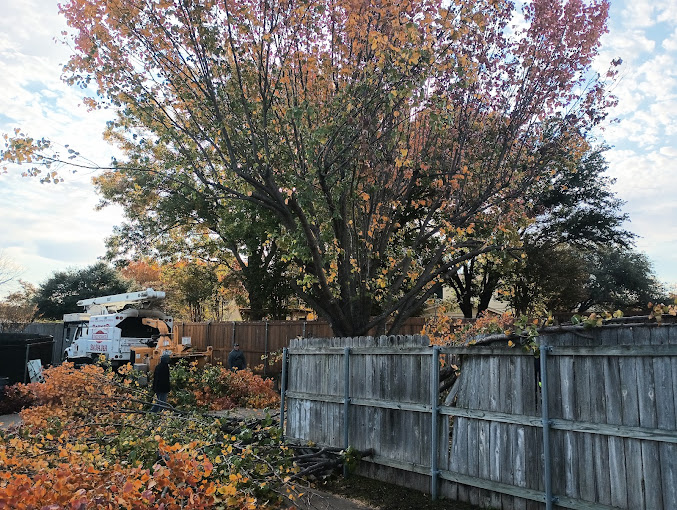
Tree Service Safety Tips to Prevent Property Damage
If a branch crack, shifting trunk, or storm-snagged limb has you worried about your home or business, this guide breaks down practical safety checks homeowners and property managers can do before any work starts. You will also learn which tree issues usually need trained help, especially around Dallas, TX and the DFW suburbs.
A storm rolls through Dallas and suddenly you notice fresh limb breaks near the driveway. The tree still looks “mostly fine,” but you can see small fractures, hanging branches, or branches rubbing the roofline. At the same time, you might be thinking about tackling pruning yourself, clearing debris, or waiting until things dry out.
Before you make a call or start moving anything, you need a clear way to judge risk. This guide will help you recognize common red flags that lead to property damage, understand what “safe pruning” and “safe removal” really mean, and decide when to schedule professional tree care in Dallas, TX.
- Quick answer
- What to check first
- Main things customers should understand
- Why this matters in Dallas, TX
- Common mistakes to avoid
- Customer checklist
- Frequently asked questions
Quick Answer
If you see unstable limbs, fresh storm damage, leaning trunks, cracks, or signs of tree disease near structures, the safest move is to stop DIY work and have a professional assess the tree’s risk. For routine pruning, confirm the goal (clearance, shape, or health) and avoid cutting large limbs yourself because the wrong cut can increase failure risk later. In Dallas, TX, storms and fast seasonal swings can make “seems okay” trees become hazards quickly. Start with a basic visual check, then schedule a tree inspection or the appropriate service based on what you find.
What to Check First
Before any chainsaw or ladder touches your property, focus on what can fall and what can fail. Walk the perimeter of the tree and the areas it could hit: roofs, gutters, fences, vehicles, walkways, and utility lines. If anything is hanging, cracked, or visibly shifted, treat it as an unstable situation and keep people away from the drop zone. For safety, also check the ground for uneven surfaces, hidden roots, and debris that can cause slips or trip hazards during cleanup.

Pruning that protects clearance
When branches threaten eaves, windows, or power-adjacent areas, targeted tree pruning and trimming is often safer than heavy “cutting to fix everything.”
Storm-damage planning
If limbs are cracked or stuck in place after a weather event, emergency tree removal services help reduce the chance of sudden secondary failure.
Root and stump risk control
For hazards around the yard, stump grinding and removal can clear trip points and improve long-term yard safety.
Main Things Customers Should Understand
Most property damage during tree work is preventable when the job starts with the right safety plan. The biggest factors are what the tree is doing, what forces are building inside it, and what the work needs to accomplish without creating new weak points.
Professional observation: The safest tree work is usually planned around the tree’s failure points, not just its appearance. A branch can look “okay” until weight shifts, wind changes, or a cut removes support.
1) Look for instability cues
Unstable trees often show warning signs like a trunk lean that is new or increasing, bark cracking, large dead limbs, or branches that hang at odd angles. In Dallas, TX, where storms can be intense, limbs that have already cracked are more likely to fail during cleanup or follow-up wind.
2) Understand how pruning changes risk
Improper cuts can create stress, expose inner wood, and increase the chance of future breaks. “Shaping” is not the same as removing structural limbs safely. For many homeowners, the goal is practical clearance and risk reduction, which is why a tree pruning service should match your tree’s structure, not just what’s easiest to reach.
3) Watch for pest and disease pressures
Some tree health issues make wood weaker or damage internal structure. If you notice dieback, abnormal holes, frass-like debris, or unusual webbing and leaf damage, it is a signal to evaluate tree health care needs. Depending on what’s found, treatment might include deep root fertilization and other tree health steps, but the key is getting the diagnosis right before cutting.
4) Decide whether the goal is pruning, removal, or mitigation
Not every problem is solved by trimming. Sometimes the safest path is lot clearing, brush clearing, or hazardous tree removal because the risk is too close to structures or high-traffic areas. If you are managing an active property, define the end state you need: safer clearance, fewer hazards, or removal of a specific fall risk.
| What you notice | Typical safety concern | More likely service category |
|---|---|---|
| Fresh limb breaks, hanging branches, or “cracked but still attached” limbs | Secondary failure from vibration, wind, or cleanup | Emergency tree removal assessment |
| Branches rubbing rooflines, gutters, or walkways | Ongoing contact and future break points | Tree pruning and trimming for clearance |
| Stump near a walkway, patio, or driveway edge | Trip hazard and yard obstruction | Stump grinding and removal |
| Tree vigor decline or symptoms consistent with pest or stress issues | Weakened wood and reduced long-term stability | Tree health care evaluation |
Why This Matters in Dallas, TX
In Dallas, TX and the surrounding DFW suburbs, trees often sit close to homes, patios, and parking areas. That makes any failure more likely to become property damage rather than a harmless drop in open space. Seasonal storms can also leave limbs under stress. From a safety standpoint, the same tree can look manageable one week and become risky right after wind, because wood that was already compromised can shift or fracture during the next weather cycle.
Local safety tip: After severe weather, avoid walking under or near branches that look “half-failed.” If you see limbs still hanging or leaning, treat the area as unsafe until a trained team evaluates it.
Common Mistakes to Avoid
Homeowners and property managers usually do not intend to take unnecessary risks, but several common habits can increase the chance of damage. The goal here is to help you recognize patterns that lead to avoidable problems, especially when working near structures.
- Cutting support limbs first: Removing the wrong branch can change how the remaining wood holds weight, causing unpredictable movement.
- Using a ladder where the ground is unstable: Roots, debris, and uneven soil can make ladder work unsafe, especially during cleanup after storms.
- Ignoring leaning or cracking: A trunk or major limb that is shifting is not “just a cosmetic issue.” Treat it as a risk factor.
- Assuming pruning fixes disease: If the tree is under stress from pests or health issues, cutting without assessment can leave the root of the problem unresolved.
- Clearing debris without a hazard check: Fallen or partially fallen limbs can still be under tension. Moving them the wrong way can cause sudden drops.
Customer Checklist
This checklist is designed for Dallas, TX homeowners and managers who want a simple, safety-first process. Use it before you schedule work or decide whether a tree needs professional attention.

- Keep people and pets away from the tree and any potential drop zone.
- Check for fresh cracks, hanging limbs, trunk lean changes, and bark damage.
- Look for contact points with roofs, gutters, fences, and walkways.
- Note signs of stress such as dieback, abnormal holes, or unusual leaf damage.
- Avoid DIY cutting when the tree is near structures or appears unstable.
- Document the issue with observations (what changed, when it started, and where it’s located).
- Match the service goal to the problem: clearance pruning, emergency mitigation, stump removal, or health care evaluation.
Representative Scenario
A homeowner in Dallas, TX notices a large branch crack during a wind event. The branch is still attached, but it hangs over the driveway and partly blocks the view of the front door. Instead of trying to pull it down, the homeowner clears vehicles away, keeps family members inside, and marks the area as off-limits. A professional assessment then determines whether the branch needs controlled removal or if additional mitigation is required to prevent secondary failure during cleanup. This approach reduces the chance of the limb shifting onto the roof edge or damaging siding.
Need a safety-focused tree assessment in Dallas, TX?
Describe what you’re seeing (storm damage, clearance concerns, or tree health symptoms) and Parker Tree Service can help you choose the right next step for safer property protection.
Contact Parker Tree ServiceFrequently Asked Questions
When should I call a professional for tree pruning instead of handling it myself?
If branches are near a roofline, walkways, or structures, or if you notice cracks, leaning, or hanging limbs, professional help is the safer choice. Even when the goal is “just trimming,” the location matters. In Dallas, TX, storm-stressed wood can shift during cleanup, and incorrect cuts can create new weak points. A tree pruning service can also confirm the work needed for clearance and health rather than cutting based on what looks easiest to reach.
What makes storm-damaged trees more dangerous after the weather passes?
Storm damage often leaves wood under tension. A limb that is cracked but still attached may hold for a while, then fail when wind changes, someone walks by, or debris is moved. That is why clearing the area and avoiding DIY pulling is smart. Emergency tree removal services focus on controlled mitigation so you reduce the chance of secondary failure. If a branch is hanging over a driveway, fence line, or structure, treat it as an active hazard until assessed.
Can pests or tree disease symptoms affect the risk of property damage?
Yes. When a tree is weakened by pests or stress, internal wood can become less stable and more prone to breakage. Symptoms such as dieback, abnormal holes, or unusual leaf damage can be clues that the tree’s health needs attention before or alongside pruning. For safe outcomes, the best approach is evaluation so cuts do not mask the underlying issue. Depending on findings, tree health care may include steps like deep root fertilization as part of improving tree vigor and long-term resilience.
What’s the difference between stump grinding and stump removal for safety?
From a safety standpoint, both address the obstruction created by a stump. Stump grinding service typically focuses on breaking down the remaining stump material, which can reduce trip hazards and help prepare the area for landscaping. If a stump is near a key path or you want a cleared yard for future use, a removal-focused approach may be considered based on the site conditions. The right option depends on what’s in the immediate area and what “finish condition” you need for your property in Dallas, TX.
How can I prepare my property before tree work starts?
Clear vehicles from the work area and keep pets and people inside or away from the drop zone. Remove or secure items that could be struck by falling branches, and make note of where the tree interacts with the property, like gutters, fences, or walkways. If you’re dealing with storm damage, avoid walking under hanging limbs. Providing a short list of what changed recently and where the risk seems greatest helps the crew plan safer access and work sequencing for your home or business.
Protect your home with safer tree care
If you’re in Dallas, TX and want practical guidance on tree pruning, emergency tree removal, stump grinding, or tree health care, Parker Tree Service is ready to help you choose the next step based on what you’re seeing on your property.
(214) 394-2414
Parker Tree Service
Parker Tree Service provides tree services for homeowners and property managers across Dallas, TX and the DFW suburbs, including Plano. Whether you need tree pruning for clearance, emergency tree removal after storm damage, stump grinding service to reduce yard hazards, or tree health care support, the focus is on practical safety planning to help prevent property damage.