
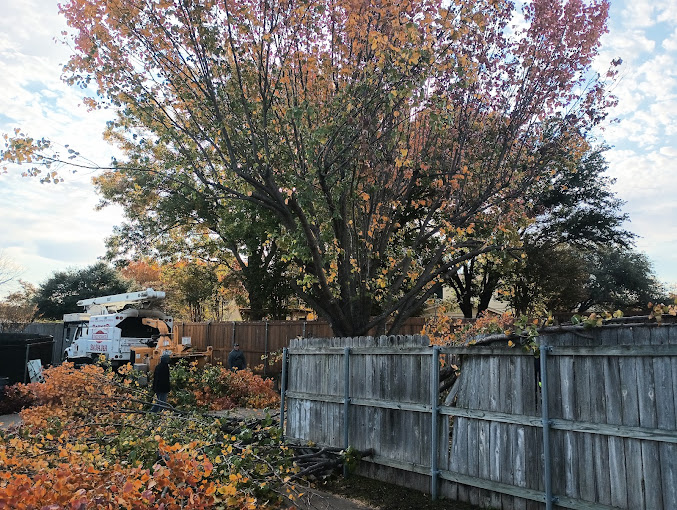
Dead Tree Removal Signs You Should Never Ignore
If you have a tree that looks “mostly fine” but something feels off, Dallas homeowners and property managers often end up waiting too long. This guide helps you spot warning signs of dead or dangerously declining trees so you can protect people, buildings, and landscaping around Dallas, TX and the DFW suburbs.
Last spring, a homeowner in Dallas noticed their tree leafed out later than usual. The branches still looked upright, and the trunk seemed solid. But over the next few weeks, the crown thinned, and a few limbs started to shed bark and tiny twigs even in calm weather.
That “not quite dead yet” stage is where people get caught. A tree can look standing while it quietly loses strength, develops hidden decay, or becomes a higher risk during storms. Below, you will learn what to watch for, what to do first, and when tree removal is the safer choice.
- Quick answer
- What to check first
- Main things customers should understand
- Why this matters in Dallas, TX
- Common mistakes to avoid
- Customer checklist
- Frequently asked questions
Quick Answer
If a tree has major dieback, dead limbs that crack or fall, persistent holes or fungal growth, or a weakened base (like lifting roots or deep trunk cracks), treat it as a potential hazardous tree and schedule an on-site tree inspection. Waiting for “one more season” often increases risk, especially around driveways, sidewalks, and structures. Your best next step is to contact a professional tree service to assess stability and recommend whether pruning, tree disease treatment, or tree removal is the safest option for your property in Dallas and the DFW suburbs.
What to Check First
Start with simple, low-risk observations. You are not trying to diagnose every cause. You are looking for red flags that suggest the tree is already beyond normal maintenance. If you see multiple signs at once, that is usually the strongest indicator that the tree needs professional evaluation sooner rather than later.
1) Look up: crown and twig health
Scan the canopy for thinning, bare patches, or limbs that are noticeably dead compared to the rest of the tree.
2) Look at the trunk: cracks, cavities, and decay
Check for deep splits, missing bark sections, soft spots, and any recurring fungal growth.
3) Look down: base and roots
Watch for lifting roots, heaving soil, exposed roots, or evidence that the tree is leaning more than before.
Main Things Customers Should Understand
When people think “dead tree,” they picture a tree with no leaves. In practice, hazardous trees often show partial failure. Dead wood can remain standing for years, and hidden decay can weaken limbs long before a trunk looks obviously damaged. Here are the signs Parker Tree Service commonly looks for during tree surveys and risk assessments.
Professional observation: In Dallas-area neighborhoods, we often see problem trees after drought-stress, construction impacts, or storm damage. The tree may look “alive” from a distance, but the structure can be compromised where you cannot easily see.
1) Persistent deadwood that does not respond to seasons
Dead branches that do not bud in spring, or that keep shedding bark and twigs while neighboring trees look normal, are a major warning. Deadwood can break unpredictably because the internal wood has lost strength.
2) Fungal growth, cavities, or recurring “mushrooms”
Fungal fruiting near the trunk base or on limbs can indicate active decay. Cavities or hollow sections can also reduce the tree’s ability to handle wind loads and storm stress.
3) Trunk cracks, peeling bark, or exposed rot
Large cracks, long splits, and bark loss around a section of the trunk often mean the tree is not compartmentalizing damage effectively. Bark that peels in wide areas can be a sign that the underlying tissues are compromised.
4) Sudden dieback after stress or a storm event
If a tree seems fine, then declines quickly after heavy rain, wind, or drought, it is worth treating as a safety issue. Storm Damage Tree Service is not only for fallen trees. It is also for assessing what remains standing but weakened.
5) Leaning, root disturbance, or soil heaving
A change in lean, disturbed soil, or roots heaving out of the ground can point to root failure. Even if only part of the crown looks bad, the root system supports the whole tree.
6) Evidence of pests that can weaken wood
Some tree pests attack stressed trees first, and wood-boring insects can weaken internal structure over time. Look for exit holes, frass-like debris, or patterns of damage on the trunk and larger limbs. If you suspect Tree Pest Control or Wood Borer Treatment is needed, the right approach depends on what is actually present.
Related service: If you are seeing signs of decline and suspect pests or disease, consider reviewing deep root fertilization as part of a broader tree health plan.
Why this matters in Dallas, TX
Dallas weather can put additional stress on trees, and storms can turn a “mostly fine” situation into a serious hazard. In the Dallas and Plano areas, properties often include mature shade trees near driveways, overhead utility lines, and older landscaping beds. When a tree starts declining, the risk is not only the tree itself. It is also what the tree could impact during the next high-wind event.
How we think about risk in the DFW suburbs
During a tree inspection, we look at the tree’s structure, the condition of the trunk and limbs, and the environment around it. That includes proximity to structures, walkways, and other property features. If the tree cannot be made stable through pruning, the safer path may be dead tree removal and, when appropriate, stump grinding removal to reduce future hazards and trip risks.
| What you notice | What it can mean | Common next step |
|---|---|---|
| Large dead branches or major dieback | Loss of internal strength or chronic decline | Tree risk assessment and removal of deadwood, if feasible |
| Cracks, cavities, or soft trunk sections | Active decay or structural failure | On-site evaluation for hazardous tree removal |
| Fungal growth near the base or limbs | Decay indicators | Tree surveys to confirm extent and stability |
| Lifting roots or a new lean | Root failure | Hazard mitigation planning, often removal |
| Signs of wood borers or tree insect activity | Weakened wood and faster decline | Tree insect treatment approach after identification |
Need help deciding what to do next?
Get a clear tree plan for your Dallas property
If you suspect dead tree removal is needed, the fastest way to reduce uncertainty is an on-site inspection. Parker Tree Service can help determine whether pruning, tree disease treatment, or removal is the safest choice for your yard in Dallas and the DFW suburbs.
Call Parker Tree ServiceCommon Mistakes to Avoid
Homeowners often do well with general tree care, but a few common choices increase risk when a tree is already declining. If you recognize yourself in any of these, pause and get a professional look before you proceed.
- Waiting for the “next season” even after multiple red flags appear. A tree can remain standing while strength continues to decline.
- Only removing a few dead branches. Deadwood can be the symptom, not the cause. If decay or root issues are involved, targeted pruning may not address the hazard.
- Using topping or heavy cuts as a quick fix. Improper cuts can worsen stress and create new weak points.
- Ignoring the base of the tree. Trunk and root problems often dictate risk more than crown appearance.
- Assuming pests are the only cause. Wood borers and tree insects can accelerate decline, but they do not always explain the full structural picture.
Customer checklist before you schedule tree work
- Note when the problem started and whether it worsened after storms, drought, or construction.
- Take mental inventory of hazards: near driveways, walkways, fences, and structures.
- Watch for deadwood: branches that do not bud, bark that flakes, and twigs that shed unusually.
- Check the trunk for cracks, cavities, and bark loss patterns.
- Observe the base: lean changes, exposed roots, or soil heaving.
- Look for pest indicators such as exit holes or debris around the trunk.
- Share your observations with a tree service so they can recommend the right next step.
A representative Dallas scenario (what we usually see)
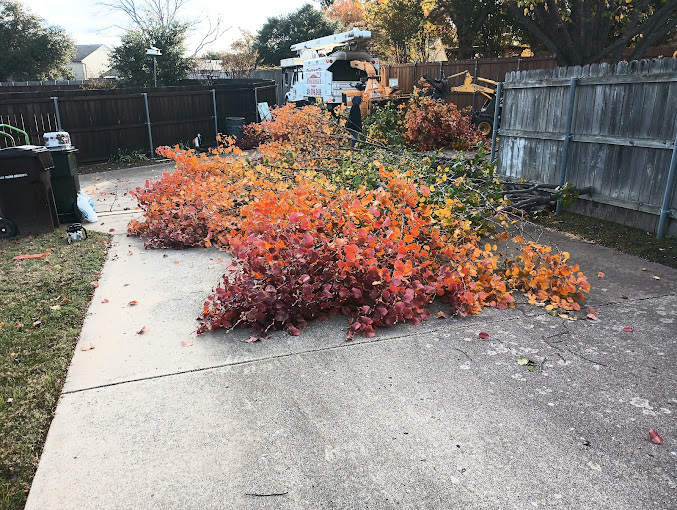
A property manager in the DFW suburbs noticed repeated limb breakage near the edge of a parking area. From the ground, the tree still had some leaves, but the crown was thinning and the trunk showed bark loss near an older cut. Over the next windy weeks, more small branches fell and the area became a trip hazard. After a tree inspection, the safest plan involved removing hazardous deadwood and addressing structural risk. Once the tree was removed, stump grinding removal was recommended to reduce remaining hazards and help the area be restored for daily use.
Service-focused option: If your situation involves a weakened tree after weather, review emergency tree removal services so you know what to request when risk is elevated.
Frequently Asked Questions
How can I tell if a tree is dead or just dormant?
Look for more than one cue. Dormant trees typically follow the season and respond with consistent leafing. A dead or dying tree often shows persistent deadwood that does not bud, thinning crowns with bare patches, and continuing bark or twig shedding. If you also see trunk cracks, cavities, or fungal growth, treat it as a safety concern rather than “normal dormancy.” An on-site tree inspection is the most reliable way to confirm what is actually happening inside the trunk and branches.
Is pruning always enough, or does dead tree removal usually come next?
Pruning can help when the issue is limited to specific dead limbs and the structure is otherwise stable. But if the trunk has decay indicators, the base is compromised, or multiple parts of the crown are failing, pruning may not reduce risk enough. In those cases, hazardous tree removal may be the safer option. A tree risk assessment considers structure, proximity to property, and how the tree is likely to behave in wind and storms.
What should I do if limbs are falling but the tree still has some leaves?
Falling limbs are a warning sign, even if the tree still has partial foliage. Keep people and pets away from the drop zone and avoid trying to clear debris by hand. Instead, request an inspection focused on structural stability. The goal is to determine whether the tree can be made safer through pruning or whether dead tree removal is needed to prevent additional breakage.
Can pests like wood borers cause a tree to die?
Yes. Wood borers and other tree insects can weaken wood over time, especially when a tree is already stressed. That stress may come from drought conditions, construction impacts, or storm damage. If you see exit holes, frass-like debris, or unusual damage patterns, it is worth getting professional tree disease treatment and tree insect treatment guidance. Correct identification matters because the right plan depends on the pest and the condition of the tree.
Do I need stump grinding after tree removal?
Often, yes. Stumps can create long-term hazards and maintenance issues, especially for mowing, landscaping, and safe foot traffic. Stump grinding service can help reduce the stump and lower trip risks. If you are planning further tree health care, soil conditioning, or replanting, addressing the stump area can make the next steps easier.
Get help before “standing dead” becomes a bigger problem
If your tree shows deadwood, trunk decay indicators, or base instability, schedule a professional tree inspection. Parker Tree Service serves Dallas, TX and the DFW suburbs, with the goal of helping you make a clear, safety-first decision.
Schedule tree removal support
Parker Tree Service
Parker Tree Service provides tree care services for homeowners and businesses across Dallas, TX and surrounding DFW suburbs. From tree removal service and emergency tree removal to pruning and trimming, stump grinding removal, deep root fertilization, and tree disease treatment, we focus on practical, safety-minded recommendations based on what we see during an on-site tree survey and risk assessment.
Interested in pruning or shaping? Explore tree pruning and trimming services.
If stump issues are part of the problem, see stump grinding removal.