
Emergency Tree Removal Versus DIY Removal Risks
If a tree is down or leaning after storms around Dallas, TX, the decision feels urgent. This guide helps you understand what makes an emergency tree removal different from a DIY cleanup, what to check first, and when professional tree service is the safer path for your home, your family, and your property in the DFW suburbs.
After a windy afternoon, you step outside in Dallas and notice a large limb on the driveway or a trunk leaning toward the house. Even if it looks “mostly stable,” you may still be wondering whether you can handle it yourself with a saw, a rope, and a borrowed pickup.
The trouble is that emergency situations are rarely just about cutting. A tree can shift, fall the wrong way, or expose hidden hazards like compromised roots, unstable branches, or electrical risk. Below, you’ll learn how to assess the situation quickly, what risks DIY removal creates, and what a safer next step looks like for residential and commercial properties.
- Quick answer
- What to check first
- Main things customers should understand
- Why this matters in Dallas, TX
- Common mistakes to avoid
- Customer checklist
- Frequently asked questions

Quick Answer
If a tree is down, leaning, blocking an exit, or sitting near power lines, the safest choice is professional emergency tree service. DIY removal can turn dangerous fast because trees can move unexpectedly as cuts are made, and hidden instability may pull sections in a different direction. Start by keeping people and pets away and identifying immediate hazards. If you need tree removal service in Dallas or the DFW suburbs, contact Parker Tree Service for an on-site assessment so the right plan is used for storm damage tree service, fallen tree removal, and hazardous tree removal.
What to Check First
Before anyone picks up a saw, spend a minute scanning for obvious hazards and deciding whether this is truly a “cleanup” or an emergency. The goal is to keep the situation from getting worse while you figure out the safe next step.
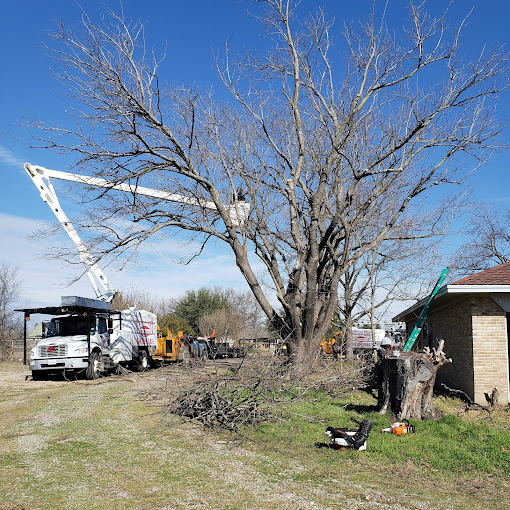
Professional observation: In emergency tree situations, the biggest risk is not the first cut. It is the moment the tree’s tension, weight, and footing change.
Use this quick triage approach:
- Stay back from the tree. Look for cracking, shifting, or fresh movement before you approach any trunk or limb.
- Check for overhead or nearby power lines. If lines are present or could be contacted, treat it as an electrical hazard and keep distance.
- Identify the “pinch points.” A limb can be lodged in another branch, trapped against a wall, or wedged in a fence. Those conditions can release suddenly.
- Check ground stability. Soil disturbance, root exposure, or a trunk that appears to be “floating” can indicate the tree is not stable.
- Consider access and property protection. If the tree is over a roof, driveway, or structures, removal planning matters as much as cutting.
Main Things Customers Should Understand
Emergency tree removal is different from routine trimming because the priority is controlling the fall and minimizing secondary damage. A professional plan considers where the tree is likely to move, what is holding it in place, and how to remove it in sections if needed.
DIY cleanup often misses structural risk
When a tree is down or partially broken, the remaining structure can be under tension. Cutting without understanding that tension can cause sudden movement.
Tools are not the same as a plan
Even with the right saw, DIY removal may not account for rigging, safe cutting angles, or how to control debris.
Safety includes what you cannot see
Split trunks, compromised roots, and hidden decay can make a tree behave unpredictably after the first section is removed.
Here’s a practical way to think about it: emergency tree service is not only about removing what you can reach. It is about managing the remaining weight, the direction of movement, and the protection of nearby features. That is especially relevant after storms, when fallen tree removal and storm damage tree service require careful sequencing.
Customer-focused takeaway: If the tree is tangled, leaning toward a structure, or appears unstable, treat it as emergency work, not a simple DIY project.
| Situation you notice | DIY approach risk level | Safer next step |
|---|---|---|
| Tree is down across a driveway, fence, or walkway | High risk of uncontrolled shifting and added property damage | Call a tree removal service for fallen tree removal planning |
| Trunk is leaning toward a home, garage, or shed | High risk of sudden movement as cuts change leverage | Request emergency tree removal assessment |
| Tree branches are entangled overhead | High risk of secondary falls during cutting | Use a storm damage tree service plan for sectional removal |
| Tree is near power lines or lines may be contacted | Extreme safety hazard | Keep distance and contact emergency tree service guidance |
| Tree is small and fully accessible on open ground | Lower risk, but still requires caution and proper equipment | Confirm stability first, then consider professional help if unsure |
Why This Matters in Dallas, TX
In Dallas, TX and the surrounding DFW suburbs like Plano, storm conditions can change quickly, and trees can be positioned over driveways, older landscaping, and property boundaries. That combination is why emergency tree service decisions often come down to stability and safe access, not just “getting it off the roofline.”
One firsthand-style observation from the field: after a storm, the visible damage can be only part of the story. A tree may look “mostly intact” while the root system or internal structure is compromised, which can change how it behaves during removal. That is one reason a professional approach is focused on risk assessment before cutting starts.
Emergency removal planning
When you need emergency tree service, the right process starts with the situation on-site. Explore Parker Tree Service emergency tree removal services to understand how emergency work is handled.
Tree removal service
If removal is required due to dead tree removal or hazardous tree removal concerns, review tree removal service for a clear overview of the process.
Stump grinding and removal
After a fallen tree is handled, stumps can still create tripping hazards and regrowth issues. Learn about stump grinding service as part of clean-up.
Common Mistakes to Avoid
DIY removal can lead to preventable problems, even when homeowners are careful. These are the mistakes we see most often when people try to handle emergency cleanup without a controlled plan.
Safety reminder: If you are unsure whether a tree is stable, assume it is not and get professional help before cutting begins.
- Cutting too soon without understanding tension. A limb can be “holding” weight against another section. Once cut, it may drop unexpectedly.
- Working too close to the fall zone. Even small shifts can throw debris into windows, vehicles, or walkways.
- Ignoring the root and base condition. A trunk that has lifted from the soil can behave differently than it looks from the driveway.
- Assuming “it’s already down” means “it’s safe.” Downed trees can still move while sections are removed or while the ground settles.
- Forgetting follow-up tree health care. After emergency removal, you may still need tree health care steps for nearby trees, including tree disease treatment or tree pest control if issues are present.
In some cases, emergency removal is the first step, and then a broader plan follows. For example, if a nearby tree shows signs of decline, you may need tree surveys or tree mitigation to protect property and reduce the chance of future hazards.
Customer Checklist
Use this checklist to stay organized during an emergency and to help you communicate clearly when you call for help. It is also a good way to decide whether you need more than a simple cleanup.
- Keep people and pets away from the tree and any debris path.
- Confirm whether any power lines are involved or could be contacted.
- Note where the tree is blocking access (driveway, walkway, gate, or exit).
- Look for signs of movement: fresh cracking, shifting bark, or changes in how the trunk sits.
- Identify what the tree is resting on (roof, fence, vehicle, retaining wall, or another branch).
- Decide whether you need emergency tree removal services versus a routine tree removal service.
- After the main removal, plan for stump grinding and removal if stumps remain.
- If nearby trees show decline, consider tree disease treatment, wood borer treatment, or tree insect treatment guidance.
Representative Scenario
A homeowner in Plano, TX reports a large limb that landed near the garage after a storm. The limb is tangled with smaller branches, and the trunk base looks slightly lifted from the ground. The homeowner initially considers cutting the limb off where it is reachable. However, during inspection, the key issue is that the limb is still under stress and can shift as soon as it is freed. In that situation, emergency tree removal planning is the safer choice, followed by stump grinding and removal if any sections remain as hazards.
Frequently Asked Questions
How do I know if this is an emergency tree situation or a normal cleanup?
Treat it as an emergency when a tree is down or leaning toward structures, blocking a driveway or exit, or appears unstable at the base. After storms, visible damage does not always match internal stability, so if the trunk or limb looks like it could shift, assume it needs emergency tree removal planning. When power lines might be involved, prioritize safety and keep distance. If you are unsure, contacting a professional tree service for an on-site assessment is the practical next step.
Can I remove a fallen limb myself if it looks “fully on the ground”?
Sometimes, but the risk depends on what is holding the limb in place. If the limb is wedged against another branch, resting on a roof edge, or trapping weight, it can move when you cut. In emergency conditions, homeowners often underestimate how tension changes as sections are removed. If there is any chance the limb can shift or fall into a structure, it is safer to use professional tree removal service to manage the sequence and protect property.
What should I do about the stump after emergency removal?
Once the main tree or limb is removed, stumps can still create hazards and may affect yard accessibility. A common next step is stump grinding and removal to reduce tripping risks and help with a cleaner, safer landscape. If the stump is in a high-traffic area or near structures, planning matters so the work does not damage nearby landscaping or hardscape.
After the tree is gone, do I need to worry about tree health for nearby trees?
Often, yes. Emergency removal may reveal broader tree health care concerns, especially if the damaged tree had signs of decline. Nearby trees could need tree disease treatment, wood borer treatment, or tree insect treatment if there are indications of pests or stress. A professional tree survey or tree inspection can help you decide whether tree preservation services are needed to reduce future risk.
How does storm damage tree service differ from routine tree pruning?
Routine tree pruning focuses on shaping and managing growth, such as tree pruning services near me or professional tree trimming. Storm damage tree service focuses on safety and controlled removal after unpredictable conditions. Instead of trimming individual branches, emergency work often requires sectional removal and risk assessment because the tree’s position and stability may have changed.
Need help with emergency tree removal in Dallas?
For downed or hazardous trees, a careful assessment is the safest starting point. Contact Parker Tree Service to discuss your situation in Dallas, TX and the DFW suburbs.
(214) 394-2414Final Call to Action
If your tree is down, leaning, or tangled after storms, DIY removal can introduce risks that are hard to manage once cutting starts. A professional approach helps you control the process and protect your property. When you are ready, Parker Tree Service can help with emergency tree removal, storm damage tree service, and follow-up care such as stump grinding and removal.
Request tree removal help from Parker Tree Service
Get a clear plan for emergency removal and safe next steps for your property.
Contact Parker Tree Service
Parker Tree Service
Parker Tree Service provides tree services for homeowners and property managers throughout Dallas, TX, including Plano and the DFW suburbs. Whether you need emergency tree removal after storm damage, tree removal service, stump grinding service, or ongoing tree health care like tree fertilization service and tree disease treatment, the focus is on practical safety and responsible tree mitigation.
Serving Dallas, TX and nearby areas. Call (214) 394-2414 or visit parkertreeservice.biz.