

How Emergency Tree Removal Prevents Further Property Damage
When a storm drops a tree, cracks a trunk, or leaves branches hanging over a driveway, the risk is more than cosmetic. Parker Tree Service helps Dallas homeowners and property managers understand what to do first, what to avoid, and why prompt emergency tree removal can reduce secondary damage.
After a windy day in Dallas, you might notice a tree limb resting on the roof edge, a trunk leaning into a fence line, or branches dangling over a power line or walkway. It can be tempting to wait until the weather calms down, or to handle it yourself with a ladder and a chainsaw.
But the longer an unstable tree or broken limb stays in place, the more likely it is to shift, fall farther, or pull additional branches, siding, or landscaping with it. This guide explains how emergency tree removal helps prevent further property damage, what to check right away, and how to plan next steps for a safer, healthier landscape.
- Quick answer
- What to check first
- Main considerations
- Why this matters in Dallas, TX
- Common mistakes to avoid
- Customer checklist
- Frequently asked questions
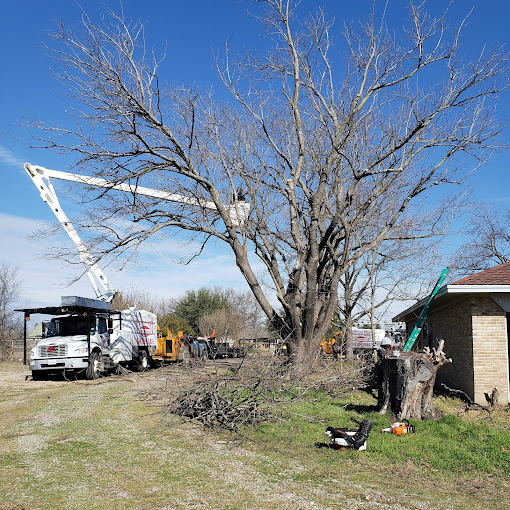
Quick Answer
If a tree is down, cracked, or hanging over structures, emergency tree removal focuses on removing the unstable parts safely and quickly so they cannot shift and cause additional damage. Start by keeping people away from the area, checking for obvious hazards like power lines, and documenting the situation. Then contact a professional tree service to assess stability, plan the removal path, and handle debris in a way that reduces risk to your home and property. After the immediate hazard is addressed, plan follow-up tree pruning or stump grinding to support long-term tree health and reduce future risk.
What to Check First
Before anyone touches the tree, do a quick safety scan from a distance. Look for power lines, damaged roofs, and areas where the trunk or branches could move if you disturb them. If you see electrical hazards, do not approach the tree. Keep vehicles and people away from the fall zone, and avoid pushing branches aside, even if they look “mostly stable.”
Stop and assess
Confirm whether the tree is down, partially broken, or leaning. A “hinged” trunk can drop suddenly as tension changes.
Mark the danger area
Use cones or visible barriers from a safe distance so kids, pets, and visitors do not wander near the debris.
Document what you see
Take notes on where limbs landed and what surfaces were hit. This helps during planning and cleanup decisions.
Professional observation: Emergency removal is not just about cutting. It is about controlling the drop, reducing rebound on tensioned limbs, and clearing the right sections first so the rest of the tree does not shift and damage more property.
Main Things Customers Should Understand
Emergency tree removal typically follows a practical sequence: hazard assessment, safe access planning, controlled removal, and cleanup. That sequence matters because a broken tree is often under stress. Storm damage can leave branches partially attached, roots loosened, or the trunk cracked in a way that changes how the tree moves when cuts are made.
First priority: Reduce the chance of secondary damage. Secondary damage is what happens after the initial storm: additional limb drops, shifting debris, or impacts to roofs, fences, driveways, and landscaping.
| Observed situation | Why it can worsen damage | What emergency removal usually addresses |
|---|---|---|
| Tree is down across a driveway or walkway | Debris can roll or settle, blocking access and creating new fall points | Controlled sectioning and removal to restore safe movement |
| Trunk is cracked or leaning toward a structure | Internal tension can release as the tree shifts | Stability-focused removal planning before cutting |
| Hanging limbs over a roof or fence | Wind or minor settling can drop the limb further | Targeted limb removal to prevent additional impact |
| Stump and roots are exposed after the storm | Roots can loosen surrounding soil and create trip or erosion risks | Debris clearing and stump grinding/removal planning |
After the hazard is removed, the next steps help prevent repeat issues. Depending on what remains, you may need tree pruning services near you to reduce risk from overgrown or damaged limbs, or stump grinding service to remove tripping hazards and make the area easier to maintain.
If the storm damage also reveals signs of tree stress, consider tree health care planning. Tree disease treatment and tree pest control decisions are often made after a visual tree inspection and risk assessment, especially when you notice abnormal growth, thinning, or wood-borer activity.
Why This Matters in Dallas, TX
In Dallas, TX and the DFW suburbs, storms can leave trees in a precarious middle state, especially when older shade trees are near fences, driveways, and homes with established landscaping. Warm-season growth and frequent weather swings mean branches can dry quickly, snap more easily, or shift with the next wind event. That is why emergency tree removal service planning matters on day one: it reduces the chance that the next gust turns a “manageable” problem into roof damage, blocked exits, or damaged landscaping.
From the field, a common firsthand pattern is this: once a limb drops, homeowners often notice more damage than expected because the limb carried smaller branches and pulled loose debris with it. A controlled approach reduces that domino effect and helps keep cleanup focused instead of endless.
Need emergency tree removal in Dallas or Plano?
If a tree is down, cracked, or hanging over a structure, the safest move is to address the hazard quickly and methodically. Parker Tree Service can help you plan the next steps for emergency tree removal and follow-up cleanup.
(214) 394-2414Common Mistakes to Avoid
When people face storm damage, they often focus on what looks “quick” instead of what is safe. One mistake is assuming a limb that is resting in place will stay there. Another is cutting without understanding tension, especially when the trunk or branch is under load. These errors can lead to additional falls, injuries, and avoidable property impacts.

- Waiting too long: A tree can shift again with the next wind or as debris settles.
- Ignoring power line risk: If you suspect any electrical hazard, keep distance and let professionals handle the area safely.
- Using ladders near tensioned limbs: Repositioning a branch can release stress and change where it falls.
- Cutting the wrong section first: Storm damage often creates hidden tension points that can rebound.
- Skipping cleanup planning: Leaves and wood fragments can hide hazards and complicate safe access.
Customer Checklist
Use this checklist to keep the situation organized from the first hour through cleanup. It is designed for Dallas homeowners and property managers who want practical steps that support safety and better decision-making.
- Keep people and pets away from the fall zone and any areas under hanging branches.
- Check for visible hazards including power lines, damaged roofs, and areas where the trunk could shift.
- Limit movement of debris and do not push branches aside.
- Take simple notes or photos of where the tree hit, including fence, driveway, and roof areas.
- Request an emergency tree service assessment so the removal plan accounts for stability and access.
- Plan follow-up tree maintenance such as professional tree trimming, pruning, or stump grinding service.
Representative Scenario: What Happens After a Storm
For example, imagine a mature tree behind a Dallas home loses a main limb during a storm. The limb lands partly on the roof line and partly over a fence, leaving the remaining branch structure “hanging” at an angle. A homeowner notices the fence posts shifting slightly over the next few hours as debris settles. Emergency removal becomes necessary not only to clear the visible limb, but also to prevent the remaining stressed sections from dropping further and causing more roof and siding damage. After the unstable sections are removed, the crew coordinates cleanup and then discusses whether pruning or stump grinding service is needed for the remaining structure and the yard.
Frequently Asked Questions
How quickly should emergency tree removal be done after a storm?
In most storm-damage situations, the goal is to address the hazard before it can shift again. A downed or tensioned tree can move as debris settles or as wind returns, which can lead to additional impacts to roofs, fences, driveways, and landscaping. While exact timing depends on safety conditions, it is wise to treat cracked trunks, hanging limbs, and leaning trees as urgent until a professional assessment confirms stability.
Will emergency removal include stump grinding or stump removal?
Emergency tree removal often focuses first on removing unstable parts and clearing the hazard safely. Stumps and roots may be handled as part of follow-up cleanup depending on what remains after the main removal. If the stump creates a tripping risk, blocks yard access, or complicates landscaping, a stump grinding service can be an appropriate next step. Parker Tree Service can help you plan the most practical sequence for your property.
Can a tree be pruned and saved after storm damage?
Sometimes, yes. If the tree is not structurally compromised and the damage is limited to branches, professional tree trimming or tree pruning services may reduce risk and restore a safer shape. If the trunk is cracked, the tree is leaning significantly, or the structure is unstable, removal may be the safer choice. A tree risk assessment and inspection help determine whether pruning is appropriate or whether mitigation is needed first.
What if the storm damage reveals signs of tree disease or pests?
Storm damage can coincide with existing stress in the tree. If you notice thinning, unusual growth, or signs consistent with wood borers, tree pest control decisions should be based on inspection. Tree disease treatment and wood borer treatment are typically planned after a careful look at the tree’s condition and risk level. In some cases, removing hazardous parts first and then scheduling tree health care helps keep the process safer and more effective.
Do you also help with tree mitigation and preventive care after removal?
Yes. After emergency removal, many customers want preventive tree maintenance to lower the chance of repeat issues. That may include pruning for structure, crown reduction or crown thinning where appropriate, and deep root fertilization or soil conditioning to support tree health. If you are planning long-term care, Parker Tree Service can help you choose practical next steps based on what remains on your property in Dallas and the DFW suburbs.
Get help with storm-damaged tree removal
When a tree is unstable, the safest plan is to address the hazard and then decide what maintenance is needed next. Parker Tree Service serves Dallas, TX and the surrounding DFW suburbs, including Plano, with practical emergency tree removal and follow-up tree care.
Emergency Tree Removal Services
Parker Tree Service provides tree services for Dallas, TX and the DFW suburbs, including Plano. From emergency tree removal to tree pruning, stump grinding service, and tree health care planning, the focus is on safe hazard resolution and practical next steps for residential and commercial properties.
For related services, you can explore tree removal service, review tree pruning and trimming, or learn about stump grinding and removal.
Prefer to call? (214) 394-2414.
Additional note: If you are dealing with storm damage plus potential tree stress, consider scheduling a tree consultation and assessment to support safer decisions for tree disease treatment, tree pest control, and long-term tree health care.