
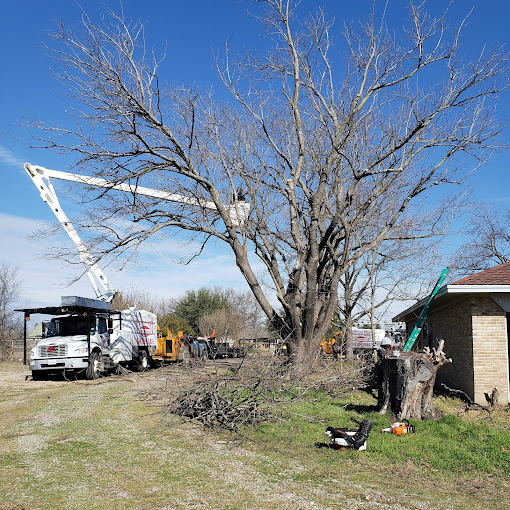
If a tree limb is down, a trunk looks split, or branches are creeping toward power lines, you do not have to guess. This guide helps homeowners and property managers around Dallas, TX recognize the warning signs that call for fast emergency tree removal, what to check right away, and what to do next to protect people and property.
A storm hits the Dallas area, and by morning you see it: a heavy branch is hanging low over the driveway, the tree is leaning more than it did yesterday, or there is a crack you cannot ignore. Even if the damage looks “sort of stable,” the situation can change quickly with wind, heat, and shifting weight in the canopy.
You may also notice a different kind of problem after rough weather, like limbs that have started to fail where you previously only saw minor deadwood. This guide will help you understand which signs mean the tree needs urgent attention, what you can safely check from the ground, and how to plan the safest next step with a professional tree service in Dallas, TX.
By the end, you will have a clear checklist, common mistakes to avoid, and practical guidance for deciding when to call for emergency tree removal services instead of waiting.
- Quick answer
- What to check first
- Main things customers should understand
- Why this matters in Dallas, TX
- Common mistakes to avoid
- Customer checklist
- Frequently asked questions
Quick Answer
If you see a fallen or hanging limb, a cracked or split trunk, a tree leaning suddenly, or branches that are close to power lines, treat it as urgent and keep people away from the area. For safety, avoid trying to “handle it later” or using DIY tools on unstable wood. The practical next step is to contact Parker Tree Service for emergency tree removal services so an arborist can assess the risk and remove the hazard properly. If you are unsure, call anyway and describe what you see from a safe distance.
What to Check First
Start with what you can safely observe from the ground, without approaching the tree or touching anything. Your goal is to identify hazards that can change with wind or additional weight shift. If power lines are involved or you suspect electrical risk, keep back and prioritize utility safety first.

Professional observation: In Dallas, TX, the combination of hot weather, gusty storms, and dry periods can make previously “okay” limbs fail sooner than homeowners expect.
1) Look for movement, not just damage
Do not assume a tree is stable because it stopped moving. Watch for signs that the tree or limb is still under tension: a trunk that looks like it is pulling apart, a limb that is suspended and slowly settling, or a canopy that appears to shift when nearby debris falls.
2) Check for hanging limbs and broken attachment points
Hanging branches can swing or drop unexpectedly. Pay attention to where the limb broke and whether it is still connected by a small portion of wood. Even a “small” connection can fail under wind.
3) Assess proximity to structures and walkways
Ask whether the damaged tree is over a driveway, sidewalk, patio, or roofline. In residential neighborhoods and older properties common in Dallas, TX, trees often grow close to buildings, and falling limbs can cause hidden damage to gutters, siding, and roof edges.
4) Consider root and soil clues
If the base looks lifted, the ground is disturbed, or you see exposed roots, the tree may be compromised. Root instability is one reason emergency tree removal is needed even when the canopy still looks mostly intact.
Quick decision tip: If the tree or limb is positioned over people, vehicles, or power infrastructure, treat it as a hazard that needs professional attention sooner rather than later.
Main Things Customers Should Understand
Emergency tree removal is not only about removing the visible break. It is about reducing risk from the entire plant structure, including how the weight is distributed after a storm, and what else could fail as the tree is cut and lowered. A thorough assessment can also help determine what the right follow-up work should be, such as pruning, stump grinding, or tree health care.
Storm damage patterns that often require urgent removal
After strong winds, trees commonly fail at the union where branches meet the trunk, or they split along the grain. In many Dallas, TX properties, mature shade trees and storm-stressed limbs can be harder to stabilize because the canopy is heavy and the tree is exposed to open sky during storms.
Structural issues that can worsen quickly
Even without a recent storm, you may notice conditions that are easy to miss until they become dangerous. For example, a trunk crack, heavy deadwood, or a tree that suddenly leans can indicate internal decay or progressive weakness. When wood is compromised, cutting can change how forces act on the rest of the tree.
When tree disease and pests are involved
Sometimes the hazard is not only the break. If you suspect tree disease treatment is needed, or you are seeing signs consistent with tree pest control concerns, the tree’s ability to recover and resist additional stress may be reduced. That does not always mean the entire tree must be removed, but it can change the urgency and the recommended next steps.
Related services you may need after removal
Depending on the situation, emergency removal may be followed by professional tree pruning, stump grinding, and soil conditioning. If the root system is disturbed or the tree has been weakened by recurring stress, deep-root fertilization and tree health care may be part of a longer-term plan.
| What you notice | Why it matters | Typical next step |
|---|---|---|
| Hanging branch or limb suspended above a driveway | Weight can shift and the limb can drop with wind | Emergency tree removal to secure the area |
| Cracked or split trunk | Internal weakness can expand under stress | Immediate risk assessment and removal if needed |
| Tree suddenly leaning or base lifted | Root failure can lead to full collapse | Hazard mitigation and possible lot clearing |
| Deadwood in multiple sections after storms | Additional failures may occur as branches load up | Tree pruning and ongoing tree risk assessment |
| Stump left behind after removal | Stumps can become a trip hazard and regrow | Stump grinding service |
Why This Matters in Dallas, TX
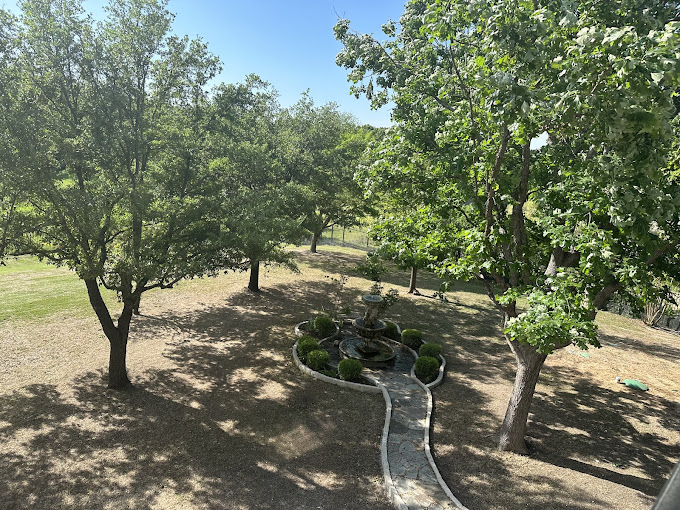
Dallas, TX properties often have established shade trees that bring comfort during hot months. After storms, those same trees can become hazards fast, especially when limbs break high in the canopy and only later settle into view. In neighborhoods across Dallas and Plano and the DFW suburbs, it is common for trees to overhang driveways, fences, and nearby structures, so a “contained” damage scene can still turn into a safety issue quickly.
A firsthand-style observation from the field
In practice, the danger is frequently underestimated because the tree looks mostly intact from the street. When we examine the attachment points and where the trunk has shifted, we often find that the apparent break is only part of the problem. The moment you start removing sections, the forces change, and that is why professional emergency tree service matters for both safety and proper handling.
Tree removal service
For hazardous trees, fallen tree removal, and storm damage tree service across Dallas, TX.
Emergency tree removal services
When the tree is actively threatening people, vehicles, or property.
Stump grinding and removal
After removal, reduce trip hazards and help finish the job cleanly.
Need urgent hazard help in Dallas, TX?
If you are dealing with storm damage tree service, a hanging limb, or a cracked trunk, call Parker Tree Service. We can guide you on the safest next step after a quick, hazard-focused assessment.
(214) 394-2414Common Mistakes to Avoid
Homeowners often try to solve the problem themselves because the damage is visible and the situation seems “manageable.” But emergency hazards involve shifting weight, unpredictable wood failure, and sometimes hidden damage underneath. Avoid the mistakes below.
- Waiting for “one more storm” when a tree is already broken, leaning, or hanging over a driveway or walkway.
- Cutting near the break without understanding how tension and compression work. One cut can cause a limb to drop suddenly.
- Ignoring root and base warning signs like exposed roots or lifted soil, which can indicate the tree may fall further.
- Assuming deadwood is harmless after high winds. Dead sections can drop with a smaller trigger than living wood.
- Overlooking follow-up needs such as tree pruning, soil conditioning, or stump grinding after removal. Leaving hazards behind often creates new safety issues.
Customer Checklist
Use this checklist to decide what to do next. If you can check multiple items, prioritize professional emergency tree removal rather than waiting.
- I see a hanging limb, fallen branch, or trunk section that could drop.
- The tree is cracked, split, or appears to be pulling apart at the trunk or main branch unions.
- The tree is leaning more than before, or the base/root area looks lifted or disturbed.
- The damage is over a driveway, sidewalk, fence line, patio, or near a roof edge.
- I suspect tree disease treatment or tree pest control concerns and the tree is worsening after stress.
- I want the safest next step, including appropriate follow-up like pruning and stump grinding service.
Representative scenario (anonymized)
After a windy afternoon in Dallas, TX, a homeowner noticed a large limb resting against a fence and partially over the driveway. The tree did not fully collapse, so the homeowner initially considered clearing it with basic tools. A closer look from a safe distance showed the limb was still suspended and the trunk had visible strain at the main branch union. Parker Tree Service assessed the hazard and removed the unstable sections safely, then handled the remaining stump area with stump grinding service to reduce ongoing risks.
Frequently Asked Questions
Below are common questions we hear from homeowners and property managers in Dallas, TX when a tree becomes an emergency hazard.
How do I know if I should call emergency tree service or wait?
If the tree is already broken, hanging, cracked, or leaning suddenly, treat it as urgent. Waiting is riskier when the damage is over a driveway, sidewalk, or roofline, because wind or additional settling can cause the hazard to worsen. If you are unsure, describe what you see from a safe distance and request a hazard-focused assessment. Parker Tree Service can help determine whether the situation is stable enough for next steps like tree pruning or whether emergency tree removal is the safer choice.
Is tree pruning enough after storm damage?
Pruning can help when the main structure is stable and the issue is localized deadwood or overgrowth. However, after storm damage, pruning alone is not always the right fix if there is trunk splitting, major limb failure, or root instability. Emergency removal is typically needed when the hazard is actively threatening people or property, or when the tree’s load-bearing structure has been compromised. A professional assessment helps match the right service, which may include tree trimming, tree crown reduction, or other mitigation work.
What should I do while I wait for a professional to arrive?
Keep people and pets away from the area under the tree and around the base. Avoid parking cars or walking near the damaged sections. If any part of the tree is near power lines, do not approach and follow utility safety guidance. Once the area is clear, you can note what you observed, such as where the limb broke and whether the tree looks like it is still under tension. This helps the team arrive prepared for hazard mitigation.
Will you handle stump grinding after emergency tree removal?
Often, yes. Removing the tree is only part of making the area safe. Stumps can be a trip hazard, interfere with mowing and landscaping, and can create long-term maintenance issues. Parker Tree Service provides stump grinding service and stump removal support so the site is left in safer, cleaner condition. If deep root fertilization or soil conditioning is part of your long-term plan, we can discuss next steps after the hazard is addressed.
Can pests or tree disease treatment affect emergency risk?
Yes. If a tree is weakened by tree disease treatment or tree pest control issues, it may be less able to handle wind and stress. That can contribute to deadwood, structural weakness, or faster deterioration after storms. While not every pest-related problem requires immediate removal, it can change the urgency and the recommended plan for tree health care. If you suspect wood borers treatment, webworms treatment, or other tree insect treatment concerns, an assessment can help determine the safest mitigation path.
Get the right tree service plan for your Dallas, TX property
If you are seeing signs of a hazardous tree, contact Parker Tree Service. We can help with emergency tree removal and the follow-up work that supports long-term tree health care, including pruning and site cleanup.
Contact for emergency tree removal
Parker Tree Service provides tree services across Dallas, TX and nearby areas including Plano and the DFW suburbs.
Whether you need professional tree trimming, emergency tree removal, stump grinding service, or support with tree health care like deep-root fertilization, our focus is practical, safety-first hazard handling and clear next steps.